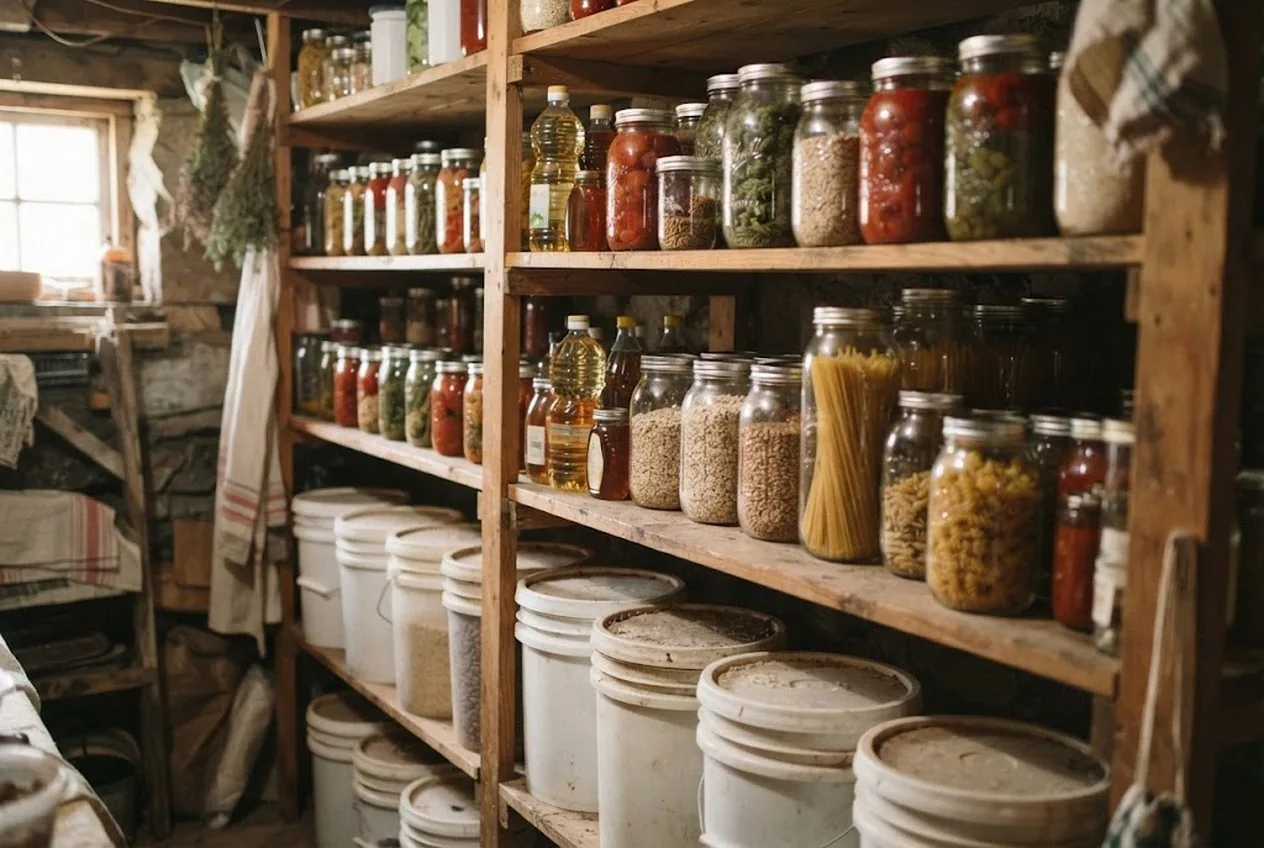
A one-year pantry sounds daunting until you break it down: it’s not a heroic act of hoarding, it’s a short list of cheap, dense, long-keeping foods bought in bulk and stored well. Get the foundation right — the grains, legumes, fats, and a handful of supporting foods — and you can feed a household through a lost job, a bad harvest, a long emergency, or just a winter of high grocery prices, all from a corner of the basement.
This is the working list: 15 foods that store for years, deliver real calories and nutrition, and won’t sit untouched because no one will eat them. We’ll cover roughly how much you need, how to store each so it actually lasts, and where to lean on convenience without overpaying.
Short answer: build the base from bulk grains and legumes for cheap calories, add fats, sugar, and salt for energy and cooking, layer in protein and canned goods, and finish with morale foods and a convenience kit or two. Store the dry staples in Mylar and buckets, rotate the rest, and aim for about 2,000 calories per person per day.
First: How Much Are We Talking About?
A useful planning target is 2,000 calories per person per day, the general guide the FDA uses for nutrition advice (FDA) — about 730,000 calories per adult for a year. Grains supply the biggest share, legumes a chunk, and the rest is fats, sugars, canned protein, and supporting foods. Treat it as a target to build toward in stages, not a shopping trip to make in one weekend. Buy the cheapest, longest-lasting foundation first, then round out variety and convenience over time.
The Foundation: Calorie-Dense Staples
These five do most of the work. Cheap, dense, and storable for decades in Mylar with oxygen absorbers, they’re the base every one-year pantry is built on.
1. White Rice
The cornerstone. Cheap, filling, universally eaten, and a 25-to-30-year keeper sealed properly (BYU Magazine). Buy it by the bulk bag and seal it in Mylar and buckets. (Skip brown rice for long-term storage — its oils go rancid much sooner.)
2. Hard Wheat (and a Grain Mill)
Whole wheat berries store for decades and grind into fresh flour on demand, which keeps far longer than pre-milled flour. A hand grain mill turns a bucket of wheat into bread, and it’s one of the highest-value additions to a serious pantry.
3. Dried Beans and Lentils
The protein-and-fiber half of the classic rice-and-beans pairing. Cheap, nutritious, and long-storing, they make grains into a complete protein. Lentils cook fastest and need no soaking — a real advantage when fuel is tight.
4. Rolled Oats
Breakfast calories that store for decades and need minimal cooking. Filling, cheap, and endlessly adaptable. A staple that stretches a pantry’s variety without adding cost.
5. Pasta
Dense, calorie-rich, familiar, and a long keeper when sealed against moisture and pests. Pairs with canned or jarred sauce for a fast, morale-boosting meal that feels normal.
These five bulk staples are exactly what belongs sealed in Mylar bags inside food-grade buckets — and a Gamma Seal lid turns any bucket into a resealable one you can dip into and close airtight again (University of Arkansas Extension), which matters when you’re rotating flour or oats week to week.
Disclosure: the product links here are affiliate links, so we may earn a commission if you buy through them at no extra cost to you. Calorie and storage figures reflect long-standing preparedness and university-extension guidance, not brand marketing.
The Energy Layer: Fats, Sugars, and Salt
Calories from grains aren’t enough on their own — you need fats for energy and sanity, and sugar and salt for cooking, preserving, and morale.
6. Cooking Oil and Shortening
Fat is dense energy and makes staple food palatable. Oils have a shorter shelf life (NDSU Extension lists about 6 months for unopened vegetable oil), while solid shortening lasts longer, 1 to 2 years unopened (NDSU Extension). Keep more than you think — cooking from scratch burns through it.
7. Sugar and Honey
Sugar keeps a long time sealed dry in Mylar (seal it without an oxygen absorber). Honey keeps well too; NDSU Extension lists 2 years for best quality (NDSU Extension). Both are energy, preservation, and a huge morale lift when everything else is bland.
8. Salt
Essential for flavor, fermentation, curing, and preserving — and it keeps for a very long time if kept dry. Buy far more than seems reasonable; a pantry without salt is a pantry of unappetizing meals and no way to preserve fresh food.
The Protein and Variety Layer
Beans do a lot, but a year of rice and beans alone wears thin. These add protein, nutrition, and welcome change.
9. Canned Meat and Fish
Canned chicken, tuna, salmon, and Spam deliver ready protein with no cooking, storing for years (NDSU Extension lists 5 years in the pantry for canned meats) (NDSU Extension). The everyday-rotation backbone of the protein layer. If you raise, hunt, or buy meat in bulk, a pressure canner lets you put up this layer yourself — our Presto pressure canner review covers the standard home unit.
10. Peanut Butter and Powdered Peanut Butter
Calorie-dense, protein-rich, and beloved. Unopened regular peanut butter keeps 6 to 24 months (NDSU Extension). A morale food that also pulls real nutritional weight.
11. Powdered Milk and Powdered Eggs
Shelf-stable protein and baking ingredients that unlock a huge range of cooking — bread, sauces, breakfast. Powdered eggs in particular make a bucket of wheat far more useful.
12. Canned and Dried Vegetables and Fruit
Vitamins, fiber, and variety. Canned goods rotate on a yearly cycle; dehydrated and freeze-dried versions store for decades. Between them they keep a stockpile nutritionally honest. Home-drying your own garden surplus is the budget route into this layer — our best food dehydrator for preserving a garden review covers the machine — and a vacuum sealer keeps those home-dried batches crisp in the medium term.
The Morale and Convenience Layer
Never underestimate this. A year on bare survival rations is grim, and morale food is what keeps people fed and functioning.
13. Coffee, Tea, and Drink Mixes
Small luxuries with outsized effect. Coffee and tea store well, and drink mixes make stored water palatable — a bigger deal than it sounds after a week of plain water.
14. Spices, Bouillon, and Condiments
The difference between “food” and “a meal.” Bouillon, hot sauce, and a spice shelf turn plain rice and beans into something you’ll actually look forward to eating, day after day.
15. A Freeze-Dried Emergency Kit
The convenience backstop: freeze-dried and dehydrated kits store for decades (Wise backs its meals with a 25-year guarantee, per Wise Company), need only water, and require zero prep — perfect for grab-and-go or for days when cooking from scratch isn’t practical. They cost more per calorie than bulk staples, so use them as a layer, not the foundation.
How to Store It So It Lasts
The list only works if the food survives. The rules are simple and non-negotiable:
- Bulk dry staples (rice, wheat, beans, oats, pasta; sugar and salt without absorbers) go in Mylar bags with oxygen absorbers inside food-grade buckets for 25-to-30-year storage. Our how to pack a 5-gallon bucket for 25-year food storage guide walks the method step by step, and the Mylar bags vs vacuum sealing comparison explains which seal belongs on which food.
- Oils and canned goods live on the shelf and rotate on a yearly cycle — first in, first out.
- Everything stays cool, dark, and dry. Heat is the enemy of every stored food; Utah State University Extension, citing USDA, says shelf life drops by about half for every 10.8°F rise (USU Extension).
- Store what you eat, and eat what you store. A pantry that’s part of your normal cooking never expires forgotten.
Build It in Stages
Don’t try to buy a year in a weekend. Start with the five foundation staples — rice, wheat, beans, oats, pasta — sealed for the long haul. Add the fats, sugar, and salt. Layer in protein and canned goods on sale. Finish with morale foods and a convenience kit. In a few months of steady, unhurried buying, a corner of your basement becomes a year of security.
For a ready-made system of calorie-dense, long-shelf-life recipes built specifically to store for years without refrigeration, our Lost SuperFoods review breaks down one popular approach — a useful complement to the bulk staples you stockpile yourself.
Frequently Asked Questions
- How much food do you need to stockpile for one year?
- A common planning target is around 2,000 calories per person per day, the general guide the FDA uses for nutrition advice, which works out to about 730,000 calories per adult for a year — mostly from grains and legumes, plus fats, sugars, and supporting foods. It's an estimate, not a rule: children eat less, active adults more, and you'll want variety beyond the bare calorie minimum. Build toward the target in stages rather than all at once, and prioritize foods your household actually eats.
- What are the cheapest foods to stockpile long-term?
- Bulk dry staples give you the most calories per dollar and the longest shelf life: white rice, hard wheat, dried beans and lentils, rolled oats, and pasta. Sealed in Mylar with oxygen absorbers inside food-grade buckets, they keep for 25 to 30 years and cost a fraction of pre-packaged emergency meals. Rounding them out with cooking oil, sugar, salt, and canned protein still keeps the overall cost low while making the stockpile genuinely edible day to day.
- What foods should you avoid stockpiling?
- Skip anything oily or high-moisture for long-term storage: brown rice, nuts, and whole-grain flours go rancid far sooner than low-oil staples, and moist foods risk spoilage in sealed containers. Avoid building a stockpile around foods no one in your house will eat, since a pantry you won't rotate is wasted money. And be wary of relying solely on foods that need lots of water or fuel to prepare if your emergency plan doesn't guarantee both.
- How do you keep a one-year pantry from going to waste?
- Rotate it — first in, first out. Store the food you actually cook with, date every container, and eat from the stockpile in normal life while replacing what you use. Bulk deep-storage staples in Mylar sit for decades untouched, but the everyday layer of canned goods, oils, and shelf-stable basics should move through your kitchen constantly. A pantry that's part of how you cook never expires forgotten on a shelf.
- Are pre-packaged emergency food kits worth it for a one-year supply?
- They're worth it as a convenience layer, not the whole plan. Freeze-dried and dehydrated emergency kits store for decades, need only water, and require zero prep — genuinely useful for grab-and-go or as a no-effort backstop. But they cost far more per calorie than bulk staples you seal yourself. The economical approach is a foundation of bulk grains and legumes, topped with a kit or two for convenience and variety when cooking from scratch isn't practical.
Sources & references
- FDA, How to Understand and Use the Nutrition Facts Label (opens in new tab)
- BYU Magazine, Ask an Expert: New Tips for Old Food (opens in new tab)
- NDSU Extension, Food Storage Guide (FN579) (opens in new tab)
- Utah State University Extension, Food Storage: Will I Use It? (opens in new tab)
- University of Arkansas Extension, Getting Started with Long Term Food Storage (opens in new tab)
- Wise Company, Emergency Food Storage (opens in new tab)
Before you go
The Renter's Homestead Pack
Self-reliance projects for the yard you don't own — container yields, a raised bed built to move with you, balcony preservation basics, and the landlord questions to ask first.
Free guide
The Renter's Homestead Pack
Self-reliance projects for the yard you don't own — container yields, a raised bed built to move with you, balcony preservation basics, and the landlord questions to ask first.