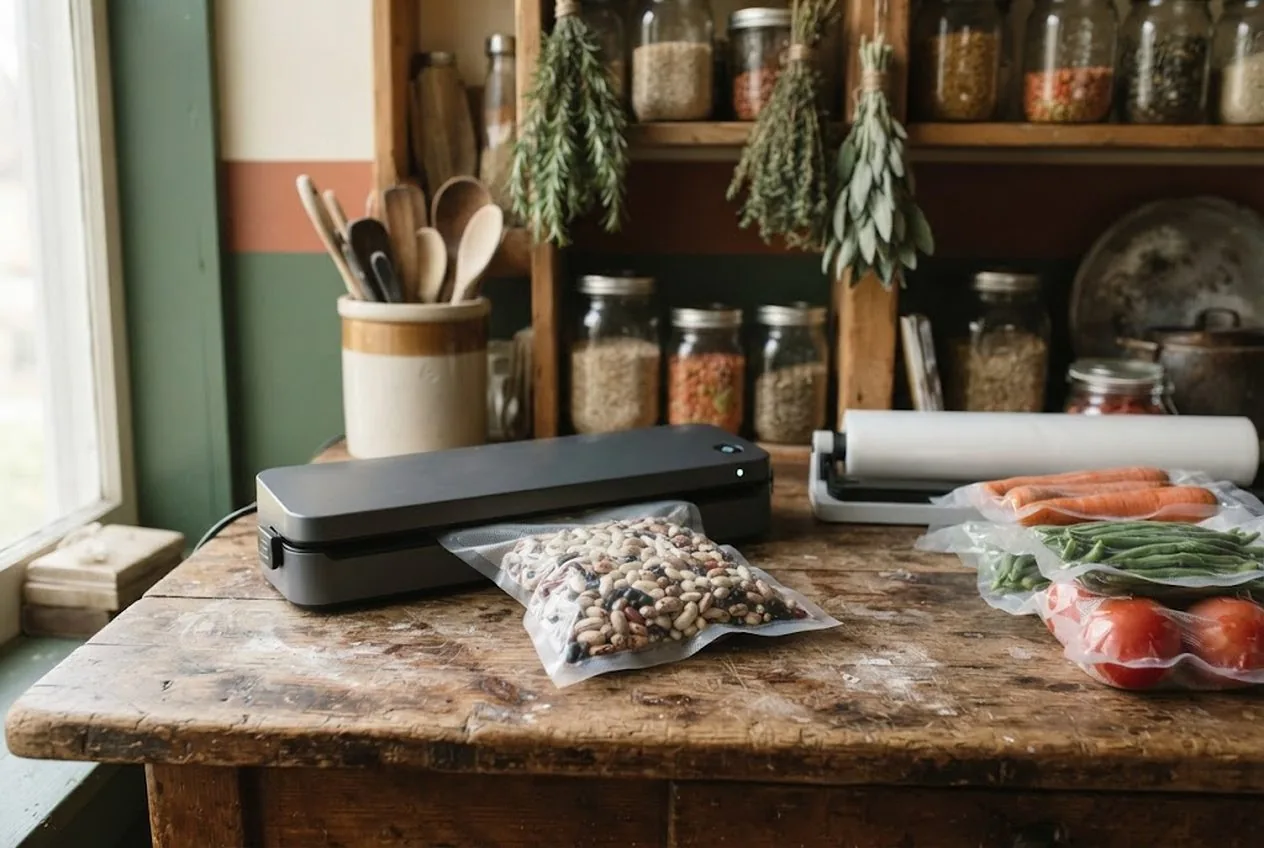
Is a vacuum sealer worth it for long-term food storage? Worth it — for one of the two jobs people buy it for. As the rotation layer of a resilient pantry, it earns its price fast: bulk meat stops burning in the freezer, warehouse-club buys stop rotting before you reach them, and the fall harvest you blanch and pack keeps for months instead of weeks. Where the honest answer is no is deep storage: standard vacuum bags aren’t a true oxygen barrier, so for the rice and beans you want to keep for decades, Mylar with oxygen absorbers wins, not a sealer (BYU Magazine). Below is the full verdict — where the machine earns its cost, where it doesn’t, and which model to buy if the answer for your kitchen is yes.
The machines themselves vary more than the near-identical photos suggest, and the differences that matter aren’t the ones on the box. What actually decides whether a sealer serves you for years: seal strength, the handful of controls that earn their keep, and the ongoing cost of bags.
Disclosure: the product links here are affiliate links, so we may earn a commission if you buy through them at no extra cost to you. This assessment is built from general vacuum-sealer features and food-preservation guidance (USU Extension) — not a hands-on test of any model.
The Worth-It Test: Four Things That Decide It
Ignore the marketing bullet points and judge a sealer on four things.
1. Seal strength. The heat bar that fuses the bag is the whole ballgame. A wide bar and a double seal (or an adjustable seal time) is what keeps a bag airtight months later. Weak, single seals are the number-one reason bags quietly fail in the freezer. This is the feature to prioritize above all.
2. A moist-food setting. Sealing marinated meat, brined vegetables, or anything with surface liquid is where cheap machines struggle — moisture at the seam prevents a clean fuse. A dedicated moist mode adjusts the vacuum and seal to handle it, and it’s the difference between success and a batch of failed seals if you preserve real food.
3. Pulse or manual control. Full auto-vacuum will crush delicate items — soft fruit, baked goods, chips. A pulse or manual mode lets you stop the vacuum by hand the moment the bag is snug, protecting the food. Underrated until the first time you flatten a batch of berries.
4. Bag cost and compatibility. This is the sleeper factor. A machine that only accepts proprietary bags can cost more over its life than a pricier one that takes universal rolls you cut to length. Over years of sealing, bag cost dwarfs the price of the machine — so a sealer that uses standard rolls is often the cheaper choice in the long run.
Living With It: Everyday Use
In daily use, a good sealer disappears into the routine. Lay the open end of a channeled bag across the vacuum channel, close the lid, and the machine pulls the air and seals in one motion. Meat gets portioned and dated, vegetables get blanched and packed, and the freezer stops eating your money in burned, forgotten packages.
A few habits make seals reliable:
- Keep the seal margin clean. Liquid, crumbs, or grease at the bag mouth ruins the fuse. Leave a wide, clean band and wipe the opening if needed.
- Pre-freeze wet foods briefly, or use the moist setting, so liquid doesn’t get pulled into the seam.
- Let the machine cool between many consecutive seals — the heat bar needs to recover its temperature to keep sealing cleanly.
- Double-seal anything long-term for insurance.
The Budget Pick: When Less Is Enough
Not everyone needs the mid-tier machine. If you seal only occasionally — a few bags a month, the odd bulk buy — a budget vacuum sealer does the core job perfectly well. You give up some seal strength, the moist and pulse modes, and often the standard-roll compatibility, but for light rotation those matter less. It’ll portion meat, stop freezer burn, and cut waste for a fraction of the price.
The line is honest and simple: occasional user, buy the budget model; regular preserver, spend up. Where a budget sealer bites is volume and wet foods — seal a real harvest with one and you’ll meet its limits fast.
Pros and Cons
Pros
- Strong double seal holds bags airtight for months in the freezer
- Moist-food setting handles marinated meat and blanched vegetables
- Pulse/manual mode protects delicate items from being crushed
- Standard-roll compatibility keeps long-term bag cost low
- Dramatically cuts freezer burn and food waste week to week
Cons
- Not a substitute for Mylar and oxygen absorbers on 25-year staples
- Needs embossed/channeled bags — smooth bags won't work
- Proprietary-bag machines get expensive over time
- Consecutive seals need cooldowns to stay reliable
Where the Answer Is No: Deep Storage
Be clear-eyed about the one thing a vacuum sealer is not: a deep-storage tool. Standard vacuum bags aren’t a true oxygen or light barrier, and Utah State University Extension notes vacuum packaging is not a food preservation method by itself (USU Extension), so dry staples sealed this way keep for a far shorter span, not decades. For rice, beans, and wheat you want to store for a generation, the right tool is Mylar with oxygen absorbers, which protect food from moisture, oxygen, and light (University of Arkansas Extension) — the two methods do different jobs, as our Mylar bags vs vacuum sealing comparison lays out in full, and our guide to packing a 5-gallon bucket for 25-year storage shows the deep-storage method start to finish.
Used for what it’s good at, though, a vacuum sealer is close to essential. It’s the rotation layer of a resilient pantry — the machine that stretches your freezer, tames bulk buys, and puts up the fall harvest you’ll actually eat this winter. Paired with pressure canning and cold storage, it rounds out the ways a self-reliant kitchen keeps food, as our off-grid food storage without a fridge or generator guide shows. And if you’re building that whole self-reliant food system rather than just one appliance shelf, the manual from the couple who spent 40 years off-grid is the bigger-picture companion.
The Bottom Line
So, is a vacuum sealer worth it for long-term food storage? Yes — as your rotation tool. For a real preserving pantry, buy the mid-tier sealer with a strong double seal, moist and pulse controls, and standard-roll compatibility; it seals reliably, handles wet foods, and keeps bag costs down over years of use. If you only seal occasionally, the budget model is the smart, honest choice. Either way, treat the sealer as your rotation layer and Mylar as your deep-storage layer, and your kitchen is covered on both timeframes.
Frequently Asked Questions
- Is a vacuum sealer worth it for long-term food storage?
- Worth it, with one honest boundary. For the rotation layer of a pantry — freezer meat, portioned bulk buys, blanched harvest vegetables, cheese, leftovers — a vacuum sealer pays for itself quickly in food that stops burning and rotting before you eat it. What it is not is a decades-long storage tool: standard vacuum bags aren't a true oxygen or light barrier, so for 25-year staples like rice and beans, Mylar with oxygen absorbers is the right tool. Buy the sealer for everyday rotation, Mylar for deep storage, and the two cover both timeframes.
- Can a vacuum sealer store food for 25 years like Mylar?
- No. A vacuum sealer is excellent for rotation storage — freezer meat, portioned bulk buys, cheese, and leftovers — but standard vacuum-seal plastic is not a true oxygen or light barrier, so air slowly seeps back over years. For decades-long storage of dry staples like rice and beans, Mylar bags with oxygen absorbers are the right tool. The two work together: the sealer handles everyday rotation, Mylar handles deep storage.
- Are expensive vacuum sealers worth it over budget models?
- For occasional use, a budget sealer is genuinely fine — it'll portion and freeze food perfectly well. The step up buys you stronger, more consistent seals, moist-food and pulse controls, faster cycles, and often the ability to use cheaper standard bag rolls, which saves money if you seal a lot. If you preserve a real harvest or buy in bulk every week, the better machine pays for itself in reliability and bag cost; if you seal a few bags a month, the budget model is the smarter buy.
- Why do vacuum-sealed bags sometimes lose their seal?
- Usually it's moisture or debris on the seal area. Liquid, crumbs, or grease along the bag opening stops the heat bar from fusing the plastic cleanly, so the seal fails days later. Leave a wide, clean margin at the bag mouth, freeze wet foods briefly before sealing or use the moist setting, and let the machine cool between many consecutive seals so the bar keeps enough heat. A double seal adds insurance on anything you're storing long-term.
- Do you need special bags for a vacuum sealer?
- You need embossed or channeled vacuum bags — the textured kind that let air escape as the machine pulls a vacuum. Smooth freezer or storage bags won't work with an external suction sealer. Beyond that, some machines lock you into proprietary bags while others accept universal rolls you cut to size. Universal rolls are usually cheaper per foot and let you make custom bag lengths, so a machine that takes standard rolls lowers your ongoing cost.
Sources & references
Before you go
The Renter's Homestead Pack
Self-reliance projects for the yard you don't own — container yields, a raised bed built to move with you, balcony preservation basics, and the landlord questions to ask first.
Free guide
The Renter's Homestead Pack
Self-reliance projects for the yard you don't own — container yields, a raised bed built to move with you, balcony preservation basics, and the landlord questions to ask first.