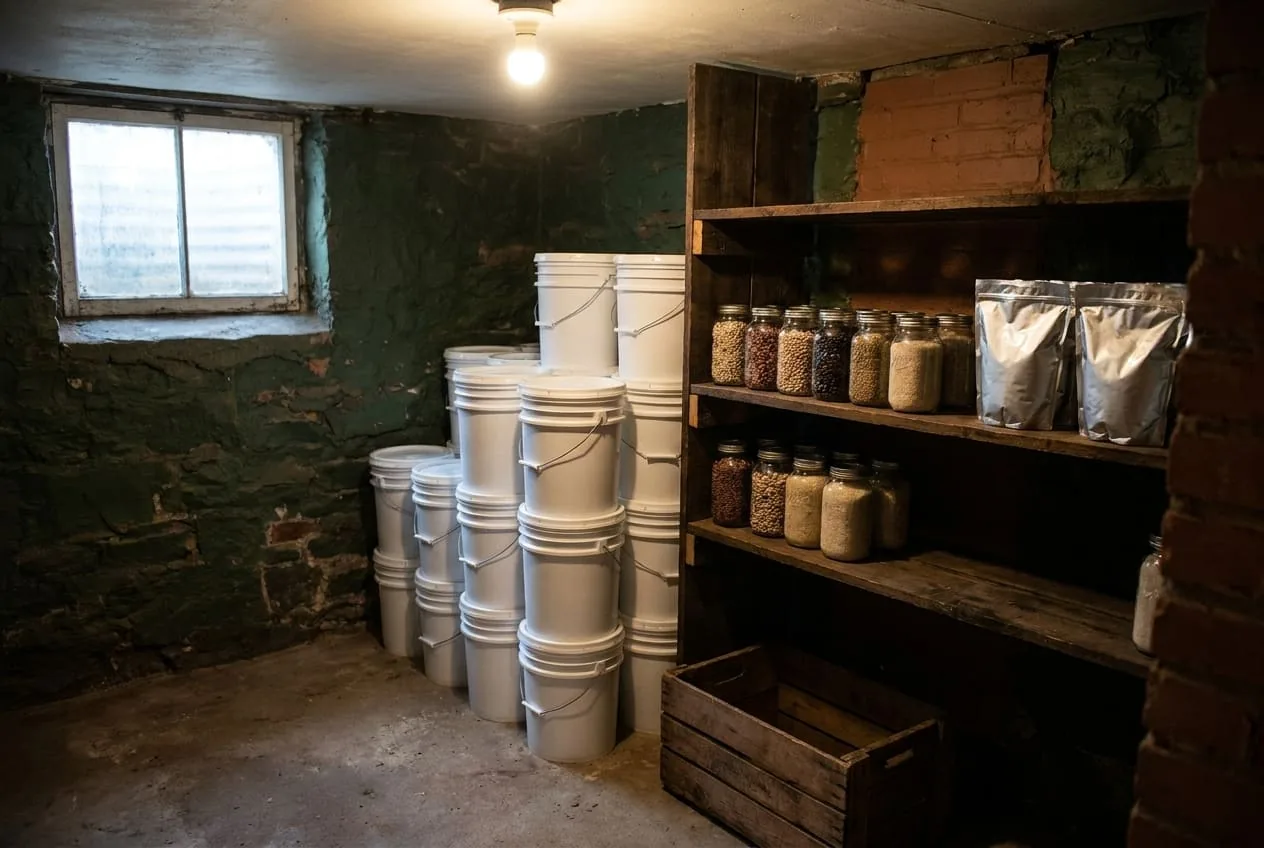
Most stockpiles don’t fail in a crisis. They fail years earlier, quietly, in a hot garage — and nobody notices until the buckets get opened. The frustrating part is that the most common long-term food storage mistakes have nothing to do with buying the wrong food. They’re about where and how it’s stored, and every one of them is cheap to fix today and expensive to discover later.
We analyzed guidance from the USDA and university extension food-storage research to identify the failure points below, and put rough dollar figures on each one. The numbers assume a modest 3-month stockpile for two people — roughly $600 of staples at mid-2026 prices. Scale up accordingly if you store more.
Short answer: Most stockpiles are ruined not by bad food choices but by storage conditions — heat, oxygen, pests, light, and skipped rotation. Fix the cheap half of the project first: keep food cool and dark, seal long-term staples in mylar and food-grade buckets, rotate FIFO, and keep a dated inventory.
What Do Long-Term Food Storage Mistakes Actually Cost You?
This table is our own estimate of the damage, mistake by mistake. “Loss” is the value of food that spoils, degrades to unusable, or gets eaten by something other than you before you’d realistically rotate it.
| # | Mistake | Typical loss on a $600 stockpile | Fix costs |
|---|---|---|---|
| 1 | Storing in a hot garage or attic | 30–70% of shelf life gone | $0 (move it) |
| 2 | Leaving food in original packaging | $100–300 to pests and oxygen | $40–80 |
| 3 | Never rotating (no FIFO) | $50–150 in quietly expired food | $0–10 |
| 4 | Storing only calories, no fats or variety | Hard to price — nutrition gap | $30–60 |
| 5 | Forgetting water entirely | Renders the rest moot | $20–100 |
| 6 | Rodent-permeable containers | $50–200 per incident | $30–60 |
| 7 | Light exposure | 10–30% quality loss | $0 (dark room) |
| 8 | No inventory or dates | Repeat losses from #3, forever | $0 (a notebook) |
Mistake 1: The Hot Garage
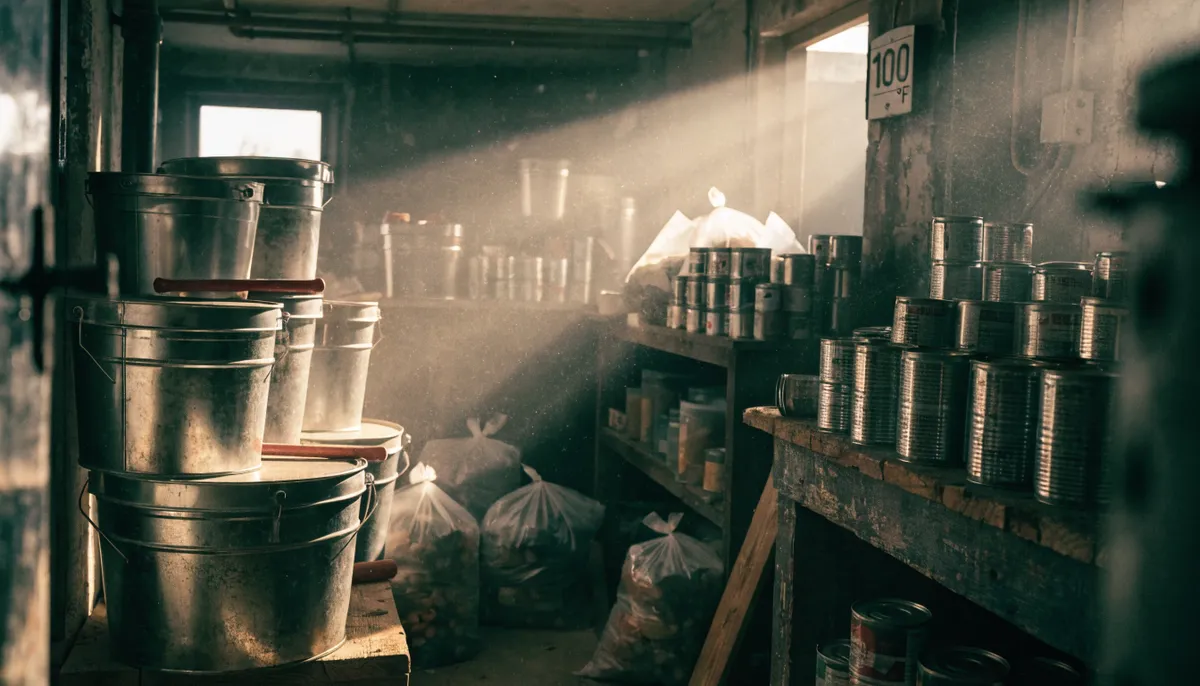
Temperature is the single biggest lever in food storage, and it’s the one most people get wrong on day one. University extension guidance is blunt about it: food stored in a garage averaging 90°F should be expected to last less than half as long as at room temperature (60–70°F), which in turn is less than half the storage life in cold storage at 40°F (USU Extension). White rice sealed in oxygen-free containers can store for up to 30 years in cooler storage areas but closer to 10 years at a constant 70°F (USU Extension), and it will go stale and bug-ridden far sooner in a garage that hits 100°F every summer.
The fix costs nothing: store food in the coolest, most temperature-stable spot you have — a basement, an interior closet, under beds. If the garage is genuinely your only option, accept shorter shelf lives and rotate faster.
Mistake 2: Trusting the Original Packaging
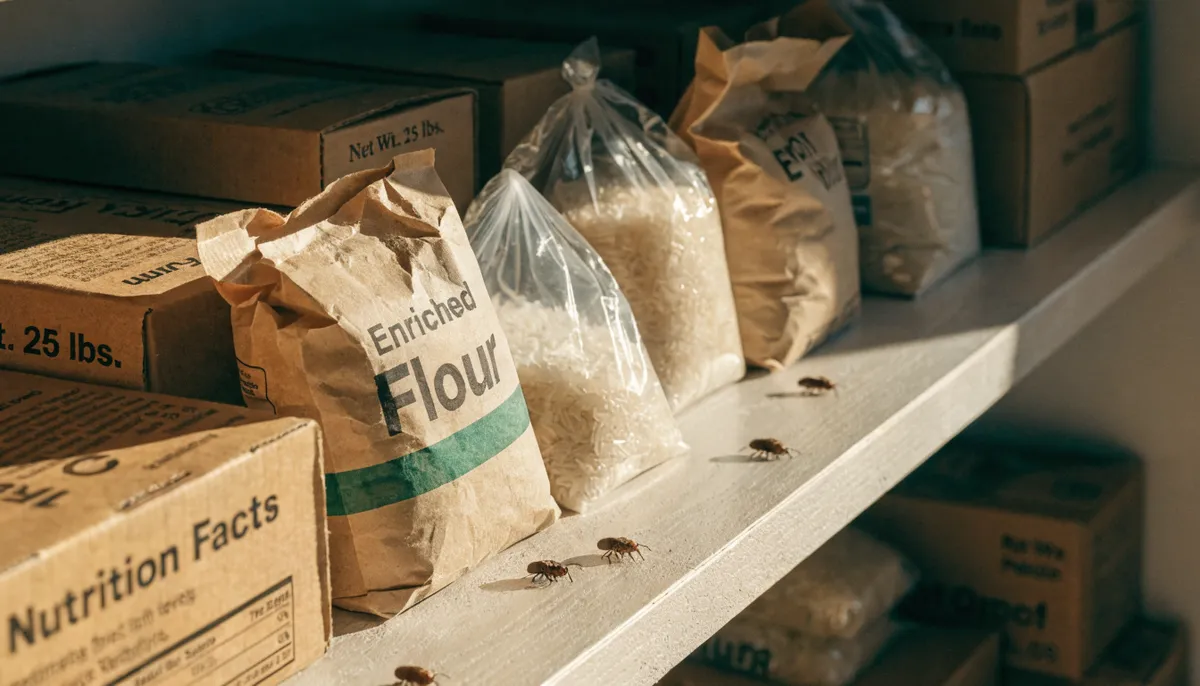
The paper, thin plastic, and cardboard food ships in was designed for weeks on a store shelf, not years in your basement. It’s permeable to oxygen and moisture and is no obstacle at all to insects — flour beetles and weevil eggs often arrive inside the package and simply hatch on your shelf.
For genuinely long-term staples (white rice, wheat, beans, oats), the standard method documented by extension programs is food-grade buckets with Mylar bags and oxygen absorbers (Amazon). A one-time investment in quality Mylar bags protects hundreds of dollars of food for decades; Brigham Young University research found wheat and rice still very acceptable after 30-plus years in low-oxygen packaging (BYU Magazine). Pair them with a vacuum sealer (Amazon) for anything you’ll rotate in and out more frequently — vacuum-sealed portions resist moisture and oxygen while staying resealable. For the methods our ancestors used before mylar existed — and which still work — see our guide to food preservation without electricity.
Mistake 3: No Rotation
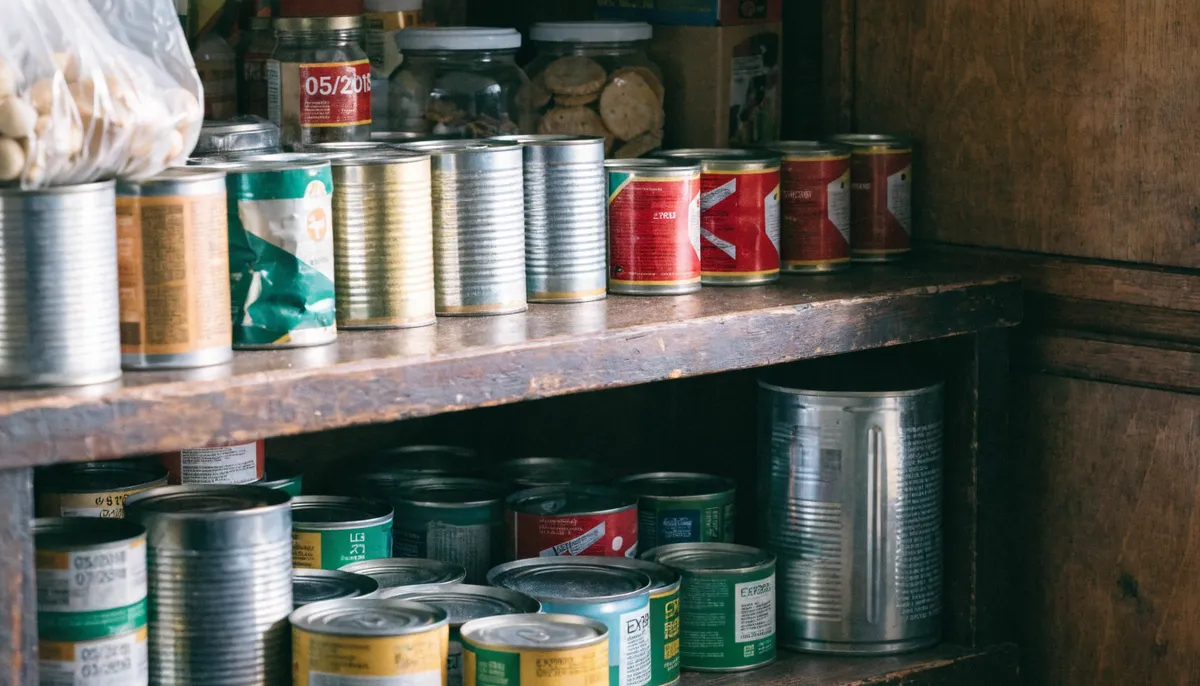
“Store what you eat, eat what you store” is repeated everywhere and practiced almost nowhere. A stockpile you never eat from is a stockpile with a hidden expiration problem: the canned goods at the back are always the oldest, and nobody knows by how much. First-in-first-out (FIFO) rotation — new purchases go to the back, meals come from the front — turns your stockpile into a slow-moving pantry that never expires as a unit.
Mistake 4: All Calories, No Fats
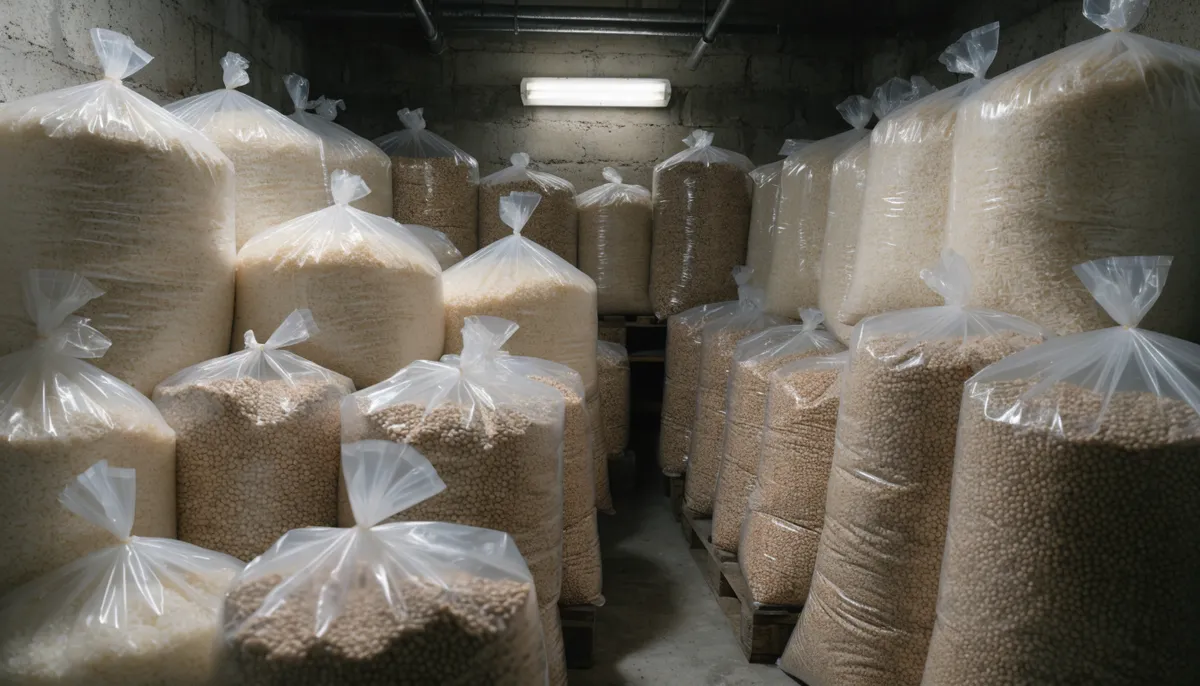
Rice-and-beans stockpiles look great on a calorie spreadsheet and fail in the kitchen. The catch: fats are both essential and the shortest-lived category in storage — cooking oils keep for far less time than grains, not decades — so they’re exactly what naive stockpiles omit. Store smaller amounts of oil and rotate them through normal cooking, and add variety (canned meats, fruit, seasonings) that makes the staples actually eatable, week after week.
Mistake 5: Forgetting Water
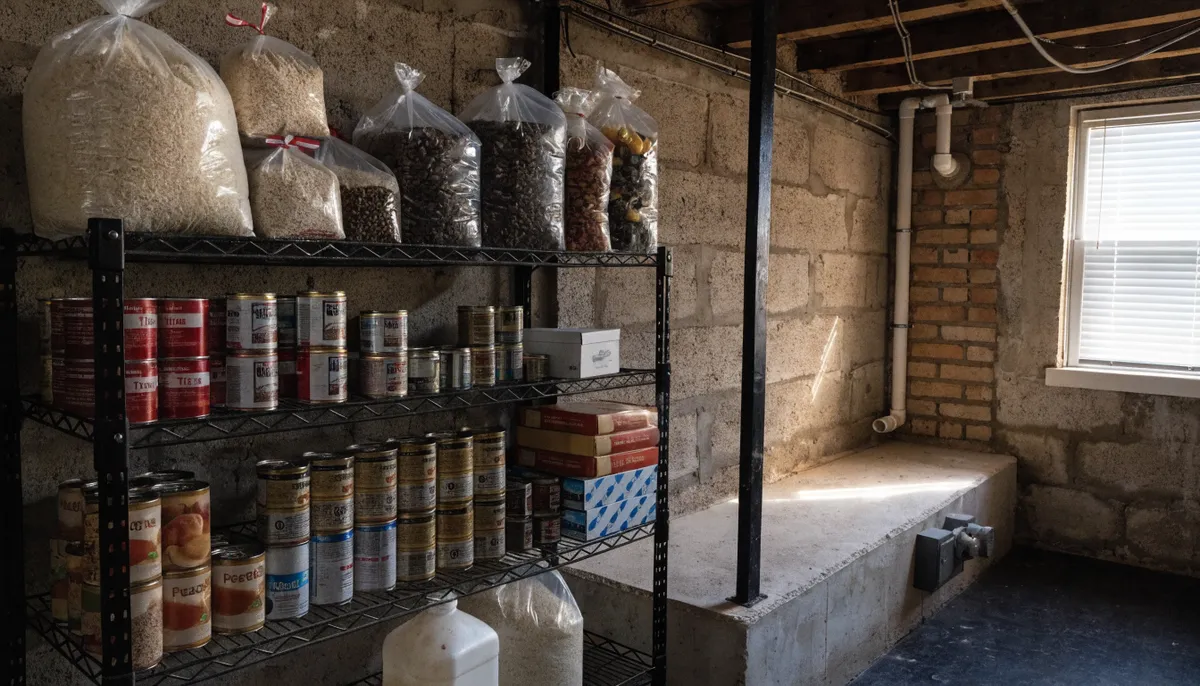
A pallet of perfectly stored rice and beans is useless without water to cook it — both staples require water, and plenty of it. Standard preparedness guidance is at least one gallon per person per day, for drinking and sanitation, as a floor (Ready.gov). You don’t need a cistern to fix this: a few cases of bottled water plus two 5-gallon containers covers the cooking needs of a two-week disruption for a couple.
Mistake 6: Containers Rodents Can Open
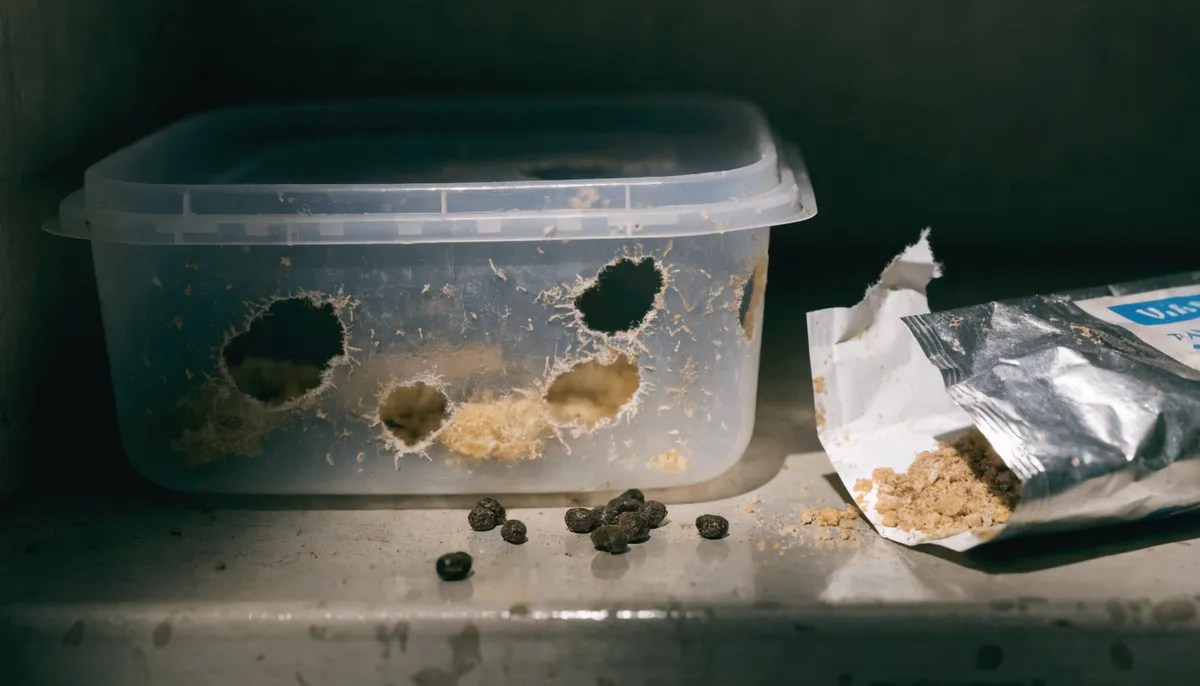
Mice chew through cardboard, paper, and thin plastic — including, given time, the thin bags inside “storage” totes. One nest in a shelf of original-packaging pasta can contaminate far more than the rodents actually eat, because droppings ruin everything nearby. Food-grade buckets with gamma seal lids (Amazon) are the practical standard: stackable, airtight, and thick enough that rodents don’t bother. Metal cans and wide-mouth mason jars (Amazon) work equally well for smaller quantities and double as your rotation jars for dried goods.
Mistake 7: Light on the Shelves
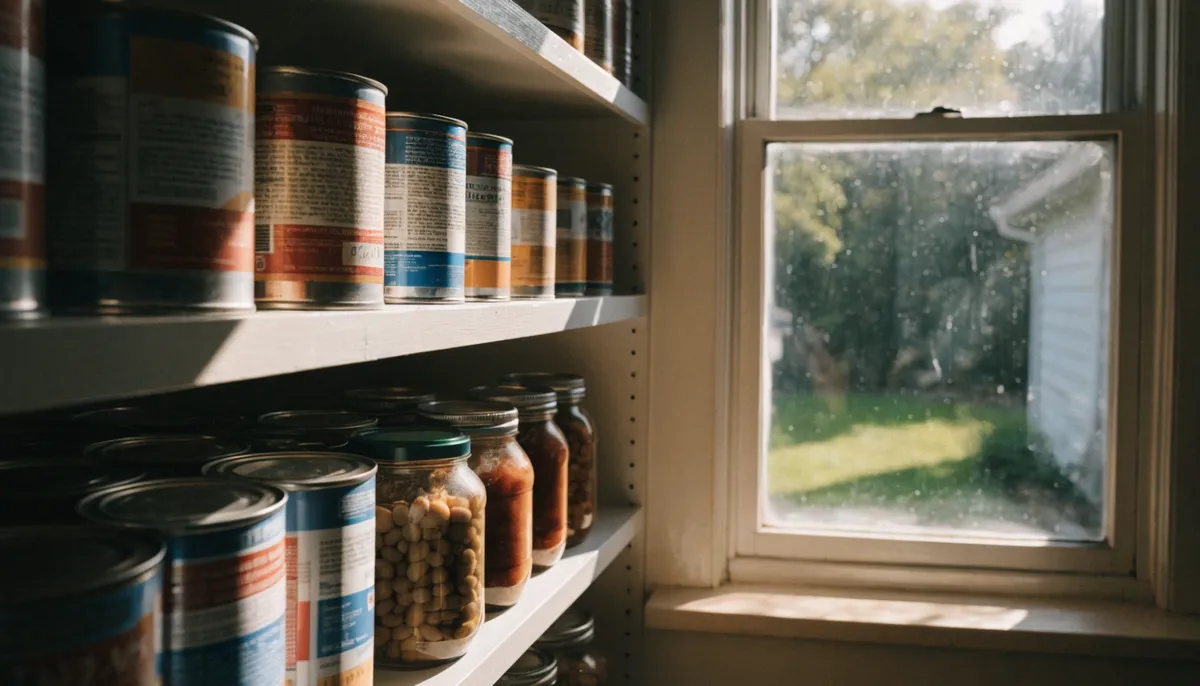
Light degrades fats, some vitamins, and the seals of clear containers’ contents faster than most people expect — it’s why quality flour and oil ship in opaque packaging. Clear jars on open shelves look wonderful on social media and cost you quality every month. Dark room, opaque containers, or a simple curtain over the shelving: pick one.
Mistake 8: No Inventory
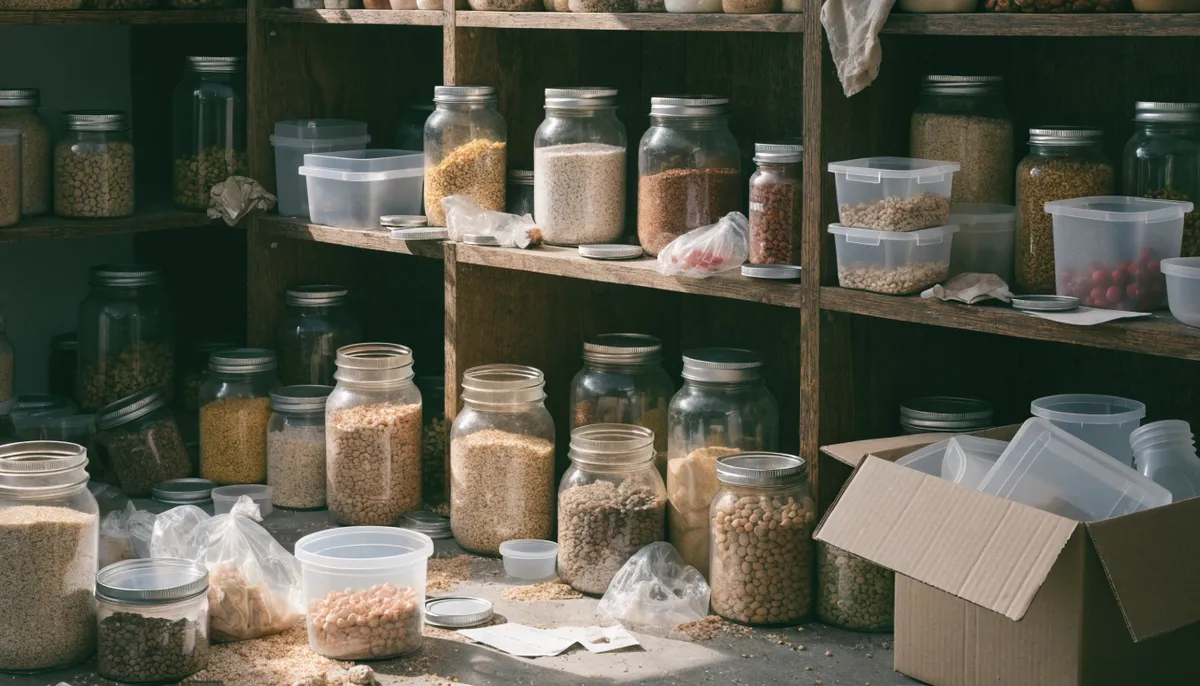
Every mistake above gets worse when you can’t answer two questions: what do I have, and when did I store it? A dated inventory — a notebook page or a spreadsheet — is the difference between rotating on schedule and discovering a 2019 bucket in 2026. Label every container with contents and date on the outside, where you can read it without moving anything.
What Do These Mistakes Have in Common?
Seven of these eight mistakes share a root cause: treating storage as a purchase instead of a system. The food is maybe half the project; temperature, packaging, rotation, and records are the other half, and they’re the cheap half. Fix the storage conditions first — before you buy another bucket of anything.
If you want a deeper library of storage methods — including pre-electricity techniques (like hardtack) that don’t depend on mylar and freezers at all — The Lost Superfoods is a book built around exactly that; we analyzed what it does and doesn’t deliver in our full Lost Superfoods review.
FAQ
What is the biggest mistake in long-term food storage? Heat. Storing food in a garage or attic can cut its usable life by more than half: food kept in a garage averaging 90°F should be expected to last less than half as long as at room temperature, per Utah State University Extension. It’s also the cheapest mistake to fix — moving your stockpile to a cool interior space costs nothing.
How long does rice actually last in storage? Stored cool, dry, and sealed with oxygen absorbers, white rice can remain usable for decades according to university extension research. In original packaging in a hot garage, expect far less before staleness and insects win. Brown rice is different: its oils go rancid in months, not decades, so it’s a rotation food, not a deep-storage food.
Do I really need mylar bags and oxygen absorbers? Only for the deep-storage layer — staples you intend to hold for 5+ years. A rotating three-month pantry of canned and jarred food you actually eat needs nothing more exotic than a cool, dark shelf and FIFO discipline. The mylar-and-buckets method is for wheat, white rice, beans, and oats you want to forget about safely.
How much water should I store with my food? One gallon per person per day is the standard planning floor — for drinking and sanitation, per Ready.gov. Two weeks is a sensible starting target for a household; note that rice and beans, the classic stockpile staples, both consume significant cooking water on top of drinking needs.
Frequently Asked Questions
- What is the biggest mistake in long-term food storage?
- Heat. Storing food in a hot garage or attic can cut usable shelf life by more than half: Utah State University Extension says food kept in a garage averaging 90°F should be expected to last less than half as long as at room temperature (60–70°F). It is also the cheapest mistake to fix — moving your stockpile to a cool interior space costs nothing.
- How long does white rice last in storage?
- Stored cool, dry, and sealed with oxygen absorbers, white rice can stay usable for decades according to university extension research. In original packaging in a hot garage, expect far less before staleness and insects win. Brown rice is different — its oils go rancid in months, so it is a rotation food, not a deep-storage food.
- Do I really need mylar bags and oxygen absorbers?
- Only for the deep-storage layer — staples like wheat, white rice, beans, and oats you intend to hold for five or more years. A rotating three-month pantry of canned and jarred food you actually eat needs nothing more exotic than a cool, dark shelf and FIFO discipline.
- How much water should I store with my food?
- One gallon per person per day, for drinking and sanitation, is the standard planning floor from Ready.gov. Remember that rice and beans, the classic stockpile staples, both require significant cooking water on top of drinking needs, so a few cases of bottled water plus two 5-gallon containers is a sensible starting target for a couple.
Sources & references
Before you go
The Renter's Homestead Pack
Self-reliance projects for the yard you don't own — container yields, a raised bed built to move with you, balcony preservation basics, and the landlord questions to ask first.
Free guide
The Renter's Homestead Pack
Self-reliance projects for the yard you don't own — container yields, a raised bed built to move with you, balcony preservation basics, and the landlord questions to ask first.