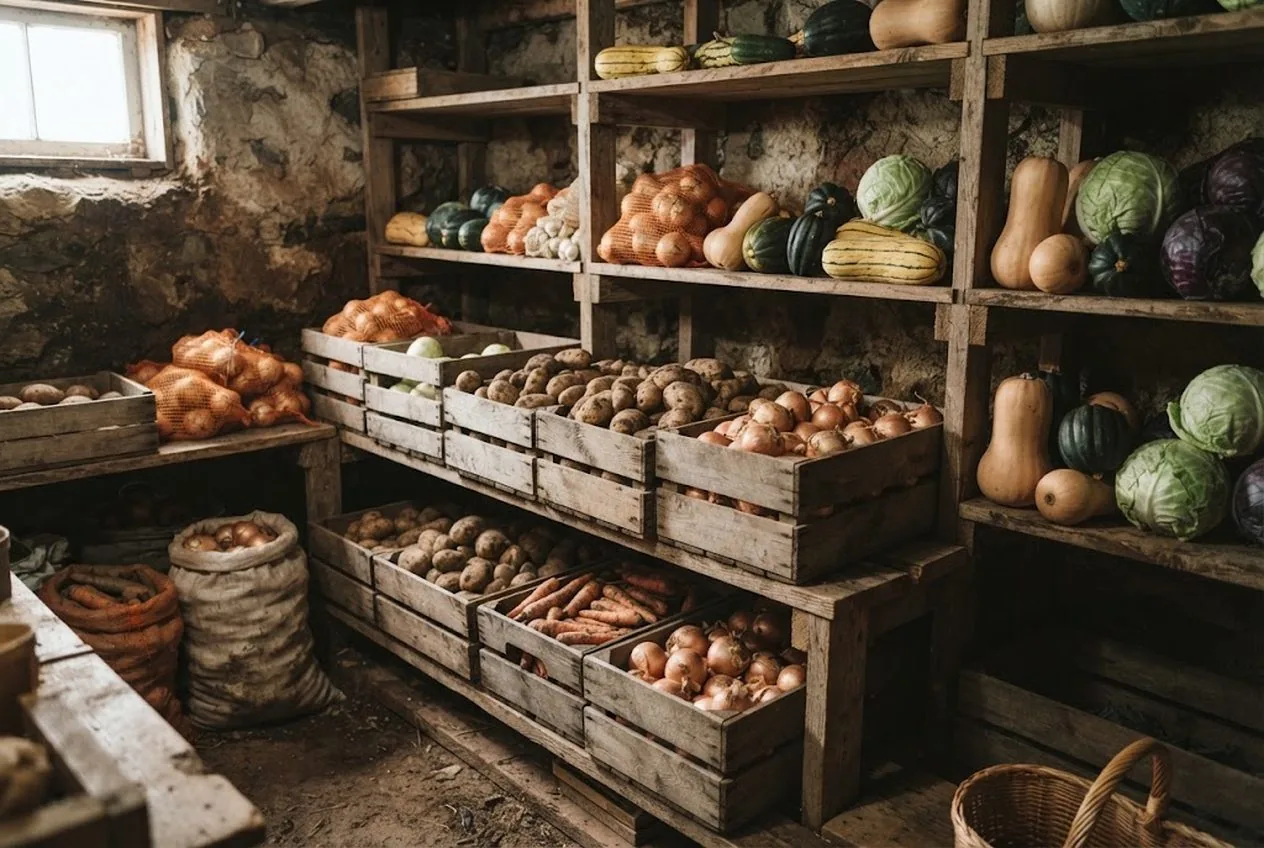
There’s a quiet magic to a well-stocked root cellar: no jars to seal, no freezer to fail, no power bill at all. You simply put the right crops into the right conditions and let the cold do the work, pulling carrots and squash and cabbage off the shelf in January that you grew in September. Fall is when that larder gets built, and the difference between a cellar that carries you to spring and one that turns to a slimy mess by December comes down to two things: choosing storage crops, and matching each to the conditions it wants.
This is the full list — the fall vegetables and fruits worth cellaring, what each one needs, and roughly how long it’ll keep. Get the pairings right and a root cellar becomes the lowest-effort, lowest-cost preservation method you own.
First, the Two Storage Zones
Almost every storage crop falls into one of two camps, and mixing them up is the fastest way to lose a harvest:
- Cold and moist (32–40°F, 90–95% humidity): most root vegetables and the cabbage family. They shrivel in dry air, so they want damp, cold storage.
- Cold-to-cool and dry (32–55°F, 50–75% humidity): onions, garlic, and winter squash (Nebraska Extension). Damp air rots them; they want it dry.
A real root cellar provides both — a cold, humid floor zone for roots and a cooler, drier shelf for alliums and squash. Keep this split in mind as you read the list, because it decides where each crop lives.
The Cold-and-Moist Crops
1. Potatoes
The cornerstone of any cellar. Cure them for about two weeks first (Iowa State suggests 50–60°F and high humidity) to heal cuts and thicken the skins, then store at about 40°F, dark, and humid. Light turns them green, so keep them covered. Keeps 4–6 months. Store them well away from apples, whose ethylene makes them sprout (Iowa State University Extension).
2. Carrots
One of the best keepers there is. Trim the tops, don’t wash them, and pack them in damp sand or sawdust in a crate to hold moisture — they’ll stay crisp for months. Near-freezing (32–35°F) and very humid is ideal (Iowa State University Extension). Keeps 4–6 months.
3. Beets
Treated just like carrots: tops trimmed, packed in damp sand, kept cold and moist. They’re forgiving and long-lasting, and the packing medium is what keeps them from going rubbery. Keeps 3–5 months (Nebraska Extension).
4. Turnips and Rutabagas
Humble, dense, and superb keepers. Cold and moist storage suits both; rutabagas in particular can go the whole winter. Their strong smell is a reason to keep them away from more delicate produce. Keeps 2–5 months.
5. Parsnips
Sweeter after cool fall weather, and happy in cold, moist storage. You can even leave them in the ground under several inches of straw and dig them in spring before regrowth starts (Iowa State University Extension). Keeps 3–4 months.
6. Celeriac and Winter Radishes
Less common but excellent cellar crops. Both want the same cold, damp conditions as carrots and beets, and both reward you with fresh, crisp eating deep into winter. Keeps 2–4 months (University of Maine Extension).
7. Cabbage
A storage champion that comes with a warning: its smell permeates everything. Store whole heads, cold and moist, ideally in a separate area or wrapped. Some cellarers hang them roots-and-all. Keeps 3–4 months for late cabbage (Nebraska Extension).
Roots stored in damp sand or sawdust do best in a sturdy, stackable crate that lets you layer the packing medium and inspect through the slats.
Disclosure: the product links here are affiliate links, so we may earn a commission if you buy through them at no extra cost to you. The storage figures here reflect long-standing university-extension and traditional root-cellaring guidance, not brand marketing.
The Cool-and-Dry Crops
8. Onions
Cure them first — two to three weeks in a warm, airy, dry spot until the necks are papery — then store cold (32–40°F) and dry (65–70% humidity) (Iowa State University Extension). Airflow is everything; a mesh bag or a slatted crate keeps them from sweating and rotting. Keeps 3–6 months depending on variety, with pungent storage onions outlasting sweet ones.
9. Garlic
Cure like onions, then store cool and dry. Well-cured garlic is one of the longest keepers in the cellar. Braid it or bag it in mesh, and never store it damp. Keeps 6–7 months.
10. Winter Squash and Pumpkins
Butternut, acorn, hubbard, and their kin want it cool and dry — not cold. Around 50–55°F is perfect; below about 50°F they suffer. Cure the skins hard (except acorn types, which shouldn’t be cured), leave a bit of stem on, and set them in a single layer so they don’t touch. Keeps 2–6 months by variety, with Hubbard types keeping longest (Iowa State University Extension).
11. Shallots
Handled exactly like onions — cured, then cool and dry with good airflow. Reliable long keepers for the kitchen. Keeps for months.
Alliums live or die on airflow. Cured onions, garlic, and shallots keep best in breathable mesh produce bags that stop them sweating in a pile.
The Fruit Worth Cellaring — Stored Apart
12. Apples and Pears
Firm, late-season apples store beautifully — cold (30–40°F) and humid (about 90%) — but they come with the cellar’s biggest rule: store them apart from your vegetables. Apples give off ethylene gas that makes potatoes sprout and other crops age faster, and they can pass their odor or flavor to more delicately flavored produce (Nebraska Extension). Keep them in their own crate, check often, and pull any that soften. Keeps up to about six months for good storage varieties. Firm pears store similarly and ripen when you bring them into the warm.
What Not to Bother Cellaring
Some fall produce simply isn’t built for cold, dark storage. Skip the root cellar and preserve these another way:
- Tomatoes, peppers, cucumbers, summer squash — too wet; they rot fast
- Leafy greens, lettuce — wilt within days
- Sweet corn, peas, green beans — lose quality almost immediately
These are the crops to can, ferment, freeze, or dehydrate instead — which is exactly why a self-reliant pantry uses several methods, not one. Our water-bath vs. pressure canning guide sorts out which canning method each crop needs, and cabbage headed for sauerkraut gets its own decision in the fermentation crock vs mason jar comparison.
Quick-Reference Storage Chart
| Crop | Zone | Ideal conditions | Keeps |
|---|---|---|---|
| Potatoes | Cold-moist | About 40°F, dark, humid | 4–6 months |
| Carrots, beets | Cold-moist | Near 32°F, packed in damp sand | 3–6 months |
| Turnips, rutabaga, parsnip | Cold-moist | 32–40°F, high humidity | 2–5 months |
| Cabbage | Cold-moist | 32–40°F, wrapped/separate | 3–4 months |
| Onions, shallots | Cool-dry | 32–40°F, dry, airflow | 3–6 months |
| Garlic | Cool-dry | Cool, dry, cured | 6–7 months |
| Winter squash | Cool-dry | 50–55°F, dry | 2–6 months |
| Apples (separate) | Cold-moist | 30–40°F, away from veg | Up to ~6 months |
Building the Cellar Around the List
The list is only half the job — the crops need the right room to live in. If you don’t have a cellar yet, our how to build a root cellar guide walks through creating those cold, humid, and cool-dry zones, even in a basement corner or a buried container. And because cold storage is just one layer of a resilient pantry, our off-grid food storage without a fridge or generator guide shows how cellaring works alongside canning, fermenting, and drying to carry a household clear through winter without leaning on the grid.
Plant the storage crops, cure what needs curing, sort each into its right zone, and a fall harvest becomes a winter’s worth of meals — no power required.
Frequently Asked Questions
- What temperature and humidity does a root cellar need?
- Most root-cellar crops want cold and damp: roughly 32–40°F with high humidity around 90–95%. That combination keeps roots firm and stops them shriveling. A smaller group — onions, garlic, and winter squash — wants cold-to-cool but dry, closer to 50–75% humidity, or they rot. That's why a good root cellar has two zones: a cold, moist area for roots and cabbage, and a cooler, drier shelf for alliums and squash.
- Can you store apples and potatoes together?
- No — keep them well apart. Apples give off ethylene gas as they ripen, and ethylene makes nearby potatoes sprout and can spoil other vegetables faster. Apples can also pass their odor or flavor to more delicately flavored produce. Store apples in their own crate away from your vegetables, and keep potatoes in a dark, separate spot. Good airflow between crops helps carry stray ethylene away.
- Which fall vegetables do not store well in a root cellar?
- Tender, high-moisture crops don't last: tomatoes, peppers, summer squash, cucumbers, and leafy greens all break down quickly in cold, damp storage. Sweet corn and peas lose quality within days. These are the crops to eat fresh, can, freeze, ferment, or dehydrate instead. The root cellar is for dense roots, cabbage-family heads, hard winter squash, and cured alliums — foods built to sit dormant for months.
- How do you store root vegetables without a root cellar?
- You can mimic root-cellar conditions in smaller spaces: an unheated basement corner, an attached garage that stays above freezing, a second refrigerator, or buried containers and insulated bins outdoors. Pack roots like carrots and beets in damp sand or sawdust inside a crate to hold humidity, keep onions and squash somewhere cool and dry, and monitor with a thermometer. The goal is cold, stable, and — for roots — humid.
- How long do root cellar vegetables actually keep?
- With the right conditions, many crops last the whole winter. Potatoes and carrots store for about four to six months, beets three to five, and late cabbage three to four; winter squash two to six months and onions one to eight months depending on variety; garlic six to seven months when well cured. Storage life depends heavily on curing, variety, and holding steady temperature and humidity — a crop that's cured properly and kept cold and stable can outlast one that's stored carelessly by months.
Sources & references
Before you go
The Renter's Homestead Pack
Self-reliance projects for the yard you don't own — container yields, a raised bed built to move with you, balcony preservation basics, and the landlord questions to ask first.
Free guide
The Renter's Homestead Pack
Self-reliance projects for the yard you don't own — container yields, a raised bed built to move with you, balcony preservation basics, and the landlord questions to ask first.