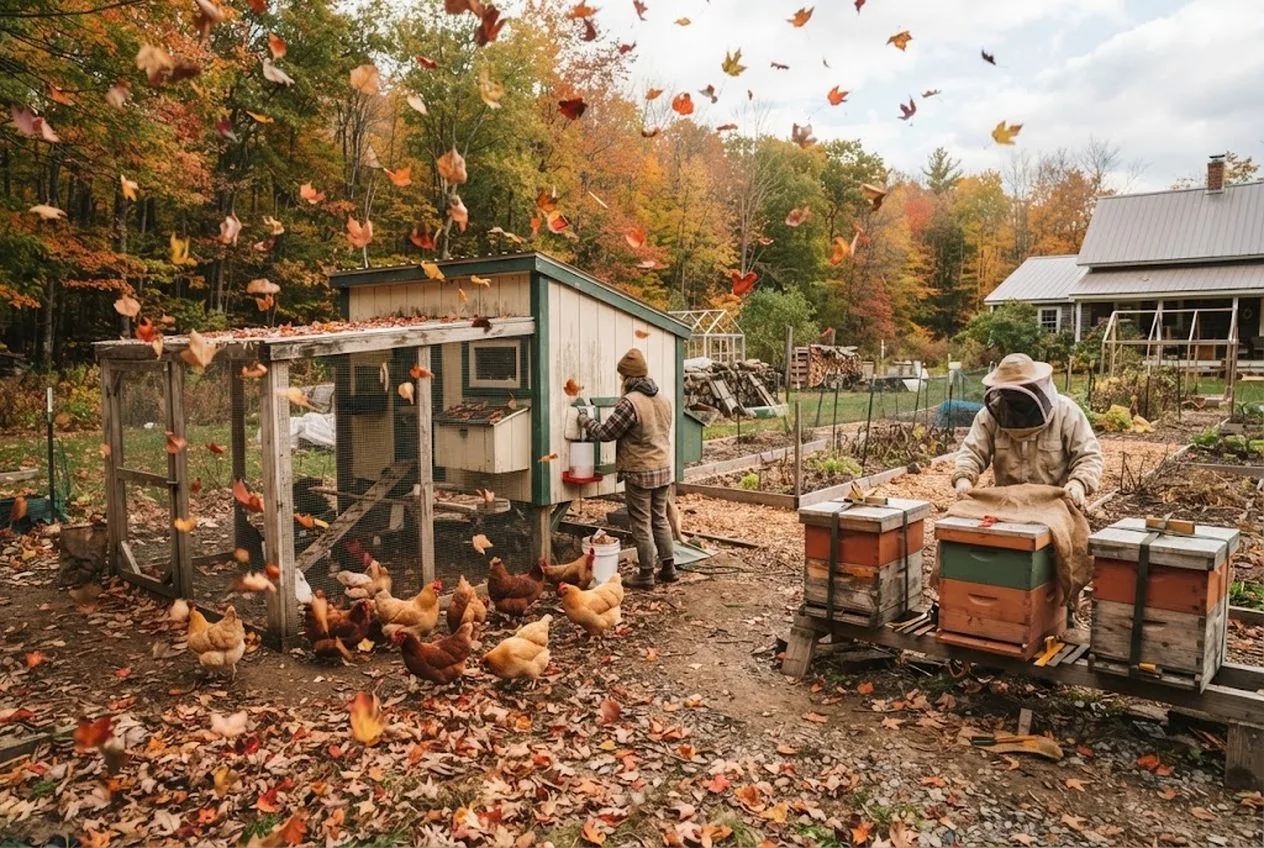
Fall on a backyard homestead is a countdown. The animals that seem carefree all summer — a flock scratching in the yard, hives humming in the corner — are running out of warm days to get ready for the one season that actually threatens them. And unlike the garden, which forgives a late start, chickens and bees have hard deadlines: treat the bees too late and the winter colony is already broken; leave the coop unready and the first freeze finds every weak point at once. This is the short list of jobs that get them through.
Short answer: the fall livestock work comes down to seven chores — refresh the coop, freeze-proof the water, ventilate for dryness, lock down predators, test and treat bees for varroa, feed the colony to winter weight, and do a final gear-and-hive check. The bee jobs are the time-sensitive ones, so start there. Below is each chore, why it matters, and how to knock it out before frost.
Disclosure: the product links here are affiliate links, so we may earn a commission if you buy through them at no extra cost to you. This checklist reflects standard cold-climate poultry and beekeeping practice rather than one brand’s catalog.
1. Deep-Clean and Refresh the Coop
Winter is the one season the flock is stuck inside for long stretches, so start by giving the coop a genuine reset. Clear out the summer’s built-up droppings, knock down cobwebs and dust, and check for mites or lice in the cracks while you’re in there — pests are easier to beat now than in a sealed winter coop. Then look hard at the nesting boxes: cold, dark days can slow laying, and clean, dry, well-placed boxes help keep the eggs coming and clean through winter. Damaged or too-few boxes are worth replacing before the birds are cooped up with them.
2. Freeze-Proof the Water
If you do nothing else on this list, do this one. Hens are more sensitive to a lack of water than a lack of feed, and a few hours without it will probably cut egg production (UF/IFAS Extension) — so a frozen waterer is far more than an inconvenience. In a real freeze an open fount can ice over within hours, which without a fix means hauling warm water out two or three times a day all winter. A heated waterer ends that in a single move, keeping water liquid through the coldest nights automatically.
Set it up before the first hard freeze so you can confirm it holds temperature while the stakes are low. Our heated chicken waterer review breaks down the power draw and what to check before you buy.
3. Ventilate and Bed Down the Coop for Dryness
Here’s the fact that saves flocks: in a coop, damp causes frostbite, not cold. Moisture raises ammonia levels and makes it harder for birds to stay warm, since damp air feels much colder than dry air (University of Maryland Extension), and a dozen birds breathing overnight fill a sealed coop with moisture that condenses on combs and toes — so the goal is a dry coop, not an airtight one. Add vents high near the roofline so moist air escapes above the birds, close the low drafts that would chill the roost, and lay down a thick deep-litter floor of pine shavings or straw that insulates and gently composts for warmth. The classic mistake is sealing everything up to trap heat, which traps humidity instead and causes the frostbite you were trying to avoid.
This is the heart of coop winterizing, and our full guide to winterizing a chicken coop before the first frost walks the ventilation-and-bedding balance in detail.
4. Lock Down Predator Protection
Fall is hungry season, and predators that ignored the coop all summer will test it hard as natural food gets scarce. Walk the coop and run and cover any gap a weasel could squeeze through with hardware cloth — not chicken wire. Least weasels can get through holes as small as a quarter inch, which typically gets them through chicken wire (eXtension). Then settle the nightly lock-up, the one chore you can never safely skip: the pop-door must be shut and latched after every bird roosts. On dark winter evenings that’s exactly the trip most likely to get put off, which is why many keepers automate it. We weigh the trade-offs in automatic coop door vs manual for winter.
5. Test and Treat the Bees for Varroa
Now the time-sensitive side. Varroa mites are one of the greatest threats to honey bee health (Honey Bee Health Coalition), and their damage falls on the winter bees — the long-lived bees raised in fall that must carry the hive to spring. Treat too late and those bees are already compromised. So test your mite load now with an alcohol wash, and if the count is at or above threshold, treat promptly with a control matched to your fall temperatures and whether brood is present. A low mite population as the colony starts shrinking for winter is critical to its survival, no matter how mild or harsh the season turns out.
This is the single most important fall bee chore, and getting the sequence and timing right is everything — our step-by-step on treating varroa mites and winterizing your hive covers the wash, the treatment window, and what comes after.
6. Feed the Colony to Winter Weight — and Gear Up
Bees can’t forage in the cold, so their winter survival is decided by the stores in the combs right now. Heft the hive or weigh it, and feed heavy 2:1 sugar syrup through fall until the colony hits the winter weight your region needs — then stop once it’s too cold for the bees to cure and cap it; Illinois Extension’s cutoff is when temperatures fall below 50°F (University of Illinois Extension). Every one of these fall hive visits is easier and calmer when you’re properly suited, and fall is a good moment to check your gear for gaps and wear before the busy spring season.
If you’re newer to bees, our backyard beekeeping starter checklist lays out the full gear list in the order to buy and use it.
7. Winterize the Hive and Do a Final Walk-Through
The last bee job protects everything you just did. Fit an entrance reducer and a mouse guard so the shrinking winter cluster can defend the hive and mice, which crawl in once the bees cluster away from the entrance, can’t move in to nest (Cornell CALS). Then set the hive up to shed moisture — the real winter killer: insulate the top so warm, damp air doesn’t condense and drip on the cluster, add an upper vent to let humidity escape, secure the lid against wind, and tilt the hive slightly forward so condensation runs out the front.
Finish with a walk-through of the whole operation. Fix roof leaks, bank the coop’s windward wall, confirm the waterer and door work as intended, and make sure both the flock and the hives are dry, fed, and secure. A dry, low-mite, well-fed setup is one that carries itself through winter.
The Takeaway
The animals give you a narrow window in fall, and the jobs sort neatly by urgency. The bee work is the deadline-driven half — test and treat for varroa before the winter bees are raised, and feed the colony up while it can still cure syrup. The chicken work is the quicker weekend half — freeze-proof the water, ventilate for dryness, deep-litter the floor, and lock down predators. Work the list before the first hard frost and both your flock and your hives walk into winter ready, instead of you scrambling to fix things in the cold. Start with the coop using our guide to winterizing a chicken coop before the first frost, then move to the hive — the two projects that decide how well everything else holds up.
Frequently Asked Questions
- When should I start winterizing my chickens and bees?
- Early fall, well before your first hard frost. The livestock jobs that matter most — treating bees for varroa and feeding them up to winter weight, and getting the coop dry and freeze-proof — all have to happen while it's still warm enough to work. Varroa treatment needs to land early, as the colony starts rearing its overwintering bees, and bees can only be fed syrup until temperatures fall below about 50°F, so waiting until the first freeze means you've already missed the window on the two most important tasks.
- What's the single most important fall chore for a backyard flock?
- Sorting out freeze-proof water. Chickens handle cold far better than most keepers expect, but hens are more sensitive to a lack of water than a lack of feed, and even several hours without it will probably cut egg production. A heated waterer keeps the flock's water liquid automatically through the coldest nights, which protects their health and takes the most tedious winter chore off your plate. Ventilation and predator-proofing matter too, but water is the one with the fastest consequences if you skip it.
- Do I really need to treat bees for mites in the fall specifically?
- Yes, and the timing is the whole point. Varroa mites damage the long-lived winter bees that must carry the colony through to spring, so treating in fall — before those bees are raised — is what gets them into a low-mite hive. If mite numbers are high as the colony shrinks for winter, it may not be healthy enough to rear bees that survive until spring, no matter how well it's fed or wrapped. Test with an alcohol wash, then treat on time if your count warrants it.
- How do I keep the coop from getting frostbite-cold without sealing it up?
- Ventilate high and keep drafts low. Frostbite in a coop is driven by damp, not dry cold — moisture makes it harder for birds to stay warm and raises ammonia — so you want moist air to escape through vents near the roofline while closing off the low, roost-level gaps that would chill the birds. A thick deep-litter floor adds insulation and gentle warmth. The mistake to avoid is sealing the coop airtight to trap heat — that traps moisture instead and causes the very frostbite you're trying to prevent.
- Can I get all of this done in one weekend?
- The chicken side, mostly yes — water, bedding, ventilation, and predator checks are an afternoon or two. The bee side runs on the colony's schedule rather than yours: mite monitoring and treatment take days to weeks depending on the product, and feeding continues until the hive hits winter weight. So start the bee jobs early and treat the chicken chores as the quicker weekend project layered on top.
Sources & references
- UF/IFAS Extension, Factors affecting egg production in backyard chicken flocks (opens in new tab)
- University of Maryland Extension, Winter weather and small flocks (FS-1133) (opens in new tab)
- eXtension, Predator management for small and backyard poultry flocks (opens in new tab)
- Honey Bee Health Coalition, Tools for Varroa Management (9th edition) (opens in new tab)
- University of Illinois Extension, Prepare your bees for winter (opens in new tab)
- Cornell CALS Pollinator Network, Overwintering (opens in new tab)
Before you go
The Renter's Homestead Pack
Self-reliance projects for the yard you don't own — container yields, a raised bed built to move with you, balcony preservation basics, and the landlord questions to ask first.
Free guide
The Renter's Homestead Pack
Self-reliance projects for the yard you don't own — container yields, a raised bed built to move with you, balcony preservation basics, and the landlord questions to ask first.