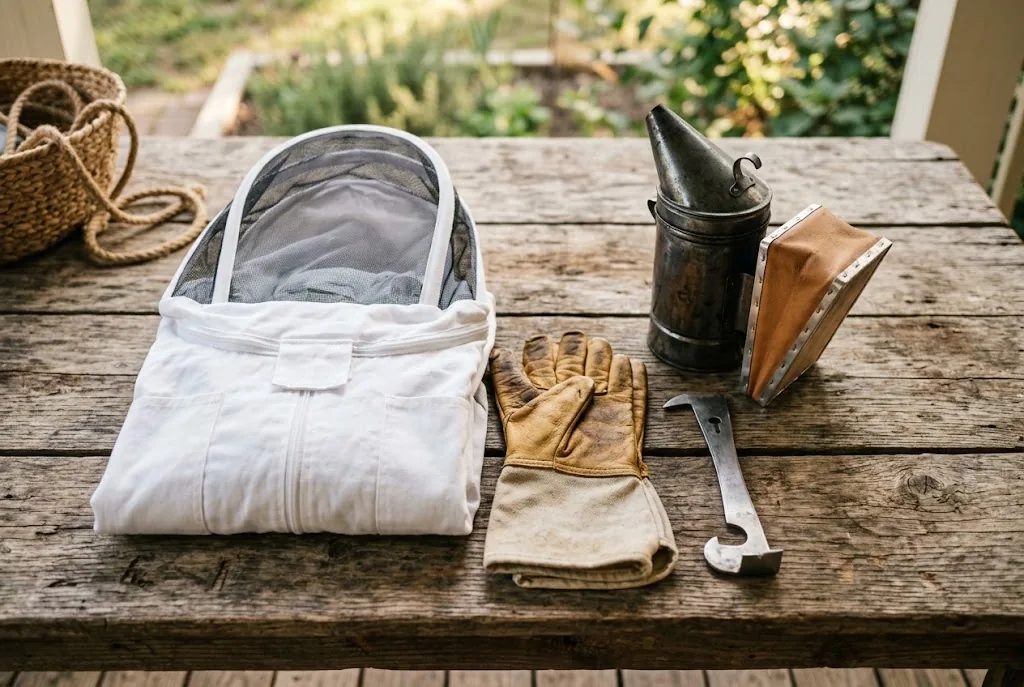
Beekeeping has a way of turning a simple hobby into a confusing shopping list — every catalog and forum pushes a different “must-have,” and beginners end up either over-buying gadgets or arriving on bee-delivery day missing the one tool they actually need. This checklist cuts through it. It is the gear and the first-year tasks that genuinely matter, in the order you should tackle them.
Short answer: you need a hive, protective gear, and a hive tool to start, plus a plan to order bees in late winter and inspect through the season. Everything else is optional. Work down this list and you will arrive at spring set up properly, without the gadget clutter.
Disclosure: the links here are affiliate links, and this checklist reflects standard beginner beekeeping practice rather than one brand’s catalog. If you want the deeper how-and-why, pair this with our backyard beekeeping beginner’s guide and the under-$50 budget setup.
The Equipment (Buy and Assemble Over Winter)
1. A Langstroth hive
The Langstroth is the standard and most popular hive in many parts of the world (UNH Cooperative Extension) for good reason: parts are interchangeable, every guide assumes it, and its stacked boxes of removable frames make inspection and honey harvest straightforward. Start here; the exotic hive styles are a second-year curiosity.
Buy it early and assemble it during the off-season. A hive built, painted, and cured ahead of time means bee-delivery day is calm instead of chaotic.
2. A full-body suit (do not skimp here)
This is the single item worth spending on. A well-sealed suit is what lets a nervous first-year keeper open the hive calmly instead of rushing, flinching, and skipping inspections — the exact behavior that gets colonies neglected.
You can graduate to a lighter jacket-and-veil later once the bees no longer rattle you. In year one, full coverage is what keeps you actually opening the hive.
3. A J-hook hive tool
The most-used tool in beekeeping. Bees glue everything together with propolis, and a hive tool is what lets you pry apart boxes and lift frames without crushing bees or wrecking comb.
It is inexpensive enough to buy two, and you will be glad you did the first time one disappears into the tall grass.
4. A smoker
A smoker keeps the colony calm, making inspections smoother and safer (UNH Cooperative Extension). It is standard equipment; learn to keep it lit with a slow-burning fuel like pine needles or burlap before you need it in front of an open hive.
5. A feeder
New colonies, especially packages, need feeding with sugar syrup to get established; Penn State Extension notes a package colony lacks honey, pollen, and comb (Penn State Extension). A simple entrance or top feeder gets your bees through the critical first weeks when they have no stores of their own.
The Livestock (Order in Late Winter)
6. Your bees — package or nuc
You cannot buy bees the week you want them. Package bees and nucleus colonies (nucs) are ordered in late winter for spring delivery, and popular suppliers can sell out. A nuc — a small established colony on frames — gives beginners an easier start than a package, because it arrives already functioning with a laying queen and existing stores, so it needs less feeding. Get on a supplier’s list, or connect with a local beekeeping club, before the season’s stock is gone.
7. Two hives, if you can swing it
Start with two colonies rather than one if the budget allows. A lone hive gives you nothing to compare against, so you cannot tell a calm colony from a failing one. Two hives let you judge them against each other, move a frame of brood from the strong one to help the weak one, and survive a total loss without being knocked out of beekeeping. One is fine to start; two is better.
The First-Year Tasks (Do Through the Season)
8. Inspect on a schedule
Open the hive at least every two weeks in the active season, the typical check interval for swarm prevention per Penn State Extension, to confirm the queen is laying, the colony has room, and there is no disease or queen-cell surprise brewing. Regular, unhurried inspections are the whole job — which is exactly why the suit that makes them painless matters so much.
9. Monitor for Varroa mites
Penn State Extension calls Varroa mites the greatest challenge in modern beekeeping. Monitor mite levels through the season and treat when counts warrant it; USDA bee researchers suggest checking monthly in summer and as often as every three weeks in fall, because colonies with high mite loads then are more likely to crash over winter (USDA ARS). A first-year colony lost to unmonitored mites is a common beginner heartbreak, and it is avoidable.
10. Leave them enough honey for winter
Resist the urge to harvest heavily in year one. A first-year colony needs to keep its stores to survive winter; colonies with large populations and honey stores have the best chance of making it (Penn State Extension). The honey is your reward in year two. Overharvesting a young hive is a classic rookie mistake that starves the colony before spring.
The Takeaway
The real starter kit is short: a Langstroth hive, a proper suit, and a hive tool, plus bees ordered in time and the discipline to inspect, monitor mites, and leave enough honey. Tick those off and skip the gadget aisle — you will be a calmer, more competent first-year beekeeper than someone who bought twice as much and understood half of it. For the full picture of what to expect through year one, read our beginner’s guide.
Frequently Asked Questions
- What's the one piece of beekeeping equipment I shouldn't skimp on?
- Your protective gear. A hive tool or a feeder can be cheap or improvised, but a poorly fitting veil or a suit with gaps turns a routine inspection into a painful ordeal that makes you avoid the hive — which is how colonies get neglected. A well-sealed full-body suit and a secure veil are what let a nervous beginner actually open the hive calmly, so buy those properly even on a tight budget.
- When should I buy my equipment and order bees?
- Buy and assemble your hive and gear over winter, and order bees in late winter for spring delivery. Package bees and nucs can sell out before spring pickup, so the calendar, not your readiness, sets the deadline. Having the hive built and painted before the bees arrive means you're set up calmly rather than scrambling on delivery day.
- Do I need a full suit, or will a veil and gloves do?
- Either can work, but a full-body suit is the confidence choice for a first-year beekeeper. A veil-and-gloves combo is lighter and cheaper and plenty for experienced keepers doing quick checks, but a full suit's complete coverage removes the fear that makes beginners rush or skip inspections. Many keepers start in a full suit and downsize to a jacket-and-veil once they're comfortable.
- How many hives should a beginner start with?
- Two, if you can. A single hive gives you nothing to compare against — you can't tell if a quiet colony is calm or failing. Two hives let you judge one against the other, share resources like a frame of brood between them, and survive losing one without being out of beekeeping entirely. Start with two if budget allows; one is fine if it doesn't.
Sources & references
Before you go
The Renter's Homestead Pack
Self-reliance projects for the yard you don't own — container yields, a raised bed built to move with you, balcony preservation basics, and the landlord questions to ask first.
Free guide
The Renter's Homestead Pack
Self-reliance projects for the yard you don't own — container yields, a raised bed built to move with you, balcony preservation basics, and the landlord questions to ask first.