Everyone quotes the same number: one gallon of water per person per day. It is a fine starting point, but it was set for ordinary conditions — and a heat wave is the opposite of ordinary. When the temperature spikes and the grid strains, the amount of water you actually need goes up, right when a broken main or a blackout that kills your well pump could cut off the supply.
So here is the direct answer. For a heat wave, plan on two gallons per person per day — double the usual rule. Roughly one gallon for drinking (your body sweats out far more in extreme heat) and one for cooking and basic hygiene. Store at least a 3-day supply, and work toward two weeks for real resilience (American Red Cross). For a family of four over two weeks in a heat wave, that is about 112 gallons. Below is why the number climbs, how to store that much safely, and how to keep it fresh.
Water is the one preparedness item with no substitute and the shortest survival clock — you can go weeks without food and only days without water, less in extreme heat. It deserves to be the first thing you get right.
Why the One-Gallon Rule Doubles in the Heat
The standard planning figure of one gallon per person per day assumes moderate temperatures and normal activity. A heat wave breaks both assumptions. In extreme heat, and especially with any exertion, the body loses far more fluid through sweat, and hot environments can double the amount of water a person needs (Southern Nevada Health District). Add a blackout with no air conditioning, and you are sweating around the clock.
That means the drinking portion of your supply — normally at least two quarts, or half a gallon, per person per day — needs to be larger, which is why the total climbs toward two gallons. The people most at risk of dehydration are the ones least able to flag it: young children, older adults, anyone with a health condition, and pets. Plan for the whole household at the higher rate, not the average.
How Much to Store, by Household
Use this as your target. The heat-wave column is the one that matters when the forecast turns red.
| Household | 3-day standard | 3-day heat wave | 2-week heat wave |
|---|---|---|---|
| 1 person | 3 gallons | 6 gallons | 28 gallons |
| 2 people | 6 gallons | 12 gallons | 56 gallons |
| Family of 4 | 12 gallons | 24 gallons | 112 gallons |
Do not let the two-week numbers stop you from starting. Build in stages: get the 3-day heat-wave supply in place first — that alone covers the most common outage — then expand toward two weeks as budget and space allow. A partial supply you actually have beats a perfect plan you never start.
Storing It Safely
Volume is only half the job; the water has to still be safe when you need it.
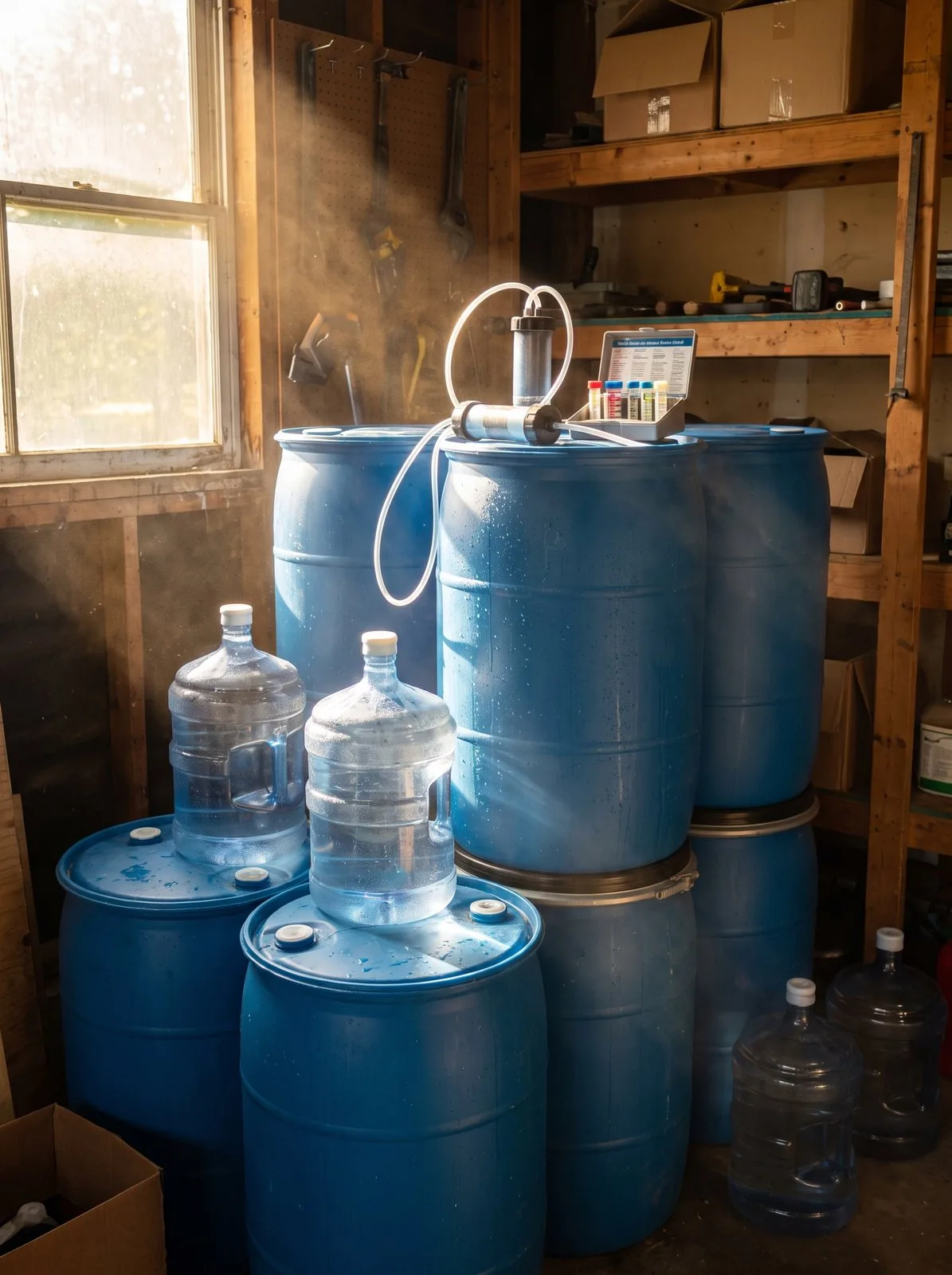
- Use food-grade containers only. Purpose-made 5-gallon food-grade containers (Amazon) stack neatly and, at about 41 pounds full, stay carryable. For bulk storage, a 50-gallon food-grade container (Amazon) holds a big share of a family supply in one footprint. Skip milk jugs and anything that held non-food substances.
- Sanitize before filling. Wash used containers, then rinse with a bleach solution (about one teaspoon of unscented bleach per quart of water), and air dry (Ohio State University).
- Fill from a cold tap and seal. Sealed in a clean food-grade container, tap water should be replaced every six months.
- Store cool, dark, and separated. Keep containers out of sunlight and away from gasoline, pesticides, and other toxic substances (Ohio State University).
Our full how to store emergency water at home guide walks through container choice, sanitizing ratios, and setup in detail, and the backyard water and blackout starter gear list rounds up the containers and filters worth buying first.
Rotate So It Stays Fresh
Stored water is not “hands-off.” Tap water in food-grade containers should be replaced every six months (Ohio State University). Label every container with the fill date, and put a recurring reminder on the calendar. Rotating water is easy: use the old water for the garden or cleaning, rinse, refill from the tap, relabel, and return it to storage. For commercially bottled water, observe the expiration date.
Keep a way to treat water alongside what you store. A Sawyer Squeeze filter (Amazon) or a supply of water purification tablets (Amazon) lets you make questionable water safe if you ever run past your stored supply, and a drinking-water test kit (Amazon) tells you where you stand.
When Storage Isn’t Enough: Renewable Sources
Stored water is finite. For a long or repeated outage — the kind a rough summer can bring — it is worth having a way to make water, not just hoard it:
- Rainwater catchment. A roof and a few barrels can capture a lot of water from a single storm; our DIY rain barrel system guide shows the build. Treat it before drinking.
- Atmospheric water. Pulling drinking water from humid air is the premise of the Water Freedom System review, which we checked against its marketing claims, and the compact Smart Water Box review covers a smaller backup approach.
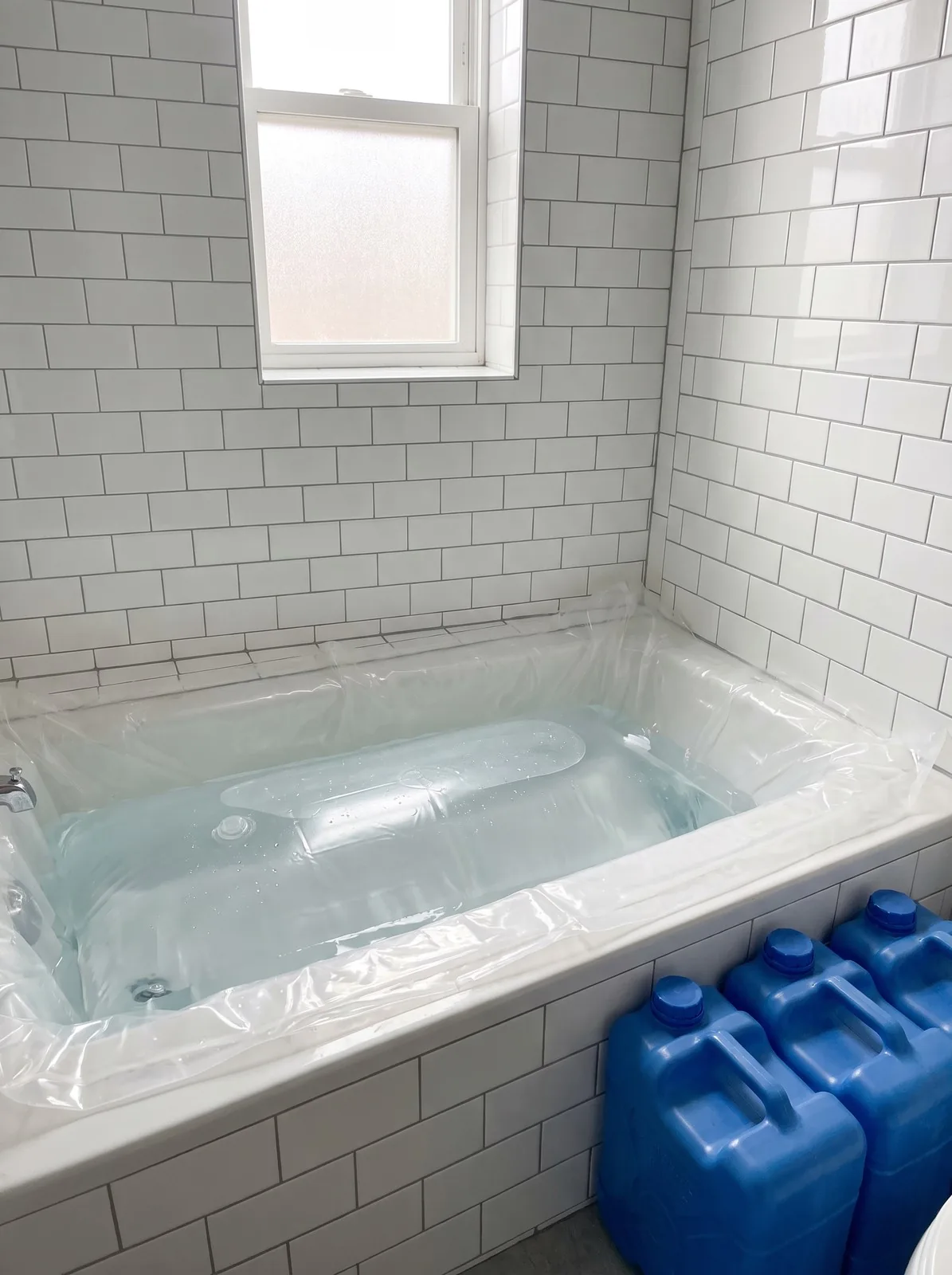
- A last-minute tub reserve. When a heat wave or storm is forecast, a bathtub bladder like the WaterBOB (Amazon) adds a tub’s worth of clean water using your existing tub — a strong supplement, not a replacement for stored supply.
The Bottom Line
For a heat wave, store two gallons per person per day, aim for a two-week supply, keep it in food-grade containers, and rotate every six months. Start with the 3-day heat-wave number and build up from there. Water is the highest-return, lowest-glamour investment in preparedness — get it handled and everything else on your summer blackout prep checklist gets easier, because the need with the shortest clock is already solved.
Frequently Asked Questions
- How much water should you store per person for a heat wave?
- Start with the standard one gallon per person per day, then plan to roughly double it in extreme heat — call it two gallons per person per day. Half is for drinking and half for cooking and basic hygiene. In a heat wave your body loses far more water to sweat, so the drinking share needs to be larger than usual. Store at least a 3-day supply, and two weeks if you can.
- Why do you need more water in hot weather?
- Because you lose more of it. In extreme heat and physical activity, the body loses far more fluid through sweat, and hot environments can double the amount of water a person needs. Dehydration sets in faster and is more dangerous during a heat wave, especially if the power is out and you have no air conditioning. The standard one-gallon-per-day planning figure was set for moderate conditions, so heat pushes the real requirement higher.
- How long can you store emergency water?
- For commercially bottled water, observe the expiration date and store it cool and dark. Tap water stored in clean, sanitized food-grade containers should be replaced every six months. Label every container with the fill date and rotate on a fixed schedule so nothing sits forgotten for years.
- What containers are safe for storing drinking water?
- Use only food-grade containers — purpose-made 5- or 50-gallon water containers, or clean commercially bottled water. Avoid milk jugs, which are hard to clean thoroughly, and any container that held toxic chemicals such as bleach or pesticides. Sanitize used containers with a bleach solution, fill from a cold tap, seal, and store away from sunlight and chemicals.
- Should you fill the bathtub before a heat wave or storm?
- Filling the bathtub is a good last-minute move for non-drinking water — flushing toilets, washing, cleaning — but a bare tub is hard to keep clean enough to trust for drinking. A tub bladder liner holds a tub's worth of clean water inside your existing tub and keeps it sealed. Use it for flushing and washing; drink it only after boiling or treating it. Do it when an outage or heat wave is forecast, on top of your stored supply, not instead of it.
Sources & references
Before you go
The Renter's Homestead Pack
Self-reliance projects for the yard you don't own — container yields, a raised bed built to move with you, balcony preservation basics, and the landlord questions to ask first.
Free guide
The Renter's Homestead Pack
Self-reliance projects for the yard you don't own — container yields, a raised bed built to move with you, balcony preservation basics, and the landlord questions to ask first.