Affiliate disclosure: Some links on this page are affiliate links. If you click through and purchase, we may earn a commission at no extra cost to you.
| Best For | Skip If |
|---|---|
| Off-grid preppers in humid climates wanting backup water | You live in an arid or low-humidity region |
| DIYers wanting a weekend water security project | You need a primary household water supply |
| Emergency planners building redundant water sources | You have reliable cheap municipal water |
Access to clean drinking water is the single most critical factor in any off-grid or emergency preparedness scenario. People can survive far longer without food than without water. That reality is why products like the Water Freedom System attract serious attention from the homesteading and prepper communities — and why it deserves a thorough, no-hype review before you spend money or build time on it.
Atmospheric water generation (AWG) is a legitimate technology, and residential-size units are sold commercially (Bagheri, Water Resources and Industry). The underlying physics — condensing moisture from ambient air, filtering it, and collecting the output — is real. The question with the Water Freedom System is not whether the technology exists. The question is whether a low-cost DIY guide can translate that technology into something practical for a backyard or homestead setup, and under what conditions it actually works.
This review is for off-grid homesteaders, emergency preparedness planners, and rural property owners who are evaluating the Water Freedom System as a primary or backup water source. Here is an honest picture of what this guide delivers, where it falls short, and whether it belongs in your preparedness toolkit.
1. What Is Water Freedom System?
Water Freedom System is a digital DIY guide that teaches you how to build a small-scale atmospheric water generator — a device that extracts moisture from ambient air humidity and converts it into drinkable water. The vendor says the author writes under a pen name, Richard Wilson (Water Freedom System), and the product is presented as a survival-focused response to water scarcity, municipal water vulnerabilities, and off-grid living needs. If you want the short version of how the pitch works before the deep dive, our overview of the $39 water-from-thin-air build explains the premise in plain terms.
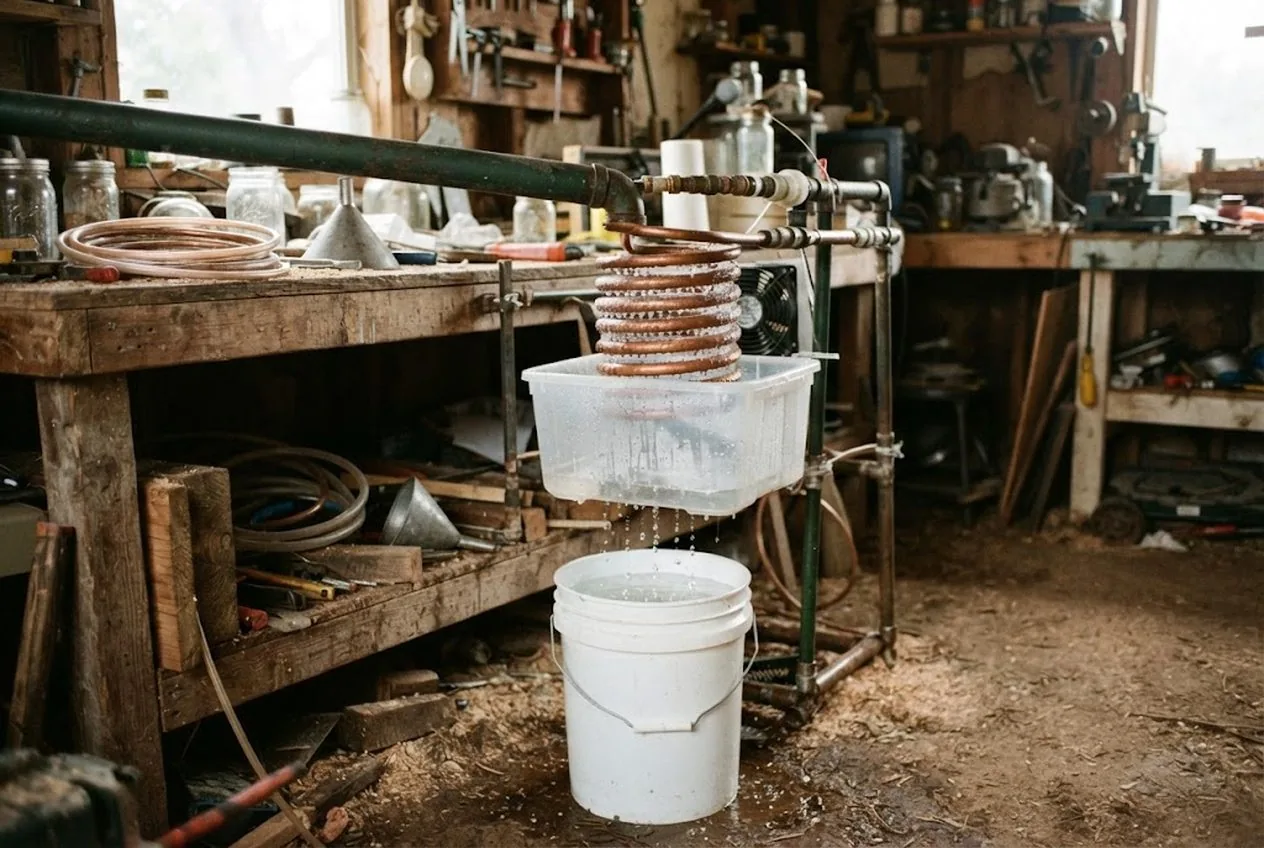
The core concept is straightforward: air contains water vapor. AWG devices use a refrigeration or desiccant-based mechanism to cool air below its dew point, causing moisture to condense. That condensate is then collected and passed through filtration stages before it reaches your glass. Commercial AWG units do exactly this, but cost far more than a DIY build, with price rising with output capacity.
The Water Freedom System pitches a DIY alternative built from hardware store components for a fraction of that cost. The target audience is preppers, off-grid homesteaders, rural property owners without reliable well or municipal water access, and anyone who wants a water independence backup that does not depend on infrastructure.
The guide is positioned as a step-by-step manual accessible to someone with basic mechanical aptitude — no specialized engineering background required.
2. What You Get
When you purchase the Water Freedom System, you receive a digital package delivered via download. The package typically includes:
- Main guide (PDF/video): Step-by-step build instructions for a small AWG unit, covering component selection, assembly, and filtration setup
- Materials list: A sourcing guide for components, most of which are available at hardware stores or via Amazon
- Maintenance guide: Basic instructions for keeping the unit running and replacing filtration media
- Bonus content: Depending on the version purchased, bonuses have included water purification guides and general survival water planning content
What you do NOT get: Physical components, hardware, or pre-built units. This is a guide only. You will need to purchase materials separately, and the budget depends on your component choices and desired output capacity. You also do not get one-on-one technical support or community access in the base package.
Realistic expectations: The DIY build described in the guide produces a modest water output, best under favorable conditions (high humidity, moderate temperatures); our DIY atmospheric water generator output guide breaks those numbers down by climate. This is a supplement or emergency backup, not a whole-household primary supply. Marketing language around “unlimited water” and “never pay a water bill again” overstates what the build realistically delivers for most users.
3. Cost Analysis: DIY vs. Commercial vs. Status Quo
Understanding the real economics here is essential before you commit.
| Option | Upfront Cost | Annual Ongoing Cost | Break-Even vs. Bottled Water |
|---|---|---|---|
| Water Freedom System (guide + materials) | $39.69 digital guide (Water Freedom System) + materials | Filters and power | Depends on output and your current water costs |
| Commercial AWG unit (entry-level) | Far higher than a DIY build | Power and filters | Long |
| Municipal water (avg. U.S. household) | $0 | Ongoing utility bill | N/A — ongoing cost |
| Bottled water dependency | $0 setup | Ongoing purchase cost | Never — pure expense |
| Doing nothing | $0 | $0 | Never |
The math is most favorable if you are currently spending heavily on bottled water and live in a humid climate where the unit can hit close to its rated output. All-in, the DIY build competes with nothing else in the AWG category on upfront cost. Where commercial units justify their price is in reliability, output volume, and build quality — factors that matter if this is your primary water source rather than a backup.
For relevant components, independent builders have sourced materials through searches for dehumidifier components, water filtration media (Amazon), and food-grade water storage containers (Amazon).
If you are interested in complementary water independence strategies, our rain barrel system guide covers another low-cost approach that pairs well with AWG in mixed climates.
4. Pros and Cons
Pros
- Technology is legitimate — atmospheric water generation is sold commercially and the underlying principles translate to DIY builds
- Low entry cost at $39.69 for the digital guide makes it accessible to test the concept before heavy materials investment
- Materials are widely available at hardware stores and Amazon, no specialty sourcing required
- 60-day money-back guarantee on digital orders, sold through ClickBank, provides real buyer protection
- Useful as a true off-grid backup — functions without municipal infrastructure, works during grid-down scenarios if paired with solar power
Cons
- Output claims are overstated — real-world production depends heavily on local humidity and temperature that many regions cannot consistently provide
- Requires electricity to run (refrigeration mechanism), which limits true off-grid utility without a separate power source like solar
- No physical product, community, or support structure — you are on your own if your build hits problems not covered in the guide
- Marketing language ("unlimited water," "water independence") sets unrealistic expectations that the actual build cannot meet in most climates
5. Who Should NOT Buy This
People in arid, low-humidity climates. AWG performance depends on climate, and lab testing has documented its climatic limitations (Bagheri, Water Resources and Industry). If you are in the American Southwest, high desert areas, or any region with consistently dry air, this device is unlikely to produce meaningful water regardless of build quality.
Anyone expecting a primary household water supply. Even under good conditions, a small DIY unit covers drinking water for a small household at most. It cannot replace a well, municipal connection, or rainwater cistern as a primary supply for a household.
People without any DIY or mechanical aptitude. This is a hands-on build project. If you are not comfortable following assembly instructions, working with basic electrical components, and troubleshooting a mechanical system, the guide will leave you frustrated. This is not a plug-and-play product.
Those seeking a completely off-grid solution without an independent power source. The condensation mechanism requires electricity. Without solar panels, a generator, or another power source already in place, the unit is not truly grid-independent. Factor that cost into your planning if you do not already have off-grid power.
Buyers expecting to break even quickly. If you have reliable, low-cost municipal water and are not spending heavily on bottled water, the economic case for this build is weak. The payback period stretches considerably when your baseline water cost is already low.
6. Price, Guarantee, and How Buying Works
The Water Freedom System digital guide is priced at $39.69 at the time of writing, and a physical book plus digital option is offered for $39.69 plus $9.95 shipping and handling (Water Freedom System); promotional pricing may vary. Digital orders carry a 60-day money-back guarantee (Water Freedom System). The sale runs through ClickBank, which handles returns at its discretion and may refund less than the full price on digital products the buyer keeps (ClickBank Support).
Delivery of the digital version is by download. After purchase you receive download access to the guide and any included bonuses. You may be presented with optional upsells after purchase; these are not required to receive the core guide.
Note that prices may change with seasonal promotions. The link below goes to the official page where current pricing is displayed.
→ Get Water Freedom System — Official Page
Recommended Water Security Products
Whether you build the AWG or choose alternative water independence strategies, these are the components most buyers combine with guides like Water Freedom System:
| Product | Role |
|---|---|
| Rain Barrel Diverter Kit (Amazon) | Directs roof runoff into storage — complements an AWG perfectly |
| Platypus GravityWorks 4L Filter System (Amazon) | No-power gravity filter for treating collected water — great for camping or bug-out scenarios |
| Big Berkey update: why we no longer recommend it | EPA pesticide classification and the maker’s lawsuit against EPA (Berkey Water Systems) — read before buying one |
| 50-Gallon Rain Barrel (Amazon) | Rainwater storage — pairs well with AWG in mixed climates |
| Sawyer Squeeze Water Filter (Amazon) | Ultralight filter for any water source |
| Aquatabs Water Purification Kit (Amazon) | Purification tablets for treating collected water |
Best Alternatives
If Water Freedom System isn’t the right fit, here are the closest alternatives:
| Alternative | Best For | Price |
|---|---|---|
| Smart Water Box | Similar AWG concept with detailed filtration guidance | Check current price |
| Platypus GravityWorks (Amazon) | No-power gravity filtration for any water source | Check current price |
| DIY Rainwater Collection | Free EPA guidance on rain barrels | Free |
8. Final Verdict
Score: 6.5/10
Water Freedom System occupies an honest middle ground: it is not a scam, but it is not a transformative off-grid solution either. The technology is real. The guide provides a functional path to building a small-scale atmospheric water generator at a cost that no commercial unit can match. For the right buyer — someone in a humid climate who wants a genuine backup water source, enjoys hands-on projects, and has realistic expectations about output volume — this is a worthwhile low-cost investment with a 60-day refund backstop on digital orders.
The score is held back by marketing that consistently oversells the product’s capabilities. “Unlimited water” and “never pay a water bill again” are claims that the physics of small DIY builds simply do not support. Buyers who purchase based on those claims and then encounter modest output in moderate humidity are disappointed by something entirely predictable — and the disappointment is largely the marketing’s fault, not the technology’s. A guide that set accurate expectations would be a stronger product with a smaller but more satisfied customer base.
Our honest recommendation: if you are in a humid region, already interested in DIY off-grid builds, and are treating this as one layer in a diversified water independence strategy rather than your only solution, Water Freedom System delivers reasonable value for $39.69. If you are in a dry climate, need a primary water supply, or are not prepared to build and troubleshoot a mechanical system yourself, look elsewhere — perhaps toward rainwater catchment systems or a quality gravity filter setup for water treatment. The money-back guarantee means the financial risk is low, but your time is worth protecting too.
Frequently Asked Questions
- What is the Water Freedom System?
- Water Freedom System is a digital guide that provides plans for building a DIY atmospheric water generator — a device that extracts drinking water from air humidity using a condensation process. The guide covers component selection, assembly, and purification setup. It is sold through ClickBank as a digital download, with a physical book plus digital option also offered.
- How much water can a Water Freedom System device actually produce?
- Output depends heavily on local humidity and temperature. Lab tests of commercial residential units found energy use per liter of water rose from about 1 kWh in warm, humid conditions to about 6.2 kWh in cold, humid conditions, and the researchers reported climatic limits on the technology. The guide's marketing language overstates what is realistic in all conditions.
- Does the Water Freedom System come with a money-back guarantee?
- Yes. The vendor says digital orders are covered by a 60-day money-back guarantee, with separate refund options for physical orders. The sale runs through ClickBank, where returns are granted at ClickBank's discretion.
Sources & references
- Water Freedom System, Refund policy and 60-day guarantee (opens in new tab)
- Water Freedom System, Official sales page (opens in new tab)
- Water Freedom System, Disclaimer (pen name notice) (opens in new tab)
- Water Resources and Industry, Performance investigation of atmospheric water harvesting systems (Bagheri, 2018) (opens in new tab)
- ClickBank Support, Return and Subscription Cancellation Policy (opens in new tab)
- US EPA, Soak Up the Rain: Rain Barrels (opens in new tab)
- Berkey Water Systems, Update on NMCL court case vs. EPA (opens in new tab)
Before you go
The Renter's Homestead Pack
Self-reliance projects for the yard you don't own — container yields, a raised bed built to move with you, balcony preservation basics, and the landlord questions to ask first.
Free guide
The Renter's Homestead Pack
Self-reliance projects for the yard you don't own — container yields, a raised bed built to move with you, balcony preservation basics, and the landlord questions to ask first.