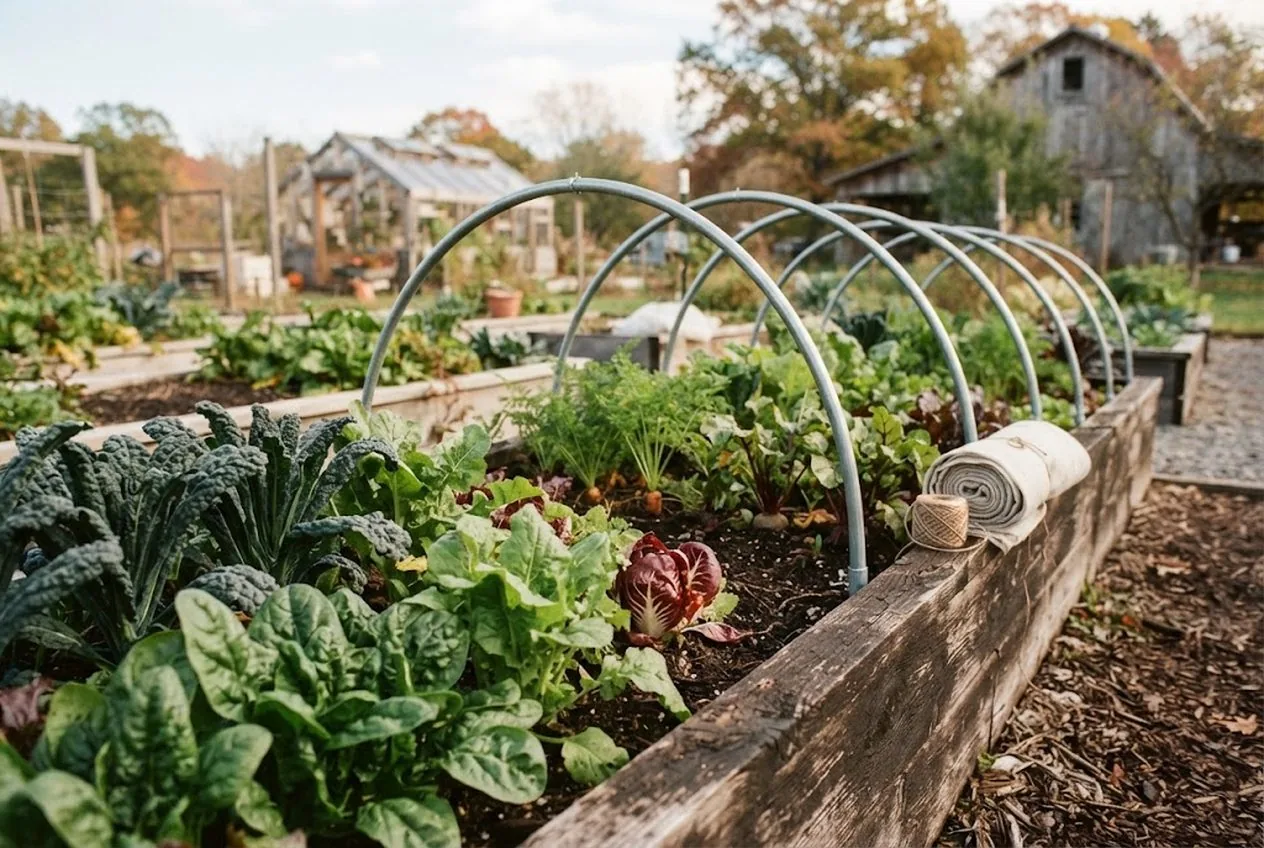
Is a cedar raised bed worth it for fall planting? For most gardeners who plant every autumn, yes — the cedar premium buys natural rot resistance through the wet months, a root zone that stays a touch warmer on frosty nights than bare metal, and the depth fall root crops actually need, all in a bed that lasts for years. It stops being worth it in two honest cases: if you want the fastest, longest-lived build regardless of a small thermal cost, a galvanized metal kit is the better spend, and if you’re just trying raised-bed growing for one season, a budget bed gets you started for less. Here’s the full verdict — what the extra dollars buy, where they don’t, and the four checks that matter before you buy any bed.
A raised bed is quietly one of the best things you can do for a fall garden either way. The elevated soil warms faster and drains well instead of drowning roots (University of Maryland Extension), and its clean edges make it simple to fit hoops and row cover over the top when frost threatens. But the market runs from cheap flat-pack beds to premium designer boxes, and the differences that matter for fall aren’t the ones on the label.
Disclosure: the product links here are affiliate links, so we may earn a commission if you buy through them at no extra cost to you. This assessment is built from material properties, extension guidance, and the cited sources, not hands-on testing.
What the Cedar Premium Has to Earn
Before the verdict, it’s worth knowing which features earn their keep in the cool season specifically — because these four are exactly what the extra money has to buy. Four things separate a bed that extends your fall harvest from one that just holds dirt:
- Depth. Fall crops lean heavily on roots — carrots, beets, turnips — and deeper soil holds daytime warmth longer into a cold night. Look for at least 10–12 inches; Utah State University Extension suggests beds 8 to 12 inches above the surrounding soil (Utah State University Extension). Shallow 6-inch beds grow greens fine but limit roots and cool off fast overnight.
- Material and rot resistance. The bed spends fall and winter wet. Naturally rot-resistant cedar lasts years untreated; galvanized metal is rust-resistant but conducts cold; untreated softwood like fir rots within a few years (Utah State University Extension). Modern pressure-treated lumber is an option too: Oregon State research found it raised soil copper only within about an inch of the bed edge (Oregon State University Extension), and USU suggests a plastic barrier between the wood and the soil.
- Thermal behavior. Wood insulates, so a cedar bed’s edge soil stays a touch warmer on frosty nights than bare metal’s. It’s a small effect, but in fall every degree at the root zone counts.
- Cover-ability. The best fall bed is one you can throw hoops and row cover over in two minutes, or fit a cold frame onto. Straight, sturdy walls of a sensible width make that easy; sprawling or flimsy beds don’t.
Hold every bed up to those four, and the worth-it question mostly answers itself.
The Verdict: What Cedar Actually Buys You
A cedar bed hits all four marks. Cedar is naturally decay-resistant (University of Maryland Extension), so it survives wet fall and winter weather for years without chemical treatment. The wood insulates the root zone, keeping edge soil a little warmer than a metal bed on a cold night. A proper cedar bed comes in the 10–12 inch depth that root crops want, and its straight, rigid walls make fitting hoops, row cover, or a cold frame straightforward.
Its one real “cost” is exactly that — price and assembly. Cedar sits above budget softwood and flat-pack metal, and you’ll spend an afternoon building it. But spread the price over the years a good cedar bed lasts and the math turns comfortably in its favor: for a grower who plants every fall and wants a bed that stays food-safe the whole time, it’s the one you stop thinking about — the highest compliment a piece of garden infrastructure earns.
Pros
- Naturally rot-resistant — no chemical treatment near food
- Wood insulates the root zone better than bare metal on cold nights
- Deep enough (10–12 in) for fall root crops
- Rigid straight walls make hoops, row cover, and cold frames easy to fit
- Lasts many years and ages to a handsome silver-gray
Cons
- Costs more than budget softwood or flat-pack metal
- Heavier to assemble; an afternoon's work
- Cedar prices vary with lumber market
When the Answer Is “Not Cedar”: the Metal Kit
If you want maximum longevity and the fastest possible setup, a galvanized metal raised bed kit is the modern favorite — and for that buyer, it’s the better answer to the worth-it question. These bolt together quickly, come in tall and modular shapes, and the galvanized steel is rust-resistant with no rot to worry about (University of Maryland Extension).
The trade-off is thermal. Bare metal conducts heat, so the soil right at the walls can cool faster on a frosty night than in a wood bed. In practice this matters most in cold zones and only at the perimeter — plant a few inches in from the edges and cover the bed when frost threatens and it’s a non-issue in most climates. For milder regions, the metal kit’s durability and easy build often outweigh the small thermal cost.
When the Budget Bed Is the Right Call
The bargain bin is where first-time buyers often get burned — but it’s also the honest answer for a one-season trial. A generic budget raised bed can absolutely grow food; the corners it cuts are usually the four that matter. Many are shallow (limiting root crops and cooling fast overnight), built from thin softwood or flimsy composite that warps and breaks down within a few years, and sized in awkward proportions that make covering them fiddly. If your budget is genuinely tight, a basic raised garden bed (Amazon) will get you growing this fall and teach you the ropes — just go in knowing you’ll likely want to upgrade once the bed weathers a winter.
How to Set Up a Raised Bed for Fall
Whichever answer fits you, the fall setup is the same. Site the bed where it gets the most sun as the days shorten, and keep it bottomless on native soil so roots run deep and water drains — line the base with cardboard only to smother grass. Fill it with a mix that holds moisture and drains well; working coco coir and compost into the soil helps it warm evenly and hold water, which we cover in our guide to building fall garden soil with coco coir and a broadfork.
Then plant for the season: the cold-hardy crops you sow in late summer — spinach, kale, carrots, beets — are exactly what a fall bed is built for. Finally, add hoops so you can throw row cover over the bed the night a frost is forecast. A bed you can cover in two minutes is a bed that keeps producing weeks longer. And if the bed is step one of a bigger self-sufficiency plan, the manual from the couple its publisher describes as living off-grid since the late 1970s (The Self-Sufficient Backyard) treats raised beds as exactly that — one piece of a backyard that feeds you year-round.
The Bottom Line
So, is a cedar raised bed worth it for fall planting? Yes — if you plant every fall, want a food-safe bed with no chemical treatment, and would rather buy once than twice, the cedar premium pays for itself in warmth at the root zone and years of wet-weather durability. Choose the metal kit instead if you want maximum longevity and the fastest build and don’t mind planting in from the edges in cold zones, and treat a bare budget bed as a starter you’ll likely upgrade after its first winter.
A raised bed is infrastructure, not a project — build the right one once and it anchors your garden for years. If you’d rather build than buy, our raised bed garden guide and our pallet raised bed build show how to make one cheaply from scratch.
Frequently Asked Questions
- Is a cedar raised bed worth the extra cost for fall planting?
- For most gardeners who plant every fall, yes. The cedar premium buys three things that matter in the cool season: natural rot resistance that survives wet fall and winter weather for years without chemical treatment, wood's insulation that keeps edge soil a touch warmer on frosty nights than bare metal, and the 10–12 inch depth fall root crops want. Spread over the many years a good cedar bed lasts, the extra cost per season is small. It stops being worth it if you only grow greens, garden casually, or need the fastest possible setup — that's metal-kit or budget-bed territory.
- How deep should a raised bed be for fall crops?
- Aim for at least 10–12 inches of soil depth. That's enough for the root vegetables and greens that dominate a fall garden — carrots, beets, turnips, kale, lettuce — and the deeper soil mass holds daytime warmth longer into the cold night, which matters more in fall than in summer. Shallow 6-inch beds work for greens but limit root crops and cool off faster overnight.
- Are metal raised beds too cold for fall?
- Metal beds are perfectly usable in fall, but bare metal conducts heat, so the soil at the edges can cool faster on cold nights than in a wood bed. In practice this matters most in the coldest zones and at the bed's perimeter. You can offset it by planting a few inches in from the walls and by using row cover or a cold frame over the bed. For milder climates the difference is minor, and metal's fast assembly and longevity are real advantages.
- Why plant in a raised bed for fall rather than in the ground?
- Raised beds warm faster, drain better, and are easier to cover — three things that all favor a fall garden. The elevated soil sheds the heavy rains of autumn instead of waterlogging roots, warms sooner on cool mornings to keep growth going, and its defined edges make it simple to fit hoops and row cover or a cold frame over the top to push the harvest weeks later. They also save your back during the cold-weather harvest.
- Does a raised garden bed need a bottom?
- Usually no. Most raised beds are bottomless and sit directly on the soil, which lets roots grow down into the native ground and improves drainage. Line the bottom with cardboard or hardware cloth if you need to smother grass or block burrowing pests, but a solid bottom isn't necessary and can impede drainage. Only elevated planter-style beds on legs need a floor.
Sources & references
- University of Maryland Extension, Growing Vegetables in Raised Beds (opens in new tab)
- Utah State University Extension, Raised Bed Gardening (opens in new tab)
- Oregon State University Extension, Pressure-treated wood for raised bed construction (opens in new tab)
- The Self-Sufficient Backyard, About the authors (opens in new tab)
Before you go
The Renter's Homestead Pack
Self-reliance projects for the yard you don't own — container yields, a raised bed built to move with you, balcony preservation basics, and the landlord questions to ask first.
Free guide
The Renter's Homestead Pack
Self-reliance projects for the yard you don't own — container yields, a raised bed built to move with you, balcony preservation basics, and the landlord questions to ask first.