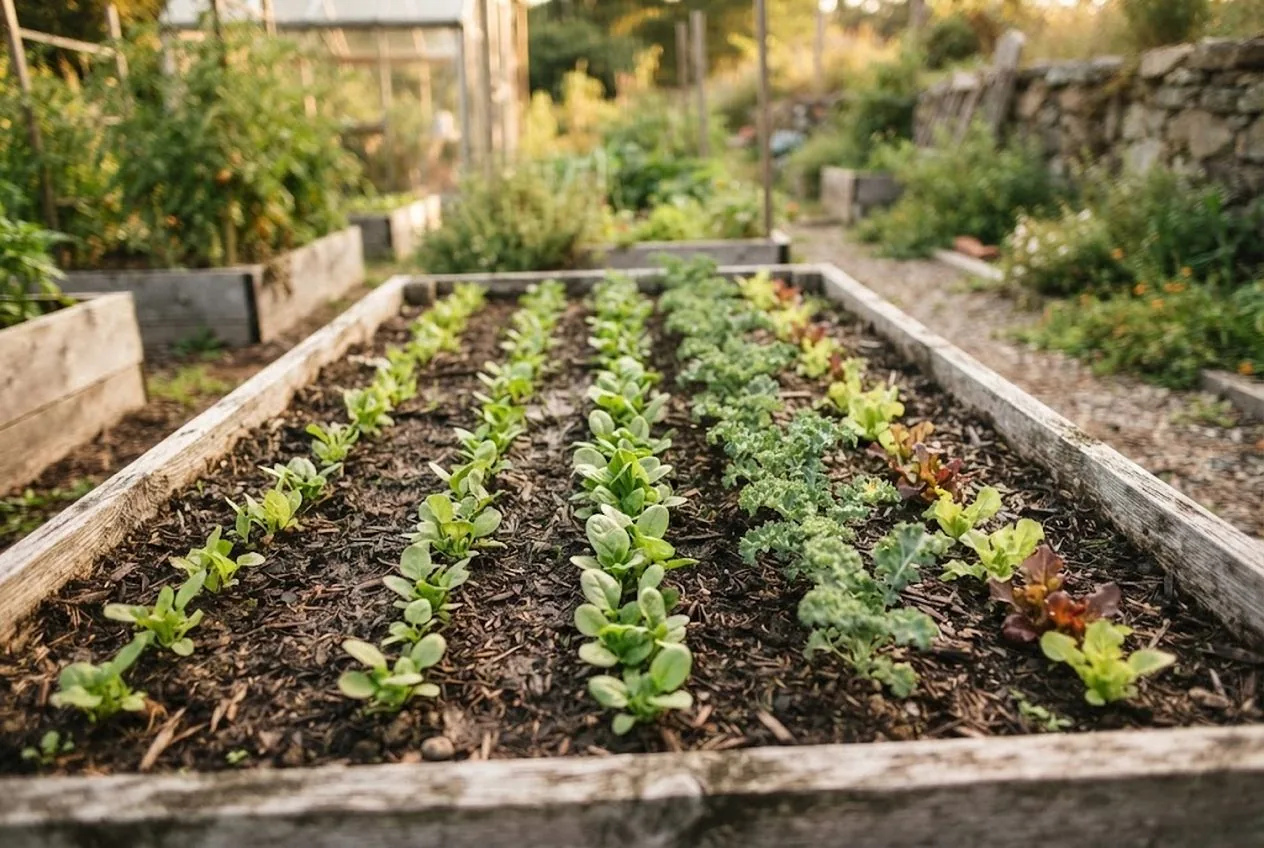
By late summer the garden looks like it’s winding down — the lettuce has bolted, the spring greens are a memory, and the tomatoes are demanding all your attention. But this is the exact moment to start the second harvest of the year. Sow the right crops in the warm soil of August, and you’ll be pulling fresh, frost-sweetened food (University of Maryland Extension) out of the garden long after the first cold nights have flattened everything tender.
The short version: cold-hardy crops — the leafy greens and root vegetables that shrug off frost — are what carry a garden into fall and winter. Sow them now while the soil is warm enough for fast germination, and they’ll mature in the cool weather they actually prefer. Below are nine of the most reliable, the frost math that tells you which ones fit your season, and how to get seeds up when the soil is still summer-hot.
When sowing fall gardens in the tail end of a heat wave, the planting is easy — the trick is keeping the seed bed cool and moist until the seedlings are established. We’ll cover both.
First, the Frost Math That Makes It Work
Before you pick crops, find your average first fall frost date — your local extension office publishes it — and count backward. The formula is simple:
Days to maturity + ~14 days (fall factor) = how far ahead of frost you must sow. (University of Maryland Extension)
That fall factor accounts for the shorter, cooler days of autumn, which slow growth compared with spring. If a crop’s adjusted time fits inside your window, it’s fair game to sow now. This is why two gardeners in different regions plant very different things in the same week — it’s all about days to frost, not the calendar.
Here’s where the nine crops fall, using extension days-to-maturity ranges (Iowa State University Extension) and frost-tolerance groupings (University of Maryland Extension):
| Crop | Days to maturity | Frost tolerance |
|---|---|---|
| Radishes | 25–40 | Light frost |
| Arugula | Fast | Hard frost |
| Spinach | 45–60 | Hardy (withstands a hard frost) |
| Leaf lettuce | 45–60 | Light frost |
| Turnips | 45–70 | Hardy |
| Mustard greens | Fast | Light frost |
| Swiss chard | 60–65 | Light frost |
| Beets | 50–70 | Light frost |
| Carrots | 60–80 | Light frost; sweeten in the ground |
Get Your Seed Supply Sorted First
A fall sowing is only as good as the seed you put in the ground, and this is a moment where buying open-pollinated, heirloom varieties pays off twice. First, heirlooms are the proven cold-season workhorses — the spinaches and kales that have been overwintered by gardeners for generations. Second, because they breed true, you can let a few plants go to seed next spring and save your own, turning one purchase into a self-renewing supply.
Disclosure: the product links here are affiliate links, so we may earn a commission if you buy through them at no extra cost to you. Our crop and timing guidance follows long-standing university-extension recommendations for fall and cool-season gardening, not brand marketing.
The 9 Cold-Hardy Crops to Sow in Late Summer
1. Radishes. The sprinter of the fall garden. Some varieties are ready in under a month, so you can sneak them in even where fall comes early — and where you’re waiting on slower crops, they make a fast, satisfying first harvest.
2. Arugula. Quick, peppery, and genuinely cold-loving. Arugula germinates and grows fast in cooling soil, tolerates hard frost, and keeps producing cut-and-come-again leaves for weeks.
3. Spinach. The champion of cold-hardy greens. Spinach thrives as the weather cools and withstands a hard frost (University of Maryland Extension). Its one quirk is that high soil temperatures can hold back germination (Iowa State University Extension), so shade the bed and keep it moist (more on that below).
4. Leaf lettuce. Loose-leaf types mature in as little as 45 days and taste sweeter in cool weather. Sow in the shadiest part of the bed for late-summer sowings, since hot soil can inhibit germination.
5. Turnips. A two-for-one crop — tender greens in a few weeks and sweet roots by fall. Turnips are hardy, fast, and forgiving, and they hold well in the ground once the weather turns cold.
6. Mustard greens. Fast, frost-tolerant, and full of flavor, mustards are a cool-season staple across the South and beyond. They bolt in heat but come into their own as the days shorten.
7. Swiss chard. One of the most productive and forgiving greens you can grow. Chard sown now keeps cutting into the cold, tolerates frost, and often overwinters in milder zones to leaf out again in spring.
8. Beets. Sow now for a fall dig. Beets give you edible greens along the way and sweet roots that actually improve in cool soil. Keep the seed bed damp until the seedlings are up — beet “seeds” are seed balls with several embryos, so plan to thin, and they need steady moisture (University of Maryland Extension).
9. Carrots. The crop most worth the wait. Carrots left in the ground through light frosts turn noticeably sweeter (Illinois Extension). Sow now, keep the surface moist until germination (the slowest step), and dig into late fall.
Getting Late-Summer Seeds to Germinate
Sowing in warm soil is easy; germinating in warm soil is the real challenge, because hot, dry ground kills seeds before they sprout and bakes a crust that seedlings can’t push through. Three habits solve it:
- Keep the seed bed consistently moist. Warm soil dries fast, so light watering once or twice a day until the seedlings emerge makes the difference between a full stand and a patchy one.
- Improve the soil’s water-holding first. Working a hydrated coco coir brick (Amazon) into the top inch or two of the bed helps it hold moisture between waterings and keeps that germination crust from forming. Coir is near-neutral to slightly acidic (pH 5.5–6.8) and holds 5–7 times its weight in water once rehydrated (UC ANR) — ideal for a late-summer seed bed.
- Shade the bed. A layer of floating row cover or shade cloth cuts the harshest afternoon sun, lowers the soil temperature into the range where cool-season seeds will actually sprout, and doubles as pest protection for tender fall greens.
Sow a little deeper than you would in spring so seeds sit in cooler, moister soil, and water in the early morning so plants are hydrated before the day’s heat peaks.
Beyond Vegetables: Cold-Hardy Medicinal Herbs
A self-reliant fall garden isn’t only about food on the plate. Late summer is also a window to start medicinal herbs such as calendula, chamomile, echinacea, and yarrow. A ready-made Medicinal Garden Kit (Amazon) bundles the seeds for a starter apothecary bed, so the same trip to the garden that fills your kitchen also stocks the salves, teas, and remedies side of self-reliance.
Tuck a few of these along the edges of your fall beds where they’ll get established before winter and return, in many cases, for years.
Protect the Back End of the Season
Everything you sow now can be pushed weeks later into the cold with a little protection once hard frost arrives. Floating row cover is the fast, cheap way to shield whole beds — our step-by-step guide to using row covers for fall frost protection walks through choosing the right weight and installing it. For a small patch of winter greens, our DIY cold frame guide shows how to build one cheaply, and our roundup of row covers vs. cold frames helps you decide which fits your garden.
Sow Now, Eat Into Winter
Late-summer planting is one of the highest-return moves in the backyard-food calendar: it turns the “off-season” into a second harvest and keeps fresh food coming when the neighbors’ gardens are done. Do the frost math, sow a mix of fast greens and longer roots, and keep the seed bed cool and moist while it establishes.
If you’re planning the whole arc of the season, our guide to what to plant in July for a fall harvest covers the earlier window, and the same beds you fill now are the ones you’ll build up for next year. Get these seeds in the ground this week, and fall takes care of itself.
Frequently Asked Questions
- What does 'cold-hardy' actually mean for a fall crop?
- A cold-hardy crop is one that keeps growing — or at least survives — through light frost and cold nights that would kill a tomato or a bean. Hardy crops like kale and turnips survive temperatures in the mid to low 20s°F, semi-hardy crops like carrots and beets handle the upper 20s°F, and several of them turn noticeably sweeter after a frost because the plant converts stored starch to sugar as a kind of antifreeze. That frost tolerance is exactly what lets you keep harvesting long after the summer garden is finished.
- Is late summer too late to plant vegetables?
- For cold-hardy crops, late summer is the ideal window, not a late one. The method is to count backward from your average first fall frost date: take a crop's days to maturity, add about two weeks for the slower growth of shortening fall days, and if that fits before your frost, you can sow it now. Fast greens and radishes will finish comfortably, and longer crops like carrots and beets mature in the cool weather they prefer.
- How do I get seeds to germinate in hot August soil?
- Warm, dry soil is the main obstacle to a fall sowing. Keep the seed bed consistently moist with light watering once or twice a day, shade it with row cover or shade cloth to lower the soil temperature, and sow a little deeper than you would in spring so seeds sit in cooler, moister ground. Working coco coir into the top inch of the bed helps it hold moisture between waterings, which is often the difference between a full stand and a patchy one.
- Which fall crops taste better after a frost?
- Kale, collards, spinach, carrots, and Brussels sprouts are the classic frost-sweetened crops. When temperatures drop, these plants convert stored starches into sugars to protect their cells, so the leaves and roots you harvest after a light freeze are genuinely sweeter and milder than the same crop in warm weather. It's one of the best reasons to grow a fall garden at all.
- Do I need to protect fall crops as it gets colder?
- The cold-hardy crops on this list handle light frost on their own, but a layer of floating row cover or a cold frame buys you several extra weeks of harvest once hard frosts arrive, and keeps leaves cleaner and more tender. Row cover is the fast, cheap option for whole beds; a cold frame is the more permanent choice for a small patch of winter greens. Many growers use both.
Sources & references
- University of Maryland Extension, Fall Vegetable Gardening (opens in new tab)
- Iowa State University Extension, Fall Planting of Vegetables (opens in new tab)
- University of Maryland Extension, Growing Beets in a Home Garden (opens in new tab)
- Illinois Extension, Fill a fall vegetable garden with variety (opens in new tab)
- UC ANR, Coir (opens in new tab)
Before you go
The Renter's Homestead Pack
Self-reliance projects for the yard you don't own — container yields, a raised bed built to move with you, balcony preservation basics, and the landlord questions to ask first.
Free guide
The Renter's Homestead Pack
Self-reliance projects for the yard you don't own — container yields, a raised bed built to move with you, balcony preservation basics, and the landlord questions to ask first.