What’s the short answer?
- Open-pollinated and heirloom seed from self-pollinating crops like tomatoes, peppers, peas and beans reproduces true to type; seed saved from an F1 hybrid usually does not.
- Cross-pollinated crops such as corn, squash, cucumbers and pumpkins need real isolation distance, often a thousand feet or more, to stay genetically stable.
- Home gardeners do not need to hit commercial isolation distances to save seed successfully; some off-type offspring from a cross is a normal tradeoff, not a failure.
- Carrots and beets are biennial and need two full growing seasons before they produce seed, so saving them means keeping that bed occupied through winter.
- Even a stable heirloom like 'Mortgage Lifter' tomato shows some plant-to-plant variation from one generation to the next.
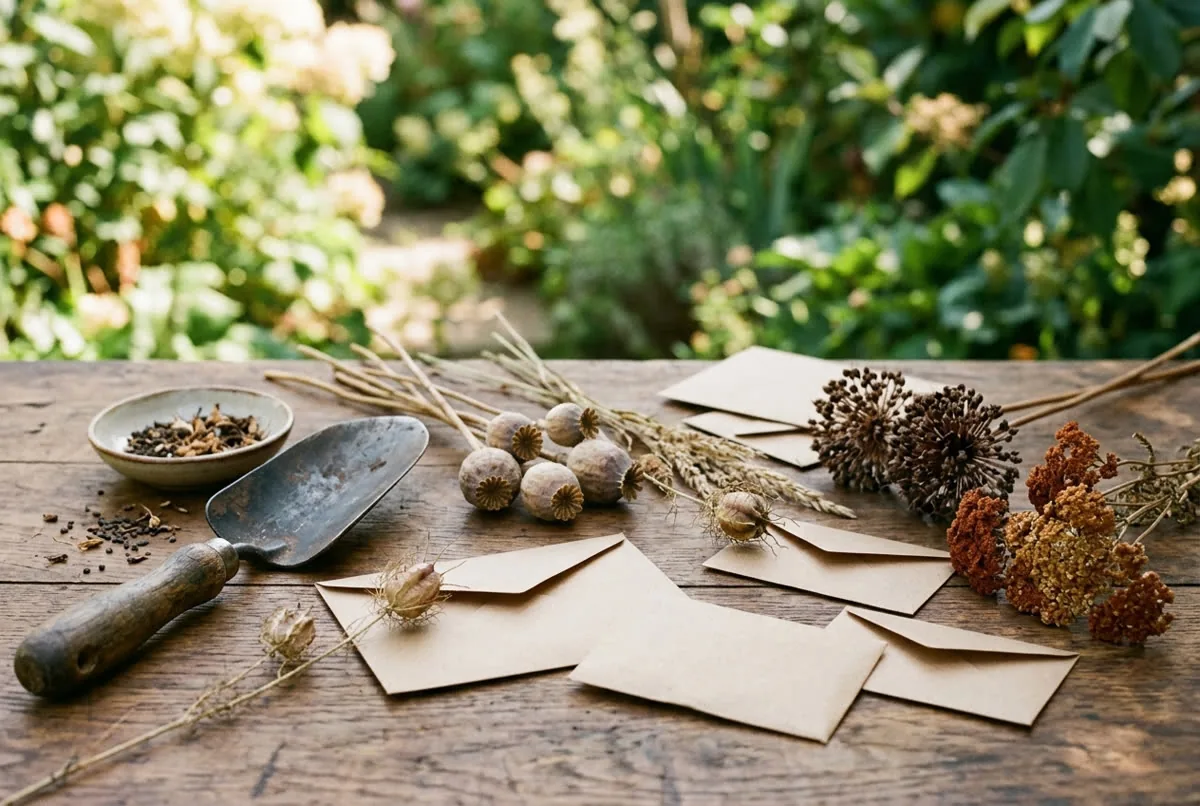
By mid-September the tomato vines are leggy, the pepper plants are still loaded with fruit no one will eat before frost, and the garden is winding down toward its last real harvest of the year, right alongside whatever cold-hardy crops went in during late summer for one more round before the cold sets in. It’s tempting to shake a handful of seeds from whatever looks biggest into an envelope and call the job done, especially after a season that produced more tomatoes and peppers than one household could reasonably eat. The seed worth keeping is rarely the biggest one; it’s the one that came from the right kind of plant in the first place.
The short answer: Save seed from open-pollinated or heirloom varieties of self-pollinating crops such as tomatoes, peppers, peas and beans, since those reliably grow into the same plant next year. Skip seed from anything sold as a hybrid (F1), and treat wind- and insect-pollinated crops like corn, squash and cucumbers as a more advanced project rather than a first attempt.
How Do You Know a Seed Is Actually Worth Saving?
The single biggest factor in whether a seed is worth saving has nothing to do with how the plant looked this season and everything to do with how it was bred. Only open-pollinated varieties, including heirlooms, reliably reproduce true to type from seed saved at home. Seed pulled from an F1 hybrid plant grows into a mixture of plant types next year, and Oregon State Extension says most of them will be inferior to the parent plants (Oregon State University Extension). University of Illinois Extension adds that the offspring of hybrids won’t necessarily carry the selected traits into the next generation (University of Illinois Extension, 2025-10-10).
That means the first stop before saving anything is the seed packet or plant tag, not the plant itself. A tomato that produced beautifully this year can still be a poor seed-saving candidate if it started life as a hybrid variety, because the seed inside it doesn’t carry a stable genetic blueprint of that same plant. Look for “open-pollinated” or “heirloom” on the original packaging, or check the variety name against a seed catalog if the tag is long gone. A healthy plant and a worthwhile seed are not the same question.
Hybrids are crossed from specific parent plants to produce selected traits such as uniformity, disease resistance, and enhanced flavor, and University of Illinois Extension notes that keeping those traits takes highly controlled hybrid seed production. None of that makes the plant a bad choice to grow. It just means the fruit it produced this year is the end of the line for that particular genetic combination, and next year’s seed should be bought again rather than pulled from an envelope in a drawer.
The Easiest Crops for a First-Time Seed Saver
Not every open-pollinated crop is equally easy to work with. Tomatoes, peppers, peas and beans all have self-pollinating flowers, meaning pollen is transferred within the flower itself, which is why University of Illinois Extension singles them out as needing little to no special care for seed saving (University of Illinois Extension, 2025-10-10). Even so, Colorado State Extension notes that some pollen can escape and reach an adjacent variety, and suggests separating varieties by a few rows of another crop (Colorado State University Extension). That combination, self-pollinating and open-pollinated, is what makes them the most forgiving starting point for anyone saving seed for the first time.
Practically, that means a gardener can grow two different open-pollinated tomato varieties with a few rows of another crop between them, save seed from both, and reasonably expect each one to grow true next year. The same isn’t true once wind or insects are doing the pollinating instead of the flower doing it to itself. If this is the first year seed saving is even on the list, starting with whichever of these four crops is already doing well is a more reliable place to spend the effort than reaching for something harder.
Peas and beans make this even simpler in a practical sense, since the seed and the food are the same object. A pod left on the vine until it dries and rattles is already most of the way to being stored seed; there’s no separate step of scooping seed out of ripe fruit the way a tomato or pepper requires. Peppers sit somewhere in between: University of Vermont Extension says to let the pepper ripen to its final color before harvesting seed (University of Vermont Extension), well past the green stage most peppers are picked at for eating, which is worth remembering before pulling seed from a pepper that still tastes underripe.
Why Corn, Squash and Cucumbers Are a Harder Project
Crops like sweet corn, squash, cucumbers and pumpkins are pollinated by wind or insects carrying pollen in from other plants entirely, which puts their genetics largely outside the gardener’s control unless real isolation distance is involved (University of Illinois Extension, 2025-10-10). And “real” isolation distance is the operative phrase: documented minimums run roughly 1,300 feet for spinach, about 5,200 feet, close to a mile, for sweet corn, 2,600 feet for broccoli and onions, and 1,300 feet for melons, radishes, squash and pumpkins to keep a variety genetically stable (University of Illinois Extension, 2025-10-10).
Those numbers rule out true isolation for almost anyone gardening on a standard residential lot, which is exactly why corn and squash are the crops where beginners run into trouble. It’s not that saving their seed is impossible; it’s that seed saved without isolation is a gamble on what shows up next season rather than a repeat of what grew this one.
The classic backyard version of this problem is a zucchini planted a few beds away from a different squash variety, with bees doing exactly what bees do in between. Neither plant shows any sign of the cross this season; the fruit still looks and tastes normal. The surprise shows up next year, in a squash plant that doesn’t resemble either parent, because the cross happened at the flower and only became visible in the seed’s offspring.
Do You Actually Need to Hit Those Isolation Distances?
Not to save seed successfully at home. A University of Illinois Extension educator says a gardener doesn’t have to be a “purist” about separation distances, and that watching plant genetics in action can lead to delightful surprises (University of Illinois Extension, 2025-10-10). Off-type offspring from an unplanned cross is a normal outcome rather than a failure.
In practice, that means a squash that crosses with another variety growing nearby isn’t a sign something went wrong; it’s what happens when insect-pollinated cucurbits grow within bee-flying distance of each other, which describes most backyards. The seed from that cross will still grow into something, just not necessarily a copy of either parent. For a gardener who’s fine with some variation, or curious what a cross produces, that’s not disqualifying. For a gardener who wants a specific variety to come back exactly as planted, it’s the reason to lean on the self-pollinating crops instead of chasing corn or squash seed in year one.
That distinction matters more than it sounds like it should, because it changes what “worth saving” even means. A tomato or pepper seed is worth saving if the gardener wants that same plant back. A cross-pollinated squash seed is worth saving if the gardener is fine with a surprise, or specifically wants to experiment with what a cross produces. Neither answer is wrong; they’re just different questions, and it’s worth being honest about which one applies before spending a season’s worth of shelf space on seed that might not grow into anything close to what was planted this year.
Carrots and Beets: A Two-Season Commitment
Root crops complicate the timeline in a different way. Carrots and beets are biennial, meaning they need two full growing seasons to produce seed at all, not one (University of Illinois Extension, 2025-10-10). A carrot pulled and eaten this fall was never going to flower or set seed this year regardless of variety.
Saving carrot or beet seed means leaving the roots in the ground, or digging and replanting them as Colorado State Extension describes (Colorado State University Extension), so the bed stays occupied through winter into a second season before any seed shows up. If that bed also needs fresh soil work before it goes into a second season, fall is the time to handle it, not next spring once the roots are already established. That’s a real commitment of space and time that faster annual crops don’t ask for, and it’s worth deciding up front whether a bed can be spared for that long before starting.
This is also where it’s easiest to talk yourself into saving seed you don’t actually need. A single carrot or beet left to flower in its second season will eventually produce far more seed than most home gardeners will plant again, since these are the same root vegetables sold by the packet with many seeds inside. Committing an entire bed through a full winter is a reasonable trade for a gardener who genuinely wants to keep growing a specific carrot or beet variety indefinitely. It’s a much harder trade to justify for a crop that’s easy and cheap to just buy fresh seed for again next spring.
Even a Reliable Heirloom Drifts a Little
Worth setting expectations here too: even a consistent, well-established heirloom variety isn’t perfectly identical generation to generation. Extension guidance notes that a variety like ‘Mortgage Lifter’ tomato, a beefsteak heirloom, still shows minor plant-to-plant variability from one generation to the next (University of Illinois Extension, 2025-10-10).
That’s not a sign the seed-saving process failed. Open-pollinated doesn’t mean identical; it means stable enough to reliably resemble the parent plant, with some natural variation built in. Anyone expecting a perfect clone from saved seed, hybrid or heirloom, is setting a bar seed saving was never meant to clear.
Getting the Seed Itself Ready to Store
Once a plant has cleared the “worth saving” question, what actually happens between vine and envelope matters almost as much as the variety decision. Fruit meant for seed generally needs to go past the point most people would pick it for eating: Oregon State Extension says cucumbers and summer squash should be well past eating quality, University of Vermont Extension says to let a pepper ripen to its final color, and bean and pea pods stay on the vine until they are dry and the seeds rattle (Oregon State University Extension; University of Vermont Extension). Picking early for the table and picking for seed are two different goals on the same plant, and it’s easy to default to the first one out of habit.
Wet-seeded crops like tomatoes and cucumbers add one more step, since the seed comes out of the fruit embedded in damp pulp. Oregon State Extension says tomatoes, cucumbers and squash should ideally be fermented for 72 hours at approximately 72 to 80°F, and that bacteria and yeast during fermentation destroy many of the seed-borne diseases that can affect the next generation of plants (Oregon State University Extension). The seed is then washed and spread thinly to dry, and OSU notes damage begins whenever seed temperature rises above 95°F, so skip added heat. Seed that goes into storage even slightly damp can mold or lose viability before spring.
Once the seed itself is fully dry, labeled with variety and year, and stored somewhere cool, dry, and dark (University of Vermont Extension), the “worth saving” work for that plant is actually done. A sealed container made for seed storage is one option for a gardener who would rather not improvise with kitchen envelopes stacked in a junk drawer. And for anyone treating seed saving as one piece of a bigger shift toward growing more of their own food at home rather than a one-off fall project, a program like Backyard Liberty, whose sales page pitches a 4ft Pocket Farm for building a food stockpile (Backyard Liberty sales page), is one place to look for a wider system that a habit like this fits into.
Frequently Asked Questions
- How do I know if my tomato or pepper seeds are worth saving?
- Check whether the variety is open-pollinated or heirloom rather than a hybrid. Tomatoes and peppers are self-pollinating, so open-pollinated varieties usually grow into the same plant next year, while seed from an F1 hybrid usually will not.
- Why do seeds from a hybrid plant grow into something different?
- Oregon State Extension says F1 hybrids combine traits of two different parent varieties, and seed collected from them produces a mixture of plant types, most of which will be inferior to the parent plants.
- Do I really need hundreds of feet between varieties to save seed at home?
- No. Documented minimum isolation distances run from about 1,300 feet for spinach to 5,200 feet for sweet corn, but a University of Illinois Extension educator says gardeners do not have to be purists about them. Some off-type offspring from an unplanned cross is a normal outcome, not a failure.
- Which vegetables are easiest for a beginner to start saving seed from?
- Tomatoes, peppers, peas and beans. All four have self-pollinating flowers and need little to no special care for seed saving, per University of Illinois Extension, which makes them the most forgiving starting point for a first-time seed saver.
- Can I save seed from carrots or beets this year?
- Only if the roots stay in the ground, or get dug and replanted, through a second full growing season. Carrots and beets are biennial and need two seasons to produce seed, so a carrot or beet harvested and eaten this fall will not produce seed this year regardless of variety.
Sources & references
- University of Illinois Extension (opens in new tab)
- Oregon State University Extension, A Step-by-Step Guide to Saving Seeds (EM 9663) (opens in new tab)
- University of Vermont Extension, Saving Seeds from Vegetable Crops (opens in new tab)
- Colorado State University Extension, Saving Seed (opens in new tab)
- Backyard Liberty (vendor sales page) (opens in new tab)
Before you go
The Renter's Homestead Pack
Self-reliance projects for the yard you don't own — container yields, a raised bed built to move with you, balcony preservation basics, and the landlord questions to ask first.
Free guide
The Renter's Homestead Pack
Self-reliance projects for the yard you don't own — container yields, a raised bed built to move with you, balcony preservation basics, and the landlord questions to ask first.