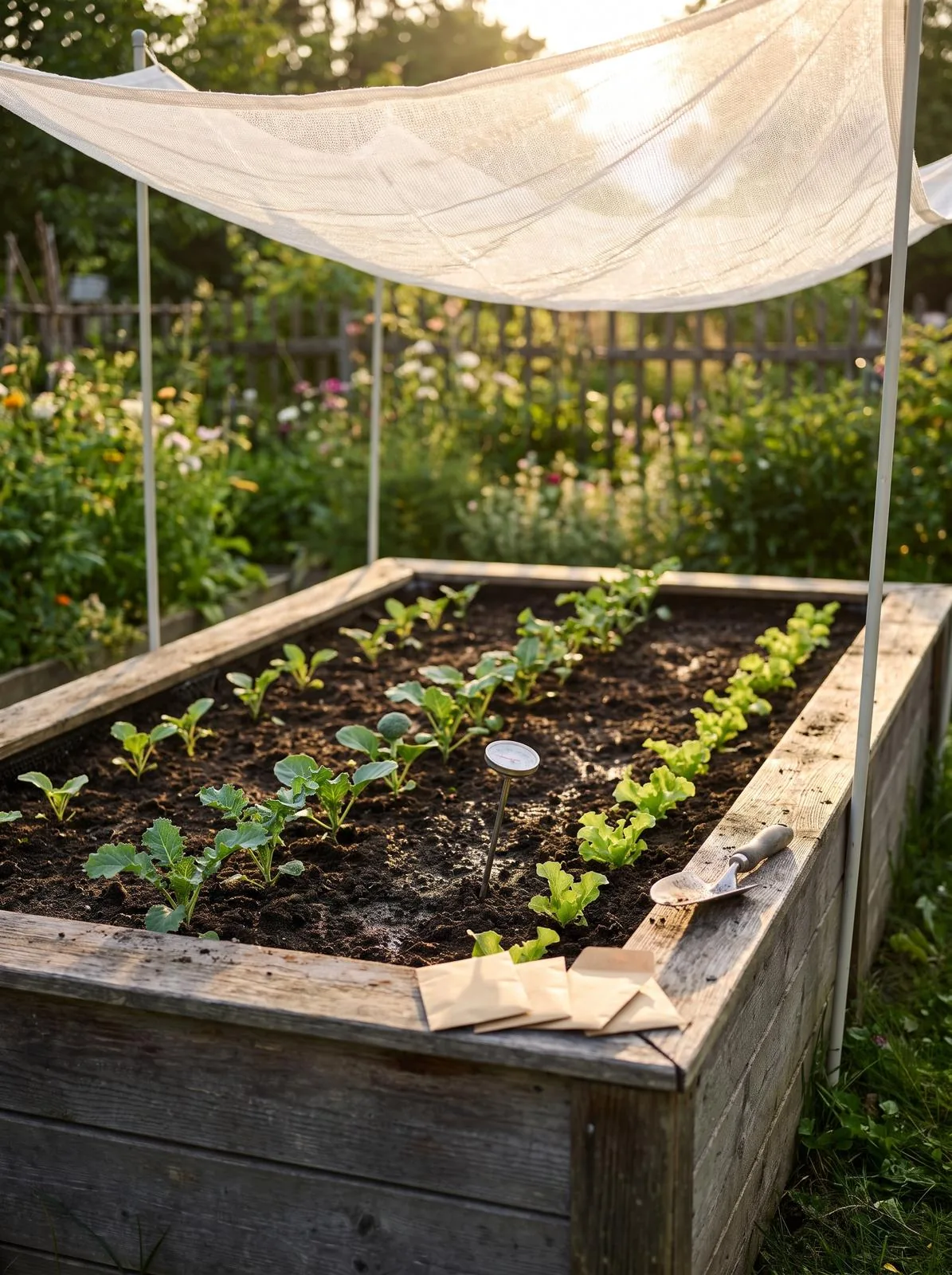
The garden in July can feel like a finish line — tomatoes ripening, beans climbing, everything planted months ago. But July is really a starting line for the second act of the growing year. Sow the right crops now and you will be harvesting fresh food long after the summer plants have given up, straight into the cool weeks of fall.
The short answer to “what can I plant in July?” is: fast greens for a quick fall harvest, heat-tolerant crops for a late-summer picking, and longer-season fall crops that finish in cool weather. The single skill that ties it together is simple frost math — count a crop’s days to maturity backward from your first frost date, add a couple of weeks for slower fall growth, and if it fits, plant it. Below is the full list, organized by how much time each crop needs, plus how to get seeds up in hot July soil.
When sowing fall gardens in the teeth of a heat wave, the planting is the easy part — keeping the seed bed cool and moist is the whole game. We will cover both.
First, Do the Frost Math
Before you pick crops, find your average first fall frost date (your local extension office publishes it) and count backward. The formula:
Days to maturity + ~14 days (fall factor) = how long before frost you must plant.
The “fall factor” accounts for the shorter, cooler days of autumn, which slow growth compared to spring (Nebraska Extension). If a crop’s adjusted time fits inside your window, it is fair game for July. This is why gardeners in different regions plant very different things in the same month — it is all about days to frost, not the calendar.
1. Quick Greens (30–50 Days) — Fall Harvest, Fast
These mature fast enough to sneak in even where fall comes early, and many actually taste better after a light frost:
- Lettuce — leaf types are ready in about 40 days (Purdue Extension); sow in the shadiest part of the bed.
- Arugula — fast, peppery, and cool-weather friendly.
- Spinach — thrives as the weather cools; germinates poorly in hot soil, so shade the bed.
- Radishes — the sprinter of the garden, some ready in under a month.
- Asian greens (bok choy, tatsoi) — quick and productive in fall.
Cool-season greens like lettuce and spinach can refuse to germinate when soil is above about 85°F (Nebraska Extension), which is the whole reason July sowing gets a bad reputation. Beat it with shade and moisture (below), or start them in a cooler spot and transplant.
2. Heat-Tolerant Crops (50–65 Days) — A Second Summer Harvest
Where you still have weeks of warm weather, these summer lovers put out one more harvest:
- Bush beans — a fast second crop; they fix their own nitrogen and mature in 50–60 days (Purdue Extension).
- Summer squash and zucchini — quick and prolific if you have the space and time before frost.
- Cucumbers — a fresh, disease-free planting often outperforms tired spring vines.
- Okra — genuinely loves the heat; a strong pick for hot-summer regions.
3. Longer Fall Crops (60–100+ Days) — Plant Now, Harvest in the Cool
These need the most runway, so July is often the last safe window:
- Broccoli and cabbage — best as transplants now; they head up in cool fall weather.
- Kale and collards — hardy, forgiving, and sweeter after frost; a fall staple.
- Carrots and beets — sow now for a fall dig; keep the seed bed damp until they are up.
- Pumpkins and winter squash — plant by early July so they ripen for autumn (and Halloween); most pumpkins need 90–120 days (University of Arkansas Extension).
Getting Seeds Up in July Heat
Planting in July is easy; germinating in July is the challenge, because hot, dry soil kills seeds before they sprout. Three tools solve it:
- Shade the seed bed. Floating row cover or shade cloth (Amazon) cuts the harshest afternoon sun, lowers soil temperature, and doubles as pest protection for tender fall brassicas.
- Keep it consistently moist. Hot soil dries out fast. Light watering two to three times a day in extremely hot weather until seeds emerge makes the difference (Nebraska Extension); a drip irrigation kit (Amazon) automates it and keeps water at the roots where it belongs.
- Know the soil temperature. A soil thermometer (Amazon) tells you when a bed has cooled into the range where cool-season seeds will actually germinate — take the guesswork out of timing.
Sow about twice as deep as you would in spring so seeds sit in cooler, moister soil, and water in the early morning so plants are hydrated before the day’s heat peaks. Heavy mulch around emerging seedlings holds moisture and keeps roots cool.
Extend the Season on the Back End
Everything you plant now can be pushed later into fall with a little protection at the other end of the season. A cold frame or row cover extends the harvest once the nights turn cold — our DIY cold frame guide shows how to build one cheaply, so the fall crops you start in July keep producing well past the first frost.
Plant Now, Eat in Fall
July planting is one of the highest-return moves in the backyard-food calendar: it turns the “off-season” into a second harvest and keeps fresh food coming when the neighbors’ gardens are done. Do the frost math, sow a mix of fast greens and longer fall crops, and protect the seed bed from the heat while it establishes.
For the bigger picture of planning a garden that feeds you across the whole year, the Self-Sufficient Backyard review and the Backyard Liberty review both dig into season-long, self-reliant food production. Get these seeds in the ground this week, and fall takes care of itself. If you are also thinking about next spring’s beds, our raised bed garden guide is a good next read — and if the garden is step one of a bigger plan, the self-sufficient backyard beginner’s guide lays out the projects that come after it.
Frequently Asked Questions
- Is July too late to plant a fall garden?
- No — July is exactly when most fall gardens are started. The trick is to count backward from your first frost date. Take a crop's days to maturity, add about two weeks for the slower growth of shortening fall days, and if that fits before your first frost, you can plant it now. In mid-summer you sow both fast crops for a quick harvest and longer-season crops that will finish in the cool of fall.
- What vegetables can you plant in July?
- In July you can sow heat-tolerant summer crops like okra, bush beans, and summer squash for a late-season harvest, quick greens like lettuce, arugula, and spinach for fall, and longer fall crops like broccoli, kale, carrots, and beets that mature in cooler weather. Pumpkins and winter squash also go in now so they ripen by autumn. Choose based on your days-to-frost window.
- How do you germinate seeds in hot summer soil?
- Hot, dry soil is the main obstacle in July. Keep the seed bed consistently moist with light watering two to three times a day in extremely hot weather, shade it with row cover or shade cloth to lower soil temperature, and sow about twice as deep as in spring so seeds sit in cooler, moister soil. Some cool-season seeds like lettuce, peas, and spinach germinate poorly when soil is above about 85°F, so starting them in a shadier spot or indoors helps.
- When should I plant pumpkins for Halloween?
- Plant pumpkins between mid-June and early July in most regions. Most pumpkin varieties need roughly 90–120 days to mature, so a sowing in that window puts ripe pumpkins on the vine around October. If you are close to your window, choose a shorter-season variety and get the seeds in the ground immediately.
- What is the best way to protect a fall garden from summer heat?
- Shade, mulch, and water timing. Use shade cloth or floating row cover to cut the harshest afternoon sun and lower soil temperature, mulch heavily to hold moisture and keep roots cool, and water deeply in the early morning so plants are hydrated before the heat peaks. A soil thermometer helps you know when the bed has cooled enough for cool-season seeds to germinate.
Sources & references
Before you go
The Renter's Homestead Pack
Self-reliance projects for the yard you don't own — container yields, a raised bed built to move with you, balcony preservation basics, and the landlord questions to ask first.
Free guide
The Renter's Homestead Pack
Self-reliance projects for the yard you don't own — container yields, a raised bed built to move with you, balcony preservation basics, and the landlord questions to ask first.