What’s the short answer?
- This guide sorts a winter car kit into four categories, based on AAA's lists: warmth, traction/visibility, repair, and health.
- Keep a phone and a portable charger in the car itself, since Apple says very cold conditions can temporarily shorten battery life.
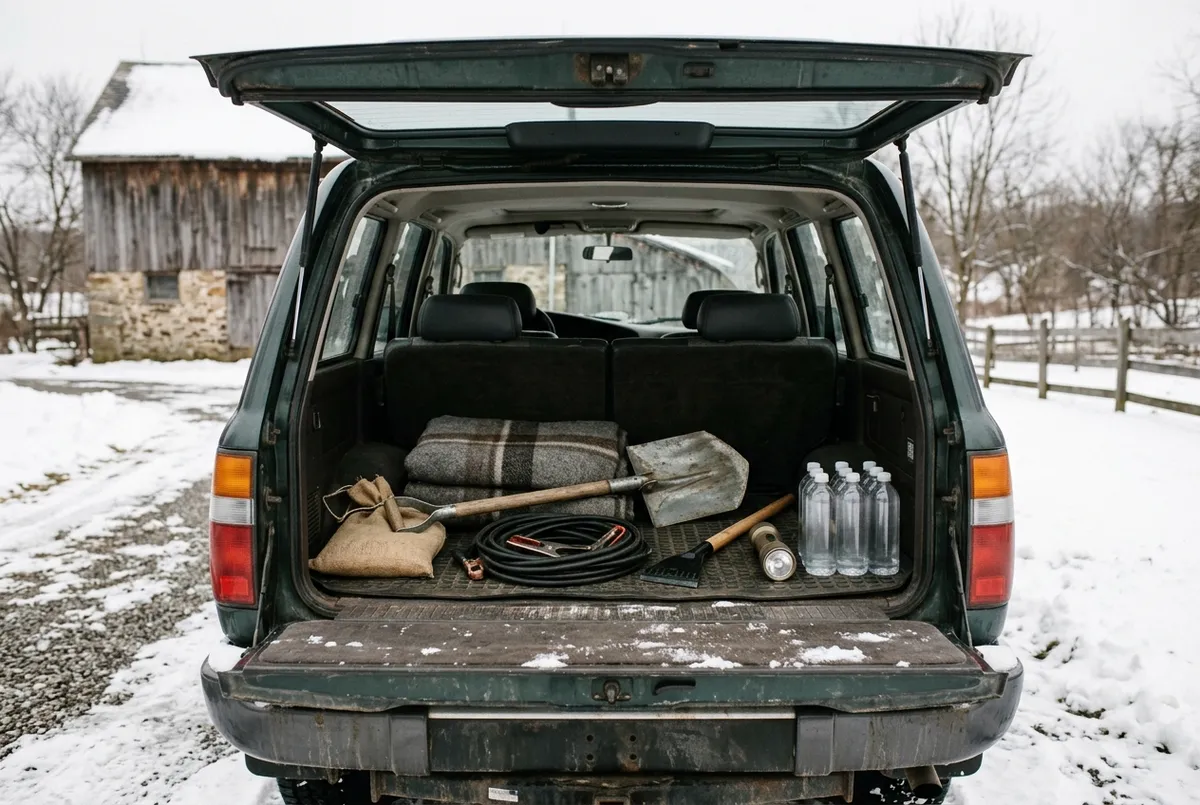
- Blankets, gloves, hats, a change of warm clothes, a shovel, an ice scraper and snow brush, and traction material handle getting warm and getting unstuck.
- Jumper cables, a basic tool kit, washer solvent, and paper towels cover small roadside failures, and cold is hard on a car battery.
- Drinking water, a first-aid kit, any needed medications, and snacks round out the health layer.
- A fire extinguisher only helps if you know how to use it before you need it.
Your car stalls on a two-lane road twenty minutes outside town, in January, with the heater already fading before you get the hood open. Nothing about that moment cares whether your phone has a signal, and nothing in the glovebox was built for it unless you put it there first. This list is built around what a stranded hour on the shoulder demands, not around whatever happens to fit in a trunk organizer.
The short answer: A winter car kit needs four things working together: warmth (blankets, warm clothing), the means to get moving again or be seen while you wait (a shovel, ice scraper, traction material, flashlight, and warning devices), basic repair and power items (jumper cables, a small tool kit, a charged phone), and health essentials (water, a first-aid kit, medications, non-perishable snacks).
Why a Car Kit Isn’t Just a Smaller Blackout Kit
A home blackout kit and a car kit solve different problems. At home you have walls, a pantry, and days to plan around; stranded on a roadside you have whatever is already in the trunk and however long it takes for help, a tow, or better weather to arrive. Our room-by-room blackout kit guide covers the house side of winter prep in depth, but a car kit needs its own list, built around a stalled or stuck vehicle rather than a dark house.
That means the car kit skews toward mobility and visibility items a home kit does not need at all: a shovel, traction material, and reflective warning devices earn their spot because getting the car moving again, or being seen by other drivers while you wait, are the two problems unique to being stranded on a road instead of in a living room. If you are shopping for someone who is building out their winter gear from scratch, our gift guide for the prepper or homesteader on your list has broader picks; this list is narrower and specific to the car.
Staying Connected: A Charged Phone and Backup Power
Start with the item everyone already owns but nobody thinks to prepare: a phone, plus a portable phone charger kept in the car itself, not just in your pocket (AAA Minneapolis, November 27, 2024). AAA also suggests programming important numbers, including AAA roadside assistance, into the phone. A phone that dies twenty minutes into a wait is a phone that cannot call for a tow, check road conditions, or tell anyone where you are. Apple notes that using an iPhone in very cold conditions can temporarily shorten battery life and could cause it to turn off (Apple Support), so a phone that reads half-charged when you leave the driveway may not last as long as you expect.
Keep the backup charger itself in the car rather than moving it in and out with your bag. A charger that lives at home is a charger that is not there the one time you need it in the car. Apple advises against leaving devices in a parked car because temperatures there can exceed their storage range (Apple Support), so check the storage temperature range for the charger you buy.
Warmth: Blankets and Clothing You Won’t Regret Packing
Blankets, plus warm clothing you can actually move in, are the core of the warmth layer: AAA’s winter road kit lists gloves, hats, blankets, hand and feet warmers, and a change of warm clothes, kept in the car rather than assumed you’ll be wearing them already (AAA Minneapolis, November 27, 2024). The scenario worth planning for is the one where you’re dressed for a warm office or a quick errand, not for standing outside in the cold for an hour.
A stalled car with the engine off loses heat fast, and running the engine to stay warm is not always something you can count on doing for long. The National Weather Service advises running the motor about 10 minutes each hour for heat, opening a window a little for fresh air while it runs, and clearing snow from the exhaust pipe to avoid carbon monoxide and gas poisoning (National Weather Service). That’s what makes the clothing and blanket layer non-negotiable rather than optional: it’s the backup that works with the engine off, no fuel, and no power.
Pack for the people who actually ride in the car, not just the driver. A blanket sized for one adult does little for a car with kids or a partner along, so plan the warmth layer for full capacity, not for a solo commute.
Getting Unstuck and Being Seen
This is the category that most separates a car kit from a home kit, and it splits into two jobs: getting the car moving again, and making sure other drivers can see you while you wait.
For getting unstuck, AAA’s winter road kit lists a snow shovel, a snow brush, an ice scraper, and a bag of abrasive material such as sand, salt, or cat litter, or traction mats (AAA Minneapolis, November 27, 2024). A shovel clears snow from around the tires and tailpipe; the scraper and brush clear the windshield and mirrors so you can actually see to drive once you’re moving; the traction material goes under the drive wheels when they’re spinning on ice or packed snow. None of these are exotic gear, but none of them are things you can improvise well with bare hands in the cold.
For being seen, keep a flashlight with extra batteries, plus warning devices such as flares or triangles, in the car (AAA Minneapolis, November 27, 2024). A car stopped on a shoulder in low winter light and falling snow is genuinely hard for other drivers to see until they’re close, and a flashlight or warning triangle set out behind the vehicle buys other drivers the extra seconds they need to react.
Jump-Starts and Small Repairs
The maintenance-and-repair layer covers the failures that are common enough to plan for and simple enough to fix roadside, given the right items: jumper cables, a basic tool kit (AAA’s list names screwdrivers, pliers, and an adjustable wrench), window washer solvent, and a cloth or roll of paper towels (AAA Minneapolis, November 27, 2024).
Cold weather is hard on a car battery: AAA says that at 32°F a battery loses about 35 percent of its strength and at 0°F about 60 percent, while starting the engine may need up to twice the normal current (AAA Oregon). Jumper cables only help if they’re actually in usable condition, so check them along with the rest of the kit rather than assuming a set bought years ago is still intact. The small tool kit matters less for a full repair job on the shoulder and more for the fixes that are genuinely within reach, such as tightening a loose clamp or freeing a stuck latch.
Washer fluid and rags earn their place for a less dramatic reason: winter driving throws road salt and slush onto the windshield constantly, and a dry reservoir or a dirty rag makes a bad-visibility day worse instead of better. Check that the washer fluid you carry is rated for the temperatures you actually drive in.
Health, Hydration and Food
The health layer covers what keeps people, and any pets riding along, through a longer wait than expected: drinking water, a first-aid kit, any medications the people or pets in the car depend on, and non-perishable snacks such as energy or granola bars (AAA Minneapolis, November 27, 2024; AAA Oregon, August 12, 2019).
The first-aid kit should be a real one, not a token box, and it should include a supply of any prescription or daily medication a household member depends on. A stalled car is a bad place to discover you’re relying on a medication that’s sitting in a cabinet at home instead of in the car. If pets ride along regularly, the same logic applies to them: any medication or condition they depend on should have a small backup in the car kit, not just in the house.
Non-perishable snacks round this out less as emergency rations and more as a way to keep blood sugar and mood stable through a wait that runs longer than planned. Pick items that hold up to temperature swings without spoiling or turning to mush in a hot trunk in one season and freezing solid in the next, and rotate them on the same schedule you check the rest of the kit.
The Fire Extinguisher Question
AAA also lists a small, type ABC fire extinguisher for the car, with one important caveat: it’s important to learn how to use it before you ever need to (AAA Oregon, August 12, 2019). The U.S. Fire Administration describes class A extinguishers as for ordinary materials like cloth, wood, and paper, class B for combustible and flammable liquids, and class C for electrical equipment, with multipurpose A-B-C units covering most types of home fires (U.S. Fire Administration).
The caveat matters more than the extinguisher itself. A fire extinguisher nobody has ever pulled the pin on, read the instructions for, or practiced aiming is a fire extinguisher that gets fumbled in the ten seconds that actually count. Spend five minutes reading the instructions on the one you buy, and mount or wedge it somewhere it won’t become a projectile if the car is ever in a collision. Owning the extinguisher and being able to use it under pressure are two different things, and only practice closes that gap.
Building the Kit Without Overbuilding It
Organize the kit by these categories rather than as one flat pile in a bag: a warmth layer, a get-unstuck-and-be-seen layer, a repair-and-power layer, and a health layer. That structure, which is this guide’s own way of sorting AAA’s lists, makes it easier to check what’s missing later and easier to grab the right thing fast when you’re standing in the cold at the side of a road.
Keep the whole kit in the trunk or cargo area, not scattered loose in the back seat, so it survives being buried under groceries or gear for months at a stretch. Check it at the start of each winter: batteries drain even when unused, washer fluid evaporates, and a first-aid kit’s contents can expire quietly while sitting untouched.
What to Do Next
Pull together what you already have first: most households already own a flashlight, some blankets, and a phone charger, which covers a real chunk of this list before you buy anything new. Fill the specific gaps next, starting with whichever category is thinnest in your own trunk right now, whether that’s warmth, traction and visibility, repair, or health. None of this needs to happen in one trip; building it category by category, over a few weeks before the first real cold snap, gets the same kit in place with less pressure than trying to assemble all of it the night before a storm warning.
Frequently Asked Questions
- What does AAA recommend keeping in a winter car emergency kit?
- AAA's winter emergency road kit lists a phone and portable charger, gloves, hats, blankets and a change of warm clothes, a snow shovel and snow brush, an ice scraper, sand, salt, cat litter or traction mats, a flashlight with extra batteries, flares or triangles, jumper cables, a basic toolkit, window washer solvent and paper towels, drinking water, non-perishable snacks, and a first-aid kit; another AAA checklist adds medications and a small ABC fire extinguisher (AAA Minneapolis, November 27, 2024; AAA Oregon, August 12, 2019).
- Do you really need jumper cables and a tool kit in a winter car kit?
- AAA's winter road kit lists jumper cables and a basic toolkit with items including screwdrivers, pliers, and an adjustable wrench, and AAA notes that cold weather strains a car battery: at 32°F a battery loses about 35 percent of its strength and at 0°F about 60 percent (AAA Minneapolis, November 27, 2024; AAA Oregon winter battery guidance).
- How much water and food should I keep in a winter car kit?
- AAA's winter road kit lists drinking water and non-perishable snacks such as energy or granola bars, without giving a quantity (AAA Minneapolis, November 27, 2024).
- Does a winter car kit need a fire extinguisher?
- AAA lists a small, type ABC fire extinguisher in its winter car checklist, with the note that it's important to learn how to use it before it's needed (AAA Oregon, August 12, 2019).
Sources & references
- AAA Minneapolis, Winter Emergency Road Kit Checklist (opens in new tab)
- AAA Oregon, Winter Car Checklist (opens in new tab)
- AAA Oregon, Winter Battery Preparation (opens in new tab)
- National Weather Service, What To Do If You're Caught in a Winter Storm (opens in new tab)
- Apple Support, If your iPhone or iPad gets too hot or too cold (opens in new tab)
- U.S. Fire Administration, Choosing and Using Fire Extinguishers (opens in new tab)
Before you go
The Renter's Homestead Pack
Self-reliance projects for the yard you don't own — container yields, a raised bed built to move with you, balcony preservation basics, and the landlord questions to ask first.
Free guide
The Renter's Homestead Pack
Self-reliance projects for the yard you don't own — container yields, a raised bed built to move with you, balcony preservation basics, and the landlord questions to ask first.