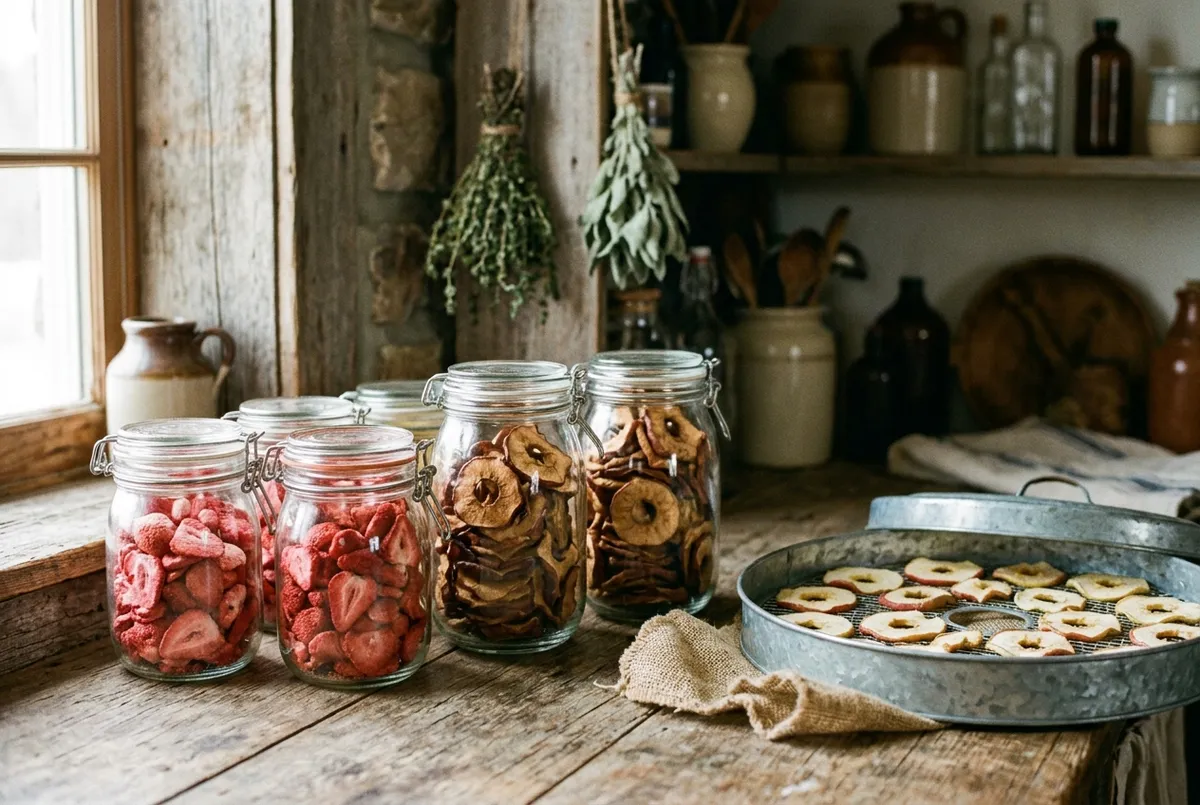
Is freeze-dried food worth the extra money compared with dehydrated food?
- Freeze-dried food is rated for 10 to 25 years (Utah State, Jan. 2026) against 4 months to 1 year for home-dried food (NCHFP). That only pays off on a reserve you will not rotate.
- At Nov. 4, 2026 prices, ReadyWise kits cost about $5.49 to $13.45 per 1,000 calories. White rice at the BLS average costs about $0.68. A freeze-dried layer is a convenience purchase, not a calorie purchase.
- Freeze-dried meals need water, and dehydrated meals often need a stove. Ready.gov suggests stocking foods that need no cooking, water or special preparation.
- A $1,795 home freeze dryer needs about $50 a month of store-bought freeze-dried food to replace to break even in 6.5 years at best. A dehydrator suits gardeners and anyone who rotates stock within a year.
Black Friday 2026 is Nov. 27, and the first banners went up early. On Nov. 4, Harvest Right’s home page was running a “Black Friday Sale” with “up to $900 off,” and its small home freeze dryer showed $1,795 against a $2,495 “was” price. A sale price is a poor way to choose between freeze-dried and dehydrated food. The two methods do different jobs, and only one of them can come with a four-figure machine.
The short answer: Freeze-dried food earns its price only on a reserve you will not rotate, and it needs water to eat. Dehydrated food is the better value for a pantry you eat from and refill, but home-dried food keeps for months to a year. Neither beats plain rice, beans and cans on cost per calorie. Decide the job first, then the method.
This is a research-based comparison. We have not bought, run or tasted any product below. Facts come from university extension pages, Ready.gov and sellers’ own product pages, opened Nov. 4, 2026 unless noted. The Amazon link near the end is an affiliate link.
Freeze-Dried vs. Dehydrated: What Actually Differs
| Dehydrated | Freeze-dried | |
|---|---|---|
| Water removed | Up to about 90%; home units may reach about 80% (City of Ivins handout, 2021) | About 98% to 99% (same handout) |
| Storage guidance | Home-dried: 4 months to 1 year (NCHFP). Top-end commercial: up to 15 years (Ivins handout) | 10 to 15 years, sometimes up to 25, if sealed with oxygen absorbers (Utah State, Jan. 2026) |
| To eat | Often needs boiling, 20+ minutes for meals (Ivins) | Add water and wait; many fruits and vegetables can be eaten dry (Ivins) |
| Weight | Heavier | Lighter |
| Home equipment | Dehydrator, plugs into a wall outlet | Freeze dryer plus vacuum pump, from $1,295 on Nov. 4 |
| Safety | Heat dries the food; still needs proper packaging | Does not kill bacteria; they can restart once water is added (Utah State, UMN) |
One caution on the first row. The moisture percentages come from a city handout, not an extension study, and we found no side-by-side figure from a university source. Treat them as a rough guide to why shelf lives differ.
How Long Each One Lasts, and When That Matters
Utah State University Extension, in a fact sheet dated Jan. 23, 2026, says freeze-dried food can remain safe and stable for 10 to 15 years, and sometimes up to 25, in airtight, moisture-proof packaging such as Mylar with oxygen absorbers, kept cool, dark and dry. It also says sensitive vitamins such as vitamin C can fall significantly within 1 to 3 years, and that it does not recommend eating home freeze-dried food more than 5 to 10 years after processing.
For dried food made at home, the National Center for Home Food Preservation gives 4 months to 1 year. Most dried fruit keeps 1 year at 60°F but only 6 months at 80°F, and vegetables last about half as long. USDA’s Food Safety and Inspection Service shows how much the packaging matters: commercially packaged jerky keeps 12 months, home-dried jerky 1 to 2 months, and dry rice and pasta 2 years.
A Utah State page on buying a home freeze dryer says conservative food-safety estimates for commercial food sealed in metal-Mylar pouches are 8 to 10 years, and that no real shelf-life data exists for home freeze-dried food, because home machines only went on sale in 2013. The 25-year figure on seller pages is a ceiling under ideal conditions, not a promise.
The long number matters only for food you will leave alone. If you eat from your pantry and replace what you use, a 1-year shelf life is not a problem. Our 30-day food supply guide covers the calorie math for a rotating stock, and the packaging does as much work as the drying method, as the bucket-packing guide shows.
The Part Sales Pages Skip: Water and Fuel
Ready.gov (updated Mar. 12, 2026) tells households to stock canned foods, dry mixes and other staples that do not require refrigeration, cooking, water or special preparation, and a manual can opener. Dried food asks for more.
A freeze-dried meal needs water. ReadyWise lists “about 120 cups of water required” for its 120-serving emergency food supply, which holds 24,540 calories, or 13 days at 1,800 calories a day. That is 7.5 gallons, on top of what a person drinks. A dehydrated meal often needs heat as well. The Ivins handout says dehydrated meals with meat and fibrous vegetables generally need cooking, often 20 minutes or more, which means a stove and fuel.
So test before you stock. Rehydrate one pouch with the water and stove you would really have in an outage, and time it. With no spare water, a freeze-dried layer is the wrong first purchase.
Cost: What a Day of Calories Costs
Prices below were read on Nov. 4, 2026. Rice comes from the BLS Sept. 2026 average of $1.118 a pound, with about 365 calories per 100 g for uncooked white rice, which is about 1,656 calories a pound. ReadyWise prices and calories come from its product pages.
| Food | Price | Calories | Per 1,000 calories | Per 2,000-calorie day |
|---|---|---|---|---|
| White rice, uncooked (BLS average) | $1.118 per lb | about 1,656 per lb | $0.68 | $1.35 |
| ReadyWise 1 Month Ready Bundle (2 buckets, dry bag, 72-hour kit) | $449.97 | 81,920 | $5.49 | $10.99 |
| ReadyWise 120 Serving Emergency Food Supply (1 bucket) | $329.99 | 24,540 | $13.45 | $26.89 |
A kit costs about 8 to 20 times the rice for the same calories. For one adult over 14 days at 2,000 calories, that is 28,000 calories: about $19 in rice, $154 from the cheaper kit and $377 from the dearer one. You are paying for no cooking, a long shelf life and a pre-packed bucket. That can be worth it, but it does not save money.
Two notes on the kit numbers. ReadyWise describes its 14-day bucket as freeze-dried and dehydrated foods, and we could not find how much of each kit is which, so these are not pure freeze-dried prices. Its home page on Nov. 4 also said it was taking December deliveries first-come, first-served, so check the ship date.
Single-ingredient freeze-dried cans are priced per serving as the maker prints it, and servings are not calories: sliced strawberries $39.99 for 18 servings ($2.22 each), peas $33.99 for 17 ($2.00), diced chicken $99.99 for 16 ($6.25). These suit a small add-on layer of protein, vegetables or fruit, not the bulk of your calories.
Home Machines: What Each Costs and Asks of You
A dehydrator. The Amazon link below opens a Cosori 6-tray stainless dehydrator listed at 4.7 out of 5 stars from about 24,000 ratings on Nov. 4, with 95°F to 165°F temperature control and a 48-hour timer. We could not see a price from our location. For scale, another 12-tray stainless unit shown on the same page was $145.26. Home-dried food keeps 4 months to 1 year (NCHFP), so it fits garden surplus, fruit and jerky you will eat. Our garden-harvest dehydrator guide covers how to size one.
A freeze dryer. On Nov. 4, Harvest Right’s product feed showed the Countertop 360 at $1,295 (was $1,595), the small Home Freeze Dryer in black at $1,795 (was $2,495), the medium at $1,995 (was $3,195) and the large at $2,995 (was $3,895). A “was” price is not proof of an earlier sale; we have not tracked these prices. Harvest Right says the Countertop 360 holds 5 to 9 pounds per batch.
The machine is not the whole bill. Utah State’s buying guide, which uses 2018 data, lists ongoing supplies (Mylar bags, oxygen absorbers, vacuum pump oil) and electricity at $2 to $5 per batch in the Intermountain West. Batches took 20 to 40 hours, and a small unit weighed 139 pounds. Utah State’s 2026 fact sheet adds that freeze dryers use several times more energy than dehydrators, and that they work best between 45°F and 80°F with good ventilation, so an unheated garage is a poor spot.
Does it pay for itself? Harvest Right says so. Utah State is more careful: commercial freeze-dried food can carry a mark-up of up to 85 percent over a home-made batch, supplies and electricity included (2018 data). That means home food costs at least 54 percent of the store price, a saving of at most 46 percent. On that ceiling, for the $1,795 small unit:
| Store-bought freeze-dried food you would stop buying | Saving per month, at most | Break-even, at best |
|---|---|---|
| $25 a month | $11.49 | 13 years |
| $50 a month | $22.97 | 6.5 years |
| $100 a month | $45.95 | 3.3 years |
This table is our arithmetic on the Utah State ceiling, not a finding. It leaves out the groceries you freeze-dry. The first row also runs past Utah State’s limit of 5 to 10 years for eating home freeze-dried food. If you do not already spend $50 or more a month on freeze-dried food, the machine is unlikely to repay itself.
Who Each Option Fits
| Option | Fits | Skip it if |
|---|---|---|
| Dry staples and cans (rice, pasta, beans, canned food) | Anyone starting out, a tight budget, a household that cooks | You have no stove and no spare water |
| Home dehydrator | Gardeners, jerky and fruit makers, a pantry you rotate within a year | You want a reserve to sit untouched for a decade |
| Ready-made freeze-dried cans or kits | Small spaces, renters, a no-cook backup, light weight, add-on protein and vegetables | You need calories on a budget, or have little spare water |
| Home freeze dryer | A household preserving large batches of harvest, meat or leftovers, with a ventilated spot and an outlet | You rent, have a small kitchen, or spend under $50 a month on freeze-dried food |
A Three-Step Plan
Numbers are per adult at 2,000 calories a day. Your needs differ, so use the calories on your own labels, and ask a doctor or dietitian about special diets, infants and medical needs.
| Step | Do this | Your number |
|---|---|---|
| Now ($0) | List 3 days of foods you would eat with no cooking. Read the calories on each label. Check how much water and what stove you have. | 3 days = about 6,000 calories |
| Before you buy | Set a price ceiling per adult before you look at any sale. If you want a freeze-dried layer, buy one can each of protein, vegetable and fruit rather than a bucket. Rehydrate one and time it. | 14 days = about 28,000 calories: about $19 in rice, $154 to $377 from kits |
| Optional (winter) | Add a dehydrator if you garden. Consider a freeze dryer only if the table above shows a payback under 4 years for your own spending. | 30 days = about 60,000 calories |
Our pantry gap calculator estimates how many days your current shelves cover. The free rotation starter below keeps either kind of food from going to waste.
Before You Buy on Black Friday or Cyber Monday
Black Friday is Nov. 27 and Cyber Monday is Nov. 30. Write down the regular price, the price you would walk away at, and the date you checked it. Then check calories per serving (not just servings), what needs water or cooking, the ship date and the return terms. We have not verified any sale end dates.
What We Could Not Confirm
- The dehydrator’s price and complaints. Amazon did not show a price from our location, and its customer reviews need a sign-in. The summary visible on the page was positive only (easy to use, quiet, accurate temperature), so we cannot say what buyers complain about. Read the one- to three-star reviews before you buy.
- Nutrient retention. The Ivins handout says freeze-dried food keeps about 97 percent of nutrients against 60 to 75 percent for dehydrated, without a source. We left it out of the table. Utah State only says freeze-drying preserves nutrients “more effectively.”
- How much of each ReadyWise kit is freeze-dried. The seller does not split it by weight or calories on the pages we read.
- Current Harvest Right batch size, weight and power use. The cost and size details we cite are Utah State’s 2018 numbers and the seller’s own claims. We did not check them against a current spec sheet.
- The Black Friday sales. We do not know when they end, or whether the “was” prices were ever charged.
We will recheck prices after Black Friday and Cyber Monday.
The Takeaway
Freeze-dried food is a long-shelf-life convenience layer, not a cheap way to get calories. Build the base from rice, beans and cans, add a dehydrator if you garden, and treat freeze-dried cans as a small add-on for protein and vegetables. A home freeze dryer pays off only if you already spend $50 or more a month on the store-bought kind. Before any sale, test one pouch and write your price ceiling down.
Frequently Asked Questions
- How long does freeze-dried food last compared with dehydrated food?
- Utah State University Extension (Jan. 23, 2026) says freeze-dried food stays safe and stable for 10 to 15 years, sometimes up to 25, in airtight, moisture-proof packaging with oxygen absorbers, kept cool, dark and dry. The National Center for Home Food Preservation gives 4 months to 1 year for home-dried foods. A 2021 City of Ivins handout says top-end commercial dehydrated food can reach 15 years. Utah State does not recommend eating home freeze-dried food more than 5 to 10 years after processing.
- Do freeze-dried meals need water, and do dehydrated meals need cooking?
- Usually yes to both. A freeze-dried meal is rehydrated with water. The City of Ivins handout says dehydrated meals with meat and fibrous vegetables generally need cooking, often 20 minutes or more. ReadyWise lists about 120 cups of water, or 7.5 gallons, for its 120-serving bucket (24,540 calories). Ready.gov (updated Mar. 12, 2026) suggests stocking foods that need no cooking, water or special preparation.
- Is ready-made freeze-dried food cheaper per calorie than rice and beans?
- No. At Nov. 4, 2026 prices, white rice at the BLS Sept. 2026 average of $1.118 a pound works out to about $0.68 per 1,000 calories. ReadyWise's 1 Month Ready Bundle works out to about $5.49 per 1,000 calories and its 120-serving bucket to about $13.45. You pay for shelf life, convenience and no cooking, not for calories.
- Does a home freeze dryer pay for itself?
- Only at high volume. Utah State University Extension says commercial freeze-dried food can carry a mark-up of up to 85 percent over a home-made batch, supplies and electricity included (2018 data). On that ceiling, a $1,795 Harvest Right small unit saves at most about $23 a month for every $50 a month of store-bought freeze-dried food it replaces, which is about 6.5 years to break even. Harvest Right says its machines pay for themselves; that is a seller claim we could not verify.
- Is freeze-dried food safer than dehydrated food?
- No. Utah State University Extension and the University of Minnesota Extension both say freeze-drying does not kill bacteria, it preserves them, and they can become active again when water is added. Raw meat, poultry, seafood and eggs must be cooked before freeze-drying or after rehydration. Neither method replaces safe handling or proper packaging.
Sources & references
- Ready.gov (FEMA), Food (last updated Mar. 12, 2026; opened Nov. 4, 2026) (opens in new tab)
- Utah State University Extension, Can I Freeze-Dry That? (peer-reviewed fact sheet, Jan. 23, 2026; opened Nov. 4, 2026) (opens in new tab)
- University of Minnesota Extension, Preserving food at home: Freeze-drying (reviewed 2025; opened Nov. 4, 2026) (opens in new tab)
- Utah State University Extension, Buying a Home Freeze-Dryer: What to Know Before You Go (undated page, cost data from 2018; opened Nov. 4, 2026) (opens in new tab)
- National Center for Home Food Preservation, Packaging and Storing Dried Foods (from So Easy to Preserve, 6th ed., reviewed 2020; opened Nov. 4, 2026) (opens in new tab)
- USDA Food Safety and Inspection Service, Shelf-Stable Food Safety (last updated Oct. 24, 2024; opened Nov. 4, 2026) (opens in new tab)
- City of Ivins, Utah, Freeze-drying vs. Dehydrating (city handout, Apr. 2021; opened Nov. 4, 2026) (opens in new tab)
- U.S. Bureau of Labor Statistics, Average Retail Food and Energy Prices (Sept. 2026 data; opened Nov. 4, 2026) (opens in new tab)
- Harvest Right, home page and product feed (seller; Black Friday Sale banner, prices read Nov. 4, 2026) (opens in new tab)
- ReadyWise, product pages (seller; prices and calories read Nov. 4, 2026) (opens in new tab)
Before you go
FIFO in an Afternoon: A Pantry Rotation Starter
A simple first-in, first-out setup for a growing pantry, with labels, zones and the can-date questions everyone asks.
Free guide
FIFO in an Afternoon: A Pantry Rotation Starter
A simple first-in, first-out setup for a growing pantry, with labels, zones and the can-date questions everyone asks.