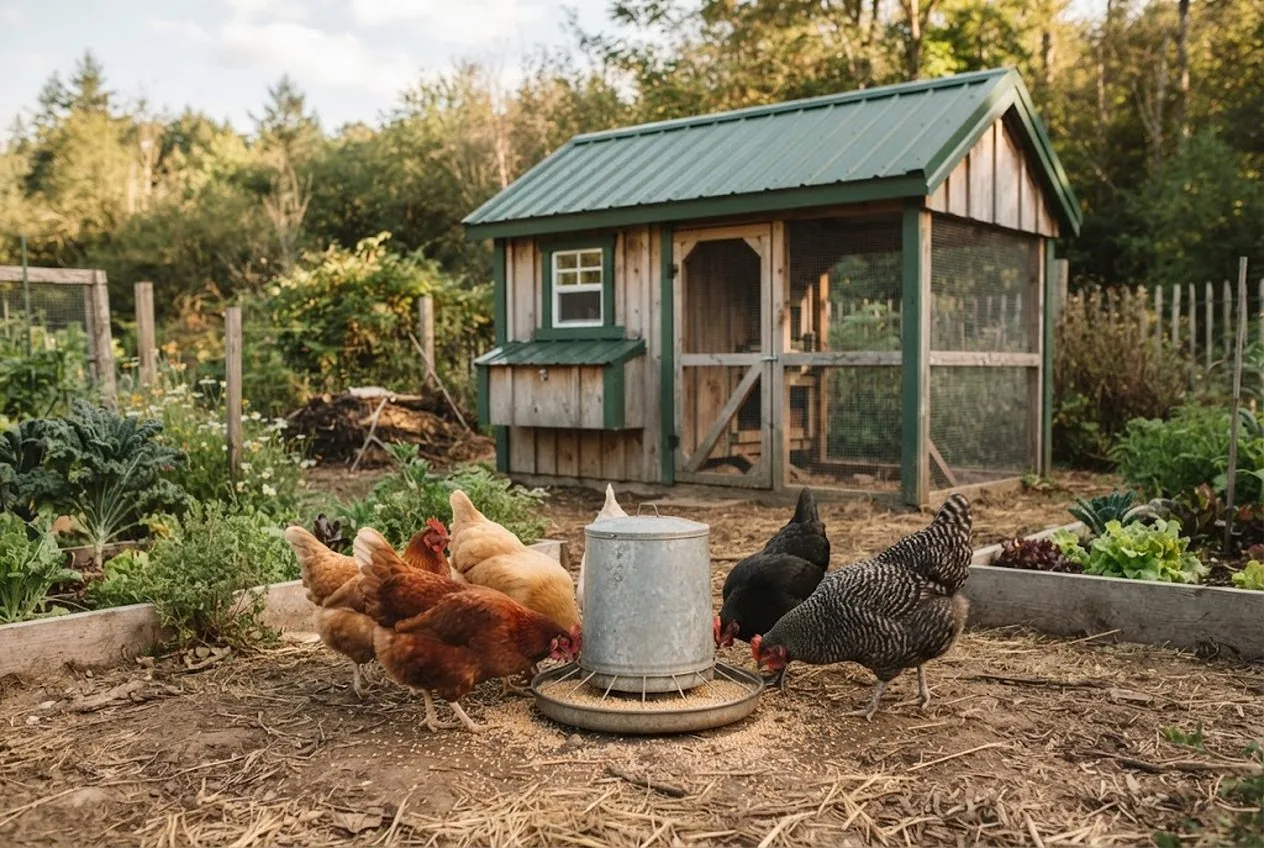
Bird flu has kept backyard chickens in the news for four years running, and every egg-price spike sends another wave of people pricing out chicks and coops. It is not a fluke news cycle. Highly pathogenic avian influenza resurged in commercial poultry this year, driven largely by migrating wild birds, with outbreaks of more than a million birds each at egg-layer operations in Colorado, North Carolina, and Wisconsin (AVMA via The Poultry Site), and USDA’s Economic Research Service counted 9.47 million commercial table-egg layers lost in February 2026 alone (USDA ERS). That is a real dent in the national flock, and it is the kind of number that makes a backyard coop suddenly look like a reasonable answer to a grocery receipt.
Short answer: The bird flu resurgence is real, but egg prices in 2026 have moved the other way: retail eggs were 23 percent cheaper in August 2026 than a year earlier, and USDA forecasts a 29.4 percent drop for the year as replacement pullets cover the losses (USDA ERS). Either way, a backyard flock is a multi-month, several-hundred-dollar project before it produces a single egg, not a same-week fix for this quarter’s prices. It can absolutely pay off, just on a timeline and budget that most impulse buyers underestimate.
Disclosure: the product links here are affiliate links, so we may earn a commission if you buy through them at no extra cost to you. This piece draws on USDA avian-influenza and egg-market reporting, agricultural trade coverage of the 2026 outbreak, and extension-service flock budgets — not a hatchery’s marketing copy. The sticker price on the chicks themselves is the smallest number in the whole project.
The Mechanism: Why a Virus in a Barn Shows Up on Your Grocery Receipt
Egg prices are a supply problem before they are anything else. A laying flock takes months to build — a pullet hatched today typically begins laying at 18 to 20 weeks of age (Oregon State University Extension), and a fully-culled barn does not come back online on a spreadsheet timeline. When a highly pathogenic avian influenza outbreak forces a farm to cull an infected flock, that supply does not return until a new set of pullets matures, and USDA says detections run higher in fall and spring as migrating wild birds spread the virus, which is part of why 2026 has produced fresh culls.
Multiply a barn-sized loss across several states and the millions of hens involved, and the shortfall can show up at the register within weeks, well before any replacement flock could possibly be laying. That lag — sick or culled hens today, empty shelf space for months — is the entire mechanism. It is also why egg prices during an outbreak year behave differently than an ordinary seasonal bump: the supply side is genuinely constrained, not just demand shifting around.
Farm-industry coverage of this year’s outbreak has focused on that same supply mechanic — culled flocks, slow replacement timelines, and the states hit hardest — rather than on any single retail number, because the outbreak’s size and geography are the more durable story than any one week’s egg price.
Why the “Beat the Egg Prices” Math Usually Fails
The instinct makes sense: eggs cost more, so raise your own. The math that actually plays out over a first year rarely matches that instinct, for three reasons.
First, a coop and run are not optional infrastructure you can skip to save money — a flock left unhoused or under-protected gets picked off by predators within days in most yards, hardware cloth and a secure door aren’t upsells, they’re the difference between a flock and a very short story. Second, pullets take months to reach laying age, so anyone starting now with day-old chicks is looking at four to five months of feed costs before the first egg, all while grocery eggs may have already come back down. Third, the “eggs are basically free once you own chickens” framing skips feed, bedding, coop maintenance, and the eventual retirement of hens that stop laying — real, recurring costs that a per-dozen store price comparison tends to erase.
None of that means a flock is a bad idea. It means the honest comparison is not “$6 a dozen at the store” versus “free eggs in the backyard.” It’s a multi-year infrastructure project that happens to produce eggs, evaluated against years of grocery prices, not this month’s spike.
The Honest Verdict on Chickens as an Egg-Price Hedge
Pros
- Once established, feed cost per dozen is usually competitive with store eggs during a price spike
- A coop and flock are reusable, multi-year assets, not a one-time purchase
- Manure and kitchen-scrap use add value beyond the eggs themselves
- Backyard eggs come from birds you can see and manage yourself
Cons
- About 18-20 weeks before started chicks produce any eggs
- Upfront coop, fencing, and equipment costs land well before any payback
- Ongoing feed, bedding, and vet or supplement costs continue whether or not egg prices stay high
- A flock is exposed to the same avian-flu risk driving prices up in the first place
- Local ordinances on flock size and roosters vary and must be checked before buying birds
That list is the honest verdict: a flock is a reasonable multi-year move for someone who wants the eggs, the garden loop, and the daily chore regardless of price headlines. It is a poor tool for beating this month’s grocery bill, because the timeline doesn’t line up.
Where Starting a Flock Actually Makes Sense
The math favors starting now if you already have, or are willing to build, secure fencing and a predator-proof coop; you have a multi-year time horizon rather than a need to offset prices this season; local ordinances in your area permit hens (and check on roosters and flock-size caps before you buy); and you can absorb feed and coop costs as a hobby expense rather than counting on the eggs to pay for themselves quickly.
It makes far less sense as a reaction to a single news cycle. If the appeal is entirely “eggs are expensive right now,” a chest freezer of store eggs or a temporary substitute is a cheaper bridge than a coop build, because prices tied to a culling event tend to ease once replacement flocks mature — usually well before a from-scratch coop project and a four-to-five-month grow-out would have paid for itself.
What a First Flock Actually Costs: The Real Numbers
Where a figure is given below, it comes from University of Maryland Extension’s example backyard budget (University of Maryland Extension); your local prices will differ, so treat every line as a range, not a promise.
| Item | Typical cost | Notes |
|---|---|---|
| Coop and run (DIY build or budget prefab) | Largest single cost ($500 for housing in UMD’s example) | Reclaimed materials and a simple DIY build sit at the low end; a sturdy 4×8 build with a proper run runs higher |
| Predator-proofing (hardware cloth, latches) | Modest, but not optional | Chicken wire alone does not stop a weasel, which can squeeze through a quarter-inch hole (eXtension) |
| Feeder and waterer | About $75 in UMD’s example | Homemade units cost less; an automatic feeder or waterer costs more but cuts daily chores |
| Started chicks or pullets (4–6 birds) | About $6 per chick in UMD’s example | Day-old chicks are cheapest; point-of-lay pullets cost more but skip the 18-20 week wait |
| Bedding and initial supplies | Low (UMD prices bedding at about $15 a bale) | Pine shavings, a heat source for chicks if starting that young, grit and starter feed |
| Rough first-flock total | Several hundred to over a thousand dollars | Wide range depending on DIY vs. prefab and whether you buy chicks or already-laying pullets |
| Ongoing feed (4–6 hens) | Steady (UMD prices layer feed at about $15 per 50-lb bag) | Recurring cost that continues regardless of egg prices |
The line most first-time flock owners forget to budget is time-saving automation once the novelty of the dawn-and-dusk coop routine wears off. An automatic coop door and an automatic feeder aren’t required to start, but most keepers add one or both within the first year, and it’s worth pricing them into the real budget rather than treating them as a surprise upsell later.
Half-inch hardware cloth belongs in the initial build, not the “maybe later” pile — it’s the single line item that determines whether a first flock survives its first few months, well before an automatic door or feeder matters at all.
Before You Order Chicks: A Reality Check
- Have you confirmed your city or county actually permits backyard hens, and checked any cap on flock size or rule on roosters?
- Do you have, or are you prepared to build, a genuinely predator-proof coop and run before any bird arrives — not sometime in the first month?
- Can you cover four to five months of feed and care before a started chick lays a single egg, without that timeline changing your decision?
- Is your real goal cheaper eggs this season, or a longer-term backyard project? Those two goals call for different decisions right now.
- Do you have a plan for winter care, molting downtime, and the eventual end of a hen’s laying years, not just the first productive season?
The Bottom Line
The bird flu resurgence is real: it has cut millions of laying hens from the national flock in 2026, even as a deep bench of replacement pullets has kept egg prices well below last year’s. But the mechanism behind every egg-price spike — a slow-to-replace laying flock — is the same mechanism that makes a backyard flock a slow-to-pay-off project. Both run on the same clock; only one of them is trying to solve this month’s grocery bill on that clock.
A flock is a sound multi-year move for someone who wants the eggs, the garden loop, and the daily chore on its own merits. It is not a fast hedge against a headline. If you decide to go ahead, build the coop right the first time — our DIY backyard chicken coop guide and winterizing checklist cover the predator-proofing and cold-weather details that determine whether a first flock survives its first year, and our heated waterer review and automatic door comparison cover the two upgrades most keepers add once the daily routine sets in.
Frequently Asked Questions
- How does bird flu affect egg prices?
- USDA's Economic Research Service says the highly pathogenic avian influenza outbreak that began in 2022 has raised egg prices by shrinking egg-layer flocks and egg production. Culling a barn of hens removes a slice of supply almost overnight, and it takes months to replace a laying flock because pullets need time to mature. In 2026 the virus resurged, with 9.47 million commercial table-egg layers lost in February alone, but a record supply of replacement pullets has covered the losses, and ERS forecasts retail egg prices to fall 29.4 percent for the year.
- Does bird flu put backyard chickens at risk too, not just commercial farms?
- Yes. USDA says migrating wild birds keep spreading the virus, and around 1,190 backyard flocks had been affected since the outbreak began in 2022, alongside about 1,000 commercial flocks. Backyard flocks are arguably more exposed in some ways, since they are more likely to free-range where wild birds pass through. Basic biosecurity — keeping the flock separate from other birds, dedicated footwear and clothing, clean equipment — matters just as much for six hens as it does for a large operation.
- Is it actually cheaper to raise your own eggs than buy them at the store?
- Not at first, and often not in year one at all. Coop construction or purchase, fencing, and starter equipment are a real upfront cost that egg savings alone take a while to pay back; University of Maryland Extension notes those startup costs are expensive if you keep hens for only a year or two and more economical spread over several years. Once the coop is built, the ongoing feed cost per dozen eggs is usually competitive with store prices during a price spike, but it is a multi-year project, not a fast hedge against this month's grocery bill.
- How much does it cost to start a backyard flock from scratch?
- University of Maryland Extension says to expect several hundred to over a thousand dollars up front, depending on flock size and setup; its example budget puts housing at $500, a feeder and waterer at $75, and chicks at about $6 each. A bare-bones DIY build can come in lower, while a prefab coop and full accessory kit can run well past $1,000. Ongoing feed is a steady monthly cost on top of that, plus the cost of any winter gear like a heated waterer.
- Do chicks and coops really sell out when egg prices spike?
- Hatcheries and farm stores can run short of chicks and coops when demand spikes, especially in spring. That is a supply-and-demand story, not a guarantee it will happen everywhere or stay that way, and availability tends to loosen once the initial rush passes. If you are set on starting a flock this season, ordering early and having a backup hatchery or feed store in mind is more useful than assuming stock will be waiting whenever you're ready.
Sources & references
- USDA Economic Research Service, Food Price Outlook summary findings (opens in new tab)
- USDA Economic Research Service, Livestock, Dairy, and Poultry Outlook: April 2026 (opens in new tab)
- AVMA via The Poultry Site, Bird flu surges in US poultry as wild migration spreads virus (opens in new tab)
- University of Maryland Extension, Backyard layer flock economics (opens in new tab)
- Oregon State University Extension, Why did my chickens stop laying? (opens in new tab)
- eXtension, Predator management for small and backyard poultry flocks (opens in new tab)
Before you go
The Renter's Homestead Pack
Self-reliance projects for the yard you don't own — container yields, a raised bed built to move with you, balcony preservation basics, and the landlord questions to ask first.
Free guide
The Renter's Homestead Pack
Self-reliance projects for the yard you don't own — container yields, a raised bed built to move with you, balcony preservation basics, and the landlord questions to ask first.