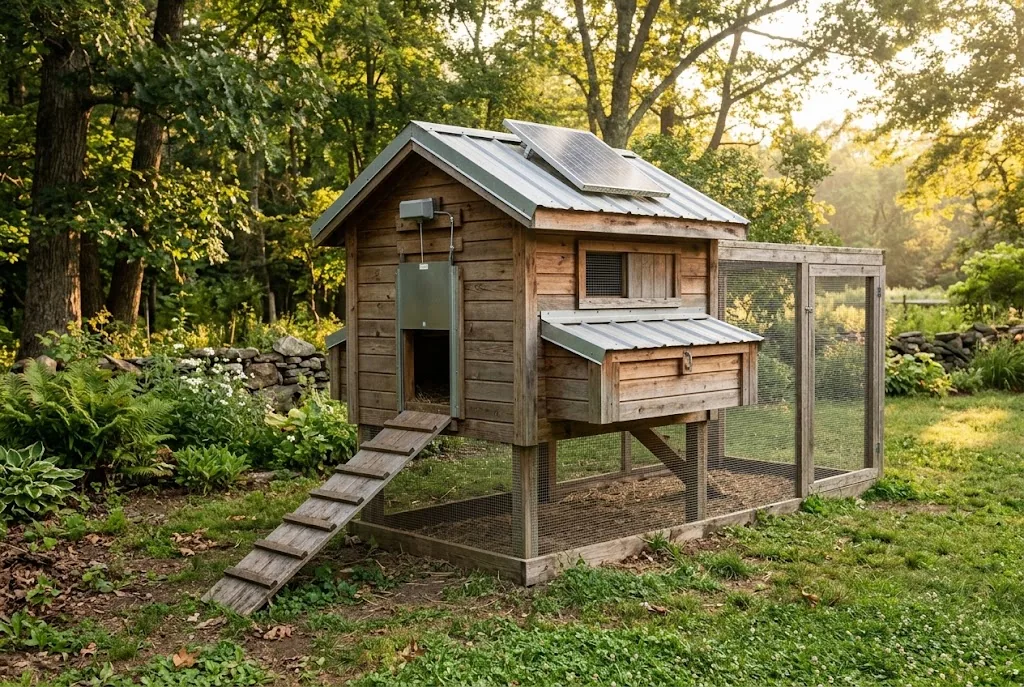
The two chores that actually tie you to a backyard flock are the dawn release and the dusk lock-up — and the freezing water bowl every winter morning. Automate those three things and chickens go from a daily obligation to a nearly hands-off part of the yard. Better still, you can power the whole setup from a small solar panel, so it works even at the far corner of the property with no mains wiring.
Short answer: an automatic pop-door on a solar-charged battery handles the open-at-dawn, close-at-dusk routine and the predator protection, and a heated waterer solves frozen water in winter. Budget models of all three can come in under $150 together (check current prices), and they eliminate the two jobs that make keeping chickens feel like a leash.
Disclosure: the links below are affiliate links, and the guidance reflects standard backyard-coop practice. If you are still building the coop itself, start with our DIY backyard chicken coop plan, then add this automation on top.
Why Automate These Two Jobs First
Plenty of coop “automation” is a solution in search of a problem — automatic feeders and cameras are nice, but they are not what wakes you at 5:30 a.m. The two genuine pain points are:
- The door. Chickens must be let out at first light and locked in after they roost, or a raccoon, fox, or weasel will find them; all three are nocturnal flock predators (Virginia Cooperative Extension), and extension guidance is to have the flock roost in a secured coop with every door closed and locked at night (Poultry Extension). That is a twice-a-day, time-specific commitment 365 days a year.
- The water. In winter, an open waterer can freeze overnight and again during the day, so someone is out there thawing it constantly.
Fix those two and you have fixed the flock’s grip on your schedule. Everything else is a bonus.
Step 1: The Automatic Pop-Door
This is the centerpiece. An automatic door opens and closes the coop’s small pop-hole on a schedule so your birds are released and secured without you.
Choose a light-sensor model if you want the door to track the changing sunrise and sunset through the seasons, or a timer model if you prefer fixed times you set yourself. Either way, the door’s low-power motor is easy to run off a small battery — which is what makes solar so practical here.
Step 2: Power It With a Small Solar Panel
A pop-door motor sips power, so you do not need a big system to run it off-grid.
Mount the panel where it catches the most sun — usually the coop roof, angled toward the south — and connect it to the door’s battery or a small dedicated 12V battery. Because the door draws so little, a small panel usually keeps it charged through short winter days. This same small-panel approach powers our solar automatic chicken feeder build, if you want to add feeding to the system later.
Step 3: A Heated Waterer for Winter
The other chore worth killing is the frozen waterer. A heated poultry waterer keeps drinking water liquid through the coldest nights so your birds stay hydrated and you stop hauling out hot water every morning.
One honest note on power: a heated waterer draws far more than the door motor. Many keepers run the door on solar year-round but power a heated waterer from mains in deep winter, since heating water is energy-hungry. If your coop is fully off-grid, size up the panel and battery accordingly, or reserve the heated waterer for the hardest freezes.
Step 4: Wire It Cleanly and Weatherproof It
Route all wiring away from the birds — chickens peck at anything — and keep connections dry and protected from the weather; with any electrical appliance in a coop, UNH Extension advises precautions against fire and electrical shock (UNH Extension). Secure the solar panel against wind, and fully enclose anything the flock can reach so they cannot foul or damage it. Tidy, protected wiring is the difference between a system that runs for years and one that fails in the first storm.
Step 5: Test the Daily Cycle
Before you trust it, run the door through a full open-and-close cycle, confirm the panel is charging the battery, and check the waterer holds temperature overnight. Then watch it for several days: the critical detail is that the door closes after your flock reliably goes in to roost, so no straggler gets shut out. Adjust the timing until it matches your birds’ actual habits.
Step 6: Keep It Running
Automation is not “install and forget.” A few minutes of upkeep keeps it reliable: wipe the solar panel clean monthly so it charges at full output, check the door sensor and battery voltage each season, and clean the waterer regularly. Do that and an automated coop quietly runs itself through every season.
The Payoff
For under $150 you have removed the two things that make backyard chickens feel like a daily job — the dawn-and-dusk door run and the frozen water — and you have done it with a system that needs no mains power. The birds are safer at night, better hydrated in winter, and your mornings are your own again. That is the highest-leverage upgrade a small flock can get.
Frequently Asked Questions
- Can you really automate a chicken coop for under $150?
- Yes, for the core jobs. A budget automatic pop-door, a small solar panel and battery to power it, and a heated waterer for winter cover the two chores that actually tie you to the coop — letting the flock out at dawn and locking up at dusk, and keeping water from freezing. Fancier systems add cameras and automatic feeders, but the door-and-water automation is what buys back your mornings, and it fits the budget.
- How does a solar automatic chicken door work?
- A small solar panel charges a battery that powers a motorized door. A light sensor (or a timer) tells the door to open at dawn and close once the birds have gone in to roost at dusk. Because it runs off its own solar-charged battery, it works with no mains wiring at all — ideal for a coop at the back of the yard or fully off-grid.
- Will a small solar panel keep the door running through winter?
- For the door alone, usually yes — a pop-door motor draws very little, so a modest panel and battery usually carry it through short winter days. A heated waterer draws far more, so many keepers run the door on solar year-round but power a heated waterer from mains in deep winter, or size up the panel and battery if the coop is truly off-grid.
- Is an automatic door safe for the chickens?
- Look for a door with obstruction detection or slow, low-force closing so it won't harm a bird in the opening, but placement and timing still matter. Set the closing time for after your flock reliably roosts, watch the first several cycles to confirm no straggler gets caught, and keep the mechanism clean so it moves freely. Done right, it's far safer than a coop left open to night predators.
Sources & references
Before you go
The Renter's Homestead Pack
Self-reliance projects for the yard you don't own — container yields, a raised bed built to move with you, balcony preservation basics, and the landlord questions to ask first.
Free guide
The Renter's Homestead Pack
Self-reliance projects for the yard you don't own — container yields, a raised bed built to move with you, balcony preservation basics, and the landlord questions to ask first.