What’s the short answer?
- Store original tax returns, birth certificates, Social Security cards, insurance policies, and property titles in one container rated for both water and fire, not fireproof alone.
- Scan paper documents and save copies on a secure device or in the cloud in addition to the physical backup.
- Photograph or video your home, vehicles, and belongings room by room before a storm to support insurance and tax-loss claims.
- If originals are destroyed, use the IRS's online tool to retrieve tax transcripts and past returns instead of waiting on mailed copies.
- September 10 marks the climatological peak of the Atlantic hurricane season, not its end.
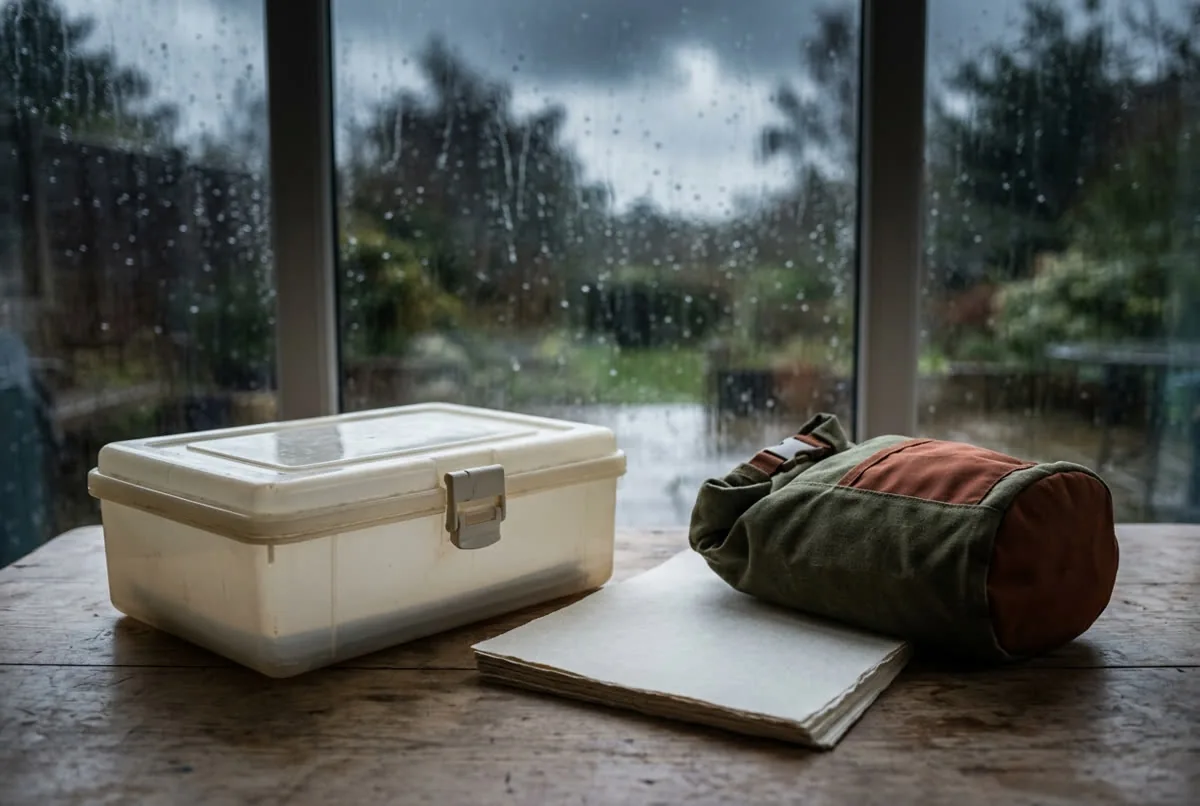
A hurricane watch goes up, and the mental checklist starts with batteries and bottled water, not paperwork. The folder holding your birth certificate, deed, and Social Security card usually sits on a closet shelf, in a container that was never rated for six inches of storm surge or a house fire. The IRS used National Preparedness Month to address that gap directly, a week before the Atlantic season’s climatological peak.
The short answer: Keep original tax returns, birth certificates, Social Security cards, insurance policies, and property titles in one container rated for both water and fire, back them up with scans or photos stored off-site, and know how to pull tax transcripts online if the paper copies do not survive (IRS.gov, 2026-09-03).
September 10 is the Atlantic season’s climatological peak, not its end, with most activity occurring between mid-August and mid-October (National Hurricane Center). NOAA’s August 6, 2026 update forecasts 7 to 13 named storms and 2 to 6 hurricanes for the season, with a 75 percent chance it lands below normal overall; as of that update, two named storms, Arthur and Bertha, had already formed in the Gulf (NOAA.gov, 2026-08-06). NOAA stresses that its outlook covers overall seasonal activity and is not a landfall forecast, so a below-normal forecast is not the same as a low-risk one for any single household, and the paperwork step below takes less time than most of the rest of a storm checklist. It also applies whether you own the roof over your head or rent it; the papers in your own folder are yours either way.
What Documents Actually Need Protecting Before a Storm
The IRS’s September 3, 2026 reminder says to keep tax returns, birth certificates, Social Security cards, insurance policies, property titles, and other important records in waterproof and fireproof containers (IRS.gov, 2026-09-03). This guide treats the first five as the priority set. These are the documents that prove who you are, what you own, and what coverage you are entitled to after a loss, and they are also the slowest and most frustrating to replace when a government office or an insurer needs to verify your identity from scratch.
Most households already stock the obvious storm gear: a hand-crank weather radio by the door, water and light covered in a hurricane-season blackout kit. The paperwork drawer gets skipped because it is not as visible a risk as a dead flashlight, right up until a claims adjuster asks for a policy number you cannot produce.
Sorting originals from everything else
Not every piece of paper in the house needs the same level of protection. Split what you have into two piles: the five categories the IRS names first, which are hard to replace and often required to prove identity or ownership, and everything else, which is inconvenient to lose but not identity-critical. Utility bills, warranty cards, and old tax returns beyond what you are required to keep can stay in a regular filing cabinet. The five priority categories go into the waterproof, fireproof container, together, so there is one place to grab in an evacuation rather than five.
Pull the originals of those five categories into that single container now, before a storm is on the forecast. Trying to gather them from different rooms while a watch is already posted wastes time you do not have, and it is the kind of task that gets skipped entirely once the wind picks up.
A one-page reference sheet
Tuck a single sheet into the same container listing your insurance policy numbers, your agent’s phone number, and your bank’s fraud line. Leave passwords and full account numbers off it; the sheet is there to save the scramble when you are filing a claim from a shelter with a phone at ten percent battery. Update the sheet whenever a policy renews, since an outdated policy number is nearly as useless as no number at all.
Is a Fireproof Safe Enough, or Do You Need Waterproof Too
A fireproof lockbox feels like it should cover the bases, but it usually does not. The IRS recommends containers that are both waterproof and fireproof (IRS.gov, 2026-09-03). Flood and storm-surge damage is a separate risk from fire damage, and a box built to survive one does not automatically survive the other.
That distinction matters most for coastal and low-lying homes, where storm surge and heavy rain are the more likely threat than fire during hurricane season. A container rated explicitly for both closes the gap without forcing a choice between the two failure modes. If you already own a fireproof box and its listing does not also mention water or submersion resistance, treat it as half the solution rather than the whole plan, and add a sealed liner or a second waterproof layer inside it until you can replace it.
Where to keep the container
A waterproof, fireproof case only helps if you can reach it fast. A closet shelf near an exterior door beats a basement or a low cabinet, since flooding tends to enter a home at ground level first. If you evacuate, the same container should be small enough to carry to the car in one trip, alongside the rest of the storm kit already staged by the door.
Should You Scan Documents or Just Photograph Them With Your Phone
The IRS recommends scanning paper records and saving the electronic copies on a secure device or in the cloud, noting that many financial institutions already offer electronic statements as a backup source (IRS.gov, 2026-09-03). A flatbed scan produces a clean, flat, fully legible copy, which matters if an insurer or a government office ever needs to read fine print like a policy number or a legal property description.
A phone photo is not a full substitute for a scan, but it is better than no backup at all if a scanner is not available. Lay the document flat in even light, photograph it straight on rather than at an angle, and check that the file is actually readable before you move on, not just that a photo exists.
Where to store the backup copies
Either way, the goal is the same: a copy that exists somewhere other than the physical folder in your house, so a single flood or fire cannot take out both the original and the backup at once. A cloud folder covers you if the phone or laptop is also damaged or lost; a copy on a second device covers you if the internet or the cloud account is unreachable right when you need it. Using both, rather than picking one, is the simplest way to avoid a single point of failure.
How to Get Tax Records Back if the Originals Are Destroyed
If paper tax records are lost, the IRS points taxpayers who need copies of previously filed returns or transcripts after a disaster to its “Get Your Tax Records and Transcripts” online tool (IRS.gov, 2026-09-03). That online path matters most in the weeks right after a storm, when you may need a prior-year return to support an insurance claim, a disaster-loss deduction, or a loan application, and local mail service may still be disrupted.
Knowing this tool exists before you need it is the real value. Bookmark it alongside your insurance company’s claims number and your bank’s account-recovery page, so all three are in the same place when you are working from a phone in an evacuation shelter or a relative’s kitchen table, rather than searching from scratch under pressure.
The Best Way to Document Your Home’s Contents for Insurance
Beyond the paperwork itself, the IRS recommends photographing or video-recording your home, business, and vehicles before a disaster, and points to its disaster-loss workbooks for building a room-by-room list of belongings that supports both an insurance claim and a tax-loss claim (IRS.gov, 2026-09-03). A slow walkthrough video, narrated room by room, captures far more detail than a handful of still photos, and it takes less time than writing an inventory from memory after the fact.
Filming a walkthrough that actually holds up
Open closets and drawers as you go rather than filming closed cabinet doors, and pan slowly enough that appliance brand plates and serial number stickers are legible if you review the footage later. Say the date and the room out loud as you move through the house so the footage documents itself. Cover the garage, shed, and any vehicles the same way, since those often hold equipment that is easy to forget once you are focused on the main living space.
Store that video the same way you store the scanned documents: a copy on your phone, a copy backed up somewhere else. If a claims adjuster or a tax preparer ever needs to verify what was lost, a dated video of the intact home gives you far more to work with than a memory of what used to be in the closet.
None of this is a once-and-done task. Documents expire, policies renew, and rooms fill up with belongings that were never on the last walkthrough. Treat National Preparedness Month, or the start of hurricane season each year, as the trigger to redo the video and refresh anything in the container that has changed, rather than assuming the version you made once will still be accurate years later.
Set aside time this week, before the next system shows up on the forecast map, to pull the five document categories above into one physical location and start the digital backups. A case built specifically to be both waterproof and fireproof makes the physical side simple, and a broader household preparedness guide can help fold this step into the rest of your storm plan.
Frequently Asked Questions
- What documents does the IRS recommend keeping in a waterproof and fireproof container?
- Tax returns, birth certificates, Social Security cards, insurance policies, property titles, and other important records (IRS.gov, 2026-09-03).
- Is a fireproof safe enough to protect important documents during a hurricane?
- Not by itself. The IRS recommends containers that are both waterproof and fireproof (IRS.gov, 2026-09-03). Flood and storm-surge damage is a separate risk from fire damage, so a container built for only one may not protect against the other.
- How can I get copies of my tax records if the originals are destroyed?
- The IRS says taxpayers who need copies of previously filed returns or transcripts after a disaster can use its "Get Your Tax Records and Transcripts" tool on IRS.gov (IRS.gov, 2026-09-03).
- When is the Atlantic hurricane season's peak?
- September 10 is the climatological peak of the Atlantic hurricane season, with most activity occurring between mid-August and mid-October (National Hurricane Center).
- What does NOAA's 2026 hurricane outlook say?
- NOAA's August 6, 2026 update forecasts 7-13 named storms and 2-6 hurricanes, with a 75 percent chance of a below-normal season; two named storms, Arthur and Bertha, had already formed in the Gulf as of that update (NOAA.gov, 2026-08-06).
Sources & references
Before you go
The Renter's Homestead Pack
Self-reliance projects for the yard you don't own — container yields, a raised bed built to move with you, balcony preservation basics, and the landlord questions to ask first.
Free guide
The Renter's Homestead Pack
Self-reliance projects for the yard you don't own — container yields, a raised bed built to move with you, balcony preservation basics, and the landlord questions to ask first.