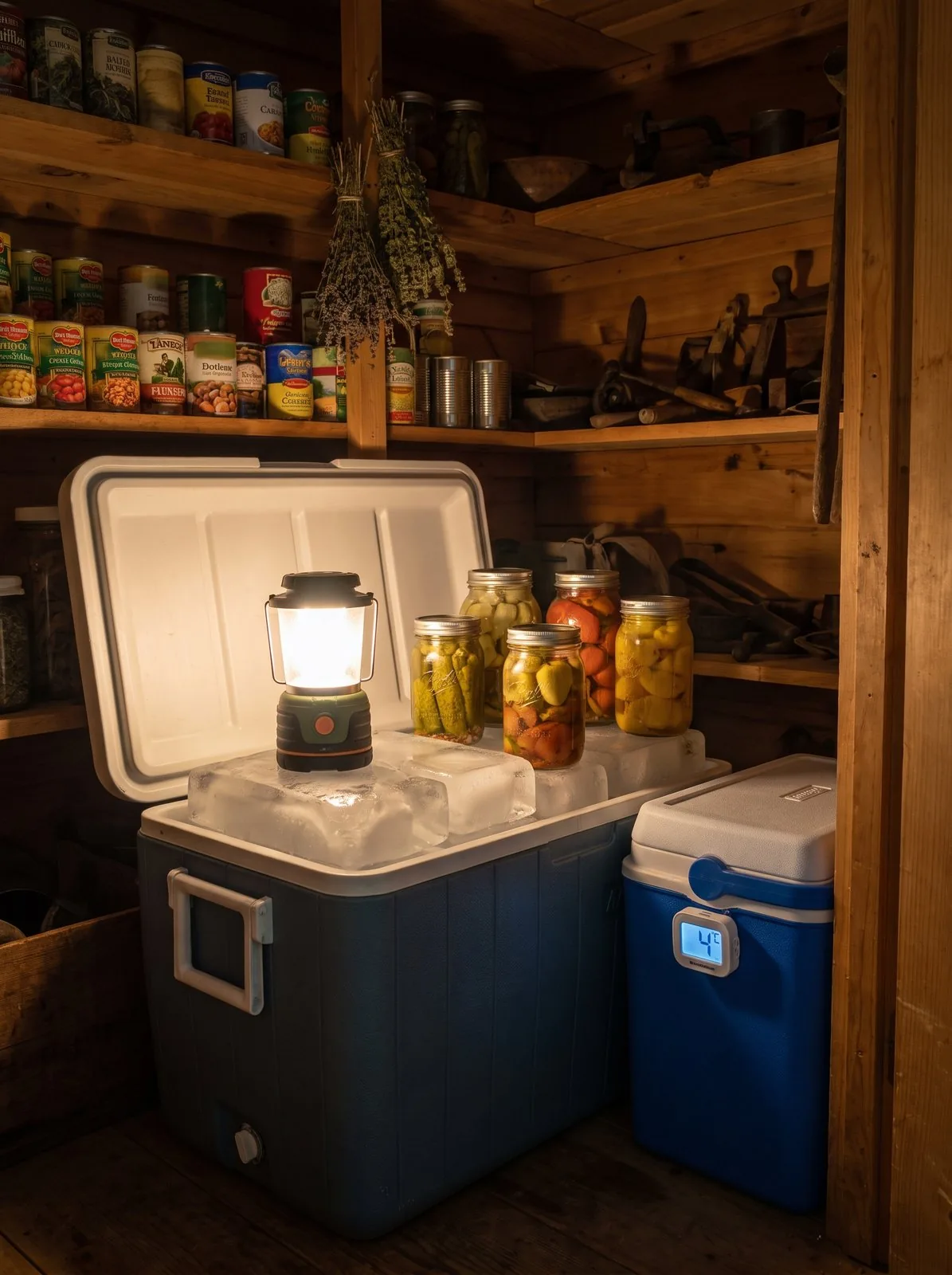
When a summer heat wave drags the grid down, the first thing most people worry about is comfort. The thing that will actually cost you money is the fridge. A refrigerator full of groceries and a chest freezer full of meat represent hundreds of dollars, and both start their countdown the second the compressor goes quiet.
Here is the short answer. An unopened refrigerator keeps food safely cold — at or below 40°F — for about 4 hours. A full freezer holds for about 48 hours, a half-full one for about 24 (FDA). To stretch those numbers, you keep the doors shut, add ice, consolidate food into coolers, and, for a longer outage, run the appliance off a portable power station or solar generator while watching a thermometer to stay under the 40°F line. Everything below is how to do that in the right order, before the ice cream turns to soup.
The households that lose the least in a multi-day outage are rarely the ones with the most gear — they are the ones who act in the first ten minutes and then leave the doors alone.
How Long Does Food Stay Cold Without Power?
The USDA numbers are worth memorizing because they set your whole timeline:
- Refrigerator: ~4 hours unopened, at or below 40°F.
- Full freezer: ~48 hours.
- Half-full freezer: ~24 hours.
Two things wreck those numbers: opening the door, and a freezer that is half empty. Cold air spills out every time you open up, and empty space in a freezer is space full of warm air. This is why a packed freezer outlasts an empty one by a full day — the frozen mass acts like a giant ice block.
The 40°F line matters because bacteria multiply fastest in the “danger zone” between 40°F and 140°F. Perishable food held above 40°F for more than 2 hours is no longer safe (FDA). That is the rule that decides, later, what you keep and what you throw out.
What You’ll Need
- An appliance thermometer for the fridge and one for the freezer
- Bags of ice, block ice, or frozen water jugs (make these now, before storm season)
- Dry ice for long outages (buy from a grocery or ice supplier; handle with gloves)
- One or two well-insulated coolers
- A portable power station (Amazon) — the cleanest way to keep a fridge running through a multi-hour outage
- An instant-read thermometer (Amazon) — to spot-check food before you decide to keep or toss it
Step-by-Step: Keeping Food Cold Without Power
Step 1: Keep the Doors Closed and Start the Clock
The single highest-value move costs nothing: stop opening the fridge. Write down the time the outage started and mark your two deadlines — the 4-hour refrigerator window and the 2-hour “above 40°F” rule for anything that does warm up.
Every door opening dumps cold air and pulls in warm room air, which in a heat wave might be 85°F or higher. Decide what you need, get it all in one trip, and shut the door. Tape a sign on it if you have kids or roommates who forget.
Step 2: Add Ice to Buy More Time
Ice is your cheapest hour-buyer. Slide frozen water jugs or bags of ice into the fridge to hold it under 40°F. For the freezer, block ice lasts far longer than cubes, and dry ice is the heavy hitter: roughly 50 pounds keeps an 18-cubic-foot full freezer cold for about two days (FDA).
Handle dry ice with gloves — never bare skin — set it on a piece of cardboard on top of the food (cold sinks down through everything below it), and crack a window, because it releases carbon dioxide as it sublimates. This is exactly why smart preppers keep a few frozen jugs in the freezer year-round: they store cold, keep a full freezer full, and become ice the moment you need it.
Step 3: Consolidate Food Into Coolers
If the outage looks like it will outlast your fridge’s 4-hour window, move the most perishable items — raw meat, dairy, leftovers, anything you would hate to lose — into a packed cooler. A cooler full of food and ice holds cold dramatically better than a fridge with lots of air space, and you open a small lid instead of a tall door.
Keep a second cooler for drinks and snacks so the “food” cooler stays shut. Every unnecessary opening of the main cooler is cold you do not get back.
Step 4: Power the Fridge With a Battery or Solar
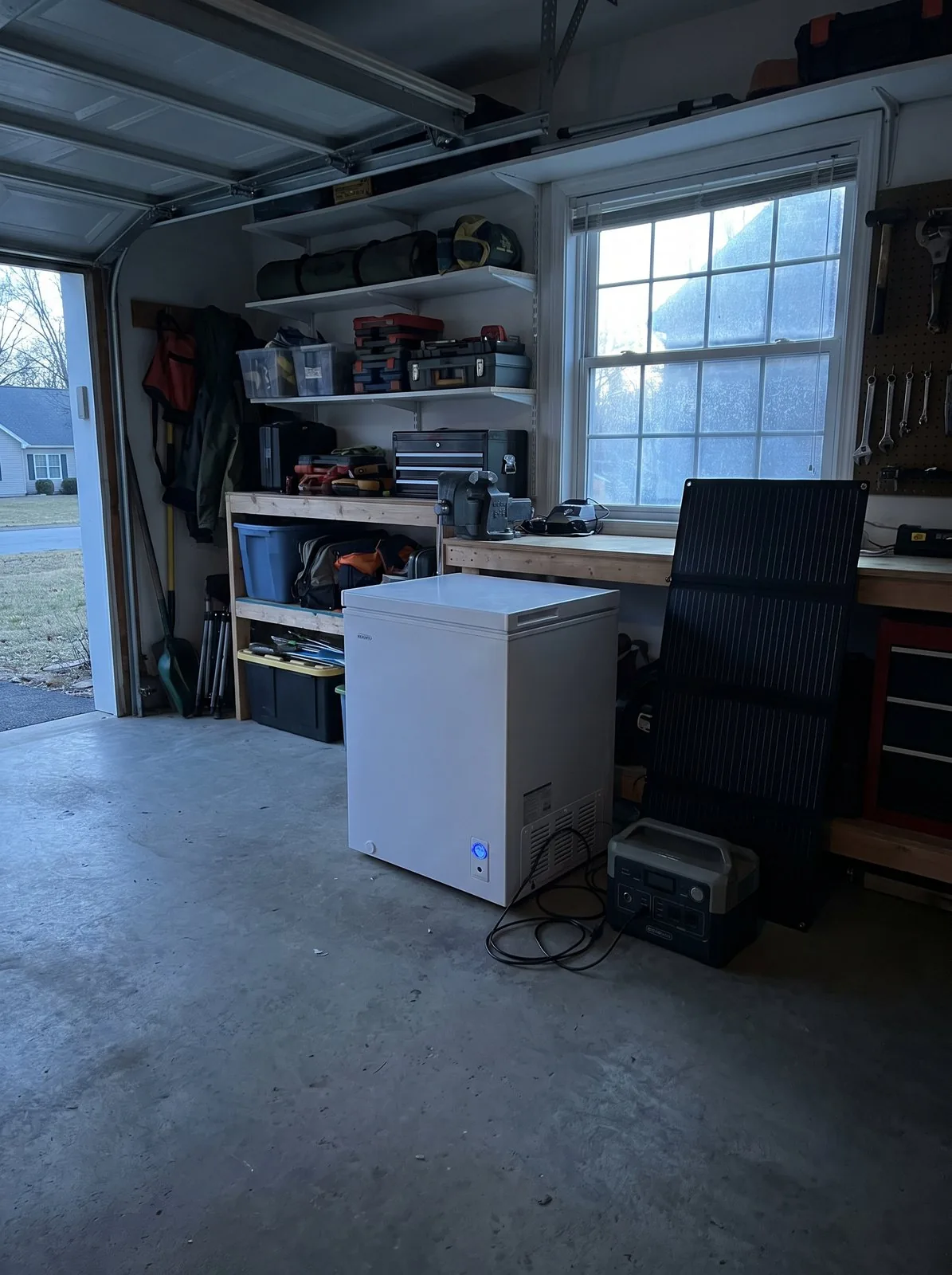
For any outage longer than a few hours, the real answer is to keep the appliance running. A modern refrigerator’s compressor cycles on and off rather than running constantly, so its average power draw is modest. That is well within reach of a mid-size battery.
A portable power station (Amazon) in the 1,000Wh class can usually run a typical fridge for many hours on a single charge. Add a folding solar panel (Amazon) and you can top the battery back up every sunny afternoon, which in a heat wave — long, cloudless days — is exactly when you have the most sun. That combination can carry a fridge through a much longer outage. If you are weighing whether a bigger home battery makes sense, our best power stations for a heat-wave blackout guide sizes units to real appliance loads.
Step 5: Monitor the Temperature
You cannot manage what you cannot see. The outside of a fridge can feel cool while the inside has quietly climbed past 40°F. Keep an appliance thermometer in both the fridge and the freezer and glance at it with a quick door crack rather than a long browse.
An instant-read thermometer (Amazon) lets you check individual items — the center of a package of meat, a jug of milk — before you decide their fate. When the power returns, those two numbers, fridge and freezer, are what tell you the truth about your food.
Step 6: Decide What to Keep and What to Toss
When power comes back, work through the fridge by the 40°F rule. Anything perishable that sat above 40°F for more than 2 hours goes in the trash, no matter how it looks or smells — you can’t rely on appearance or odor (FDA). Freezer food that still has ice crystals or stayed at or below 40°F is safe to refreeze, though the texture may suffer.
“When in doubt, throw it out” sounds wasteful until you price a night in the ER against a package of chicken. Toss with a clear conscience.
Longer Outages: Off-Grid Cold Storage
If you are in a multi-day, grid-down stretch — the kind a serious summer storm season can bring — ice and batteries eventually run out, and it is worth having a lower-tech layer underneath them:
- A solar chest freezer. A chest freezer holds cold better than an upright (cold does not fall out when you open the top) and runs comfortably on a modest solar-and-battery setup. For long outages it is the workhorse of off-grid food storage.
- A spring house or cold stream. If you have a cold, running stream, sealed jars of food submerged in it stay cool for free. It is the original off-grid fridge and still works.

- A root cellar. For anything that does not strictly need refrigeration — eggs, hard cheese, root vegetables, ferments — a cool underground space holds a steady, cool temperature. Our how to build a root cellar guide covers building one into a basement corner or hillside.
The deeper principle is to not depend on the freezer for everything. Preserving part of your harvest so it does not need cold at all — through food preservation without electricity and pantry stocking — means a blackout threatens less of your food to begin with.
Pro Tips
- Freeze water jugs now. Fill the empty space in your freezer with frozen jugs. They keep a full freezer full (which makes it hold cold longer) and become emergency ice the instant you need it.
- Buy a couple of appliance thermometers before you need them. They cost a few dollars and turn “I think it’s fine” into a number you can act on.
- Keep a cooler and ice packs staged. In a fast-moving outage you do not want to be hunting for the cooler in the garage while the fridge warms.
- Group food by risk. Push the most perishable, highest-value items to the front so you can grab them fast for the cooler without holding the door open.
- Pre-chill before a forecasted outage. If a storm is coming, turn the fridge and freezer to their coldest settings a day ahead so you start the outage with a deeper cold reserve.
Why This Matters
A fridge and freezer full of food is one of the biggest grocery investments in your house, and it is completely exposed to the least reliable thing in it — the grid. The households that sail through a summer blackout are not the ones with a bunker; they are the ones who shut the doors in the first ten minutes, had ice and a battery staged, and knew the 40°F rule cold.
Get those basics in place and a multi-hour outage becomes an inconvenience instead of an expensive loss. Pair this with a broader summer blackout prep checklist and you have covered the part of preparedness that quietly pays for itself the first time the lights go out.
Frequently Asked Questions
- How long will food stay cold in the fridge without power?
- About 4 hours, as long as you keep the door shut. The USDA guideline is that a refrigerator holds a safe temperature (at or below 40°F) for roughly 4 hours unopened. A full freezer holds for about 48 hours, and a half-full freezer for about 24 hours. Every time you open the door, you lose cold air and shorten that window.
- At what temperature does refrigerated food become unsafe?
- 40°F is the line. Perishable food — meat, poultry, dairy, eggs, leftovers, cut produce — held above 40°F for more than 2 hours should be thrown out, because bacteria multiply quickly in the 40°F to 140°F 'danger zone.' A cheap appliance thermometer left in the fridge takes the guesswork out of it, because the outside of the unit can feel cool while the inside has already climbed past 40°F.
- Can I use dry ice to keep my freezer cold in an outage?
- Yes, and it is one of the most effective options for a long outage. Roughly 50 pounds of dry ice will keep an 18-cubic-foot full freezer cold for about 2 days. Handle it with gloves, never touch it bare-handed, place it on cardboard on top of the food (cold sinks), and ventilate the room, because dry ice sublimates into carbon dioxide gas.
- Will a portable power station run a refrigerator?
- For most modern fridges, yes. A refrigerator's compressor cycles on and off rather than running constantly, with a brief startup surge each time, so its average draw is modest. How long a power station lasts depends on its capacity and how much energy your particular fridge uses, and a solar panel to recharge it during the day can extend that runtime considerably.
- Is it safe to refreeze food that thawed during a power outage?
- It depends on temperature, not appearance. Food that still contains ice crystals or has stayed at or below 40°F can be safely refrozen, though quality may drop. Anything that warmed above 40°F for more than 2 hours should not be refrozen — cook it immediately if it is still cold, or discard it.
Sources & references
Before you go
The Renter's Homestead Pack
Self-reliance projects for the yard you don't own — container yields, a raised bed built to move with you, balcony preservation basics, and the landlord questions to ask first.
Free guide
The Renter's Homestead Pack
Self-reliance projects for the yard you don't own — container yields, a raised bed built to move with you, balcony preservation basics, and the landlord questions to ask first.