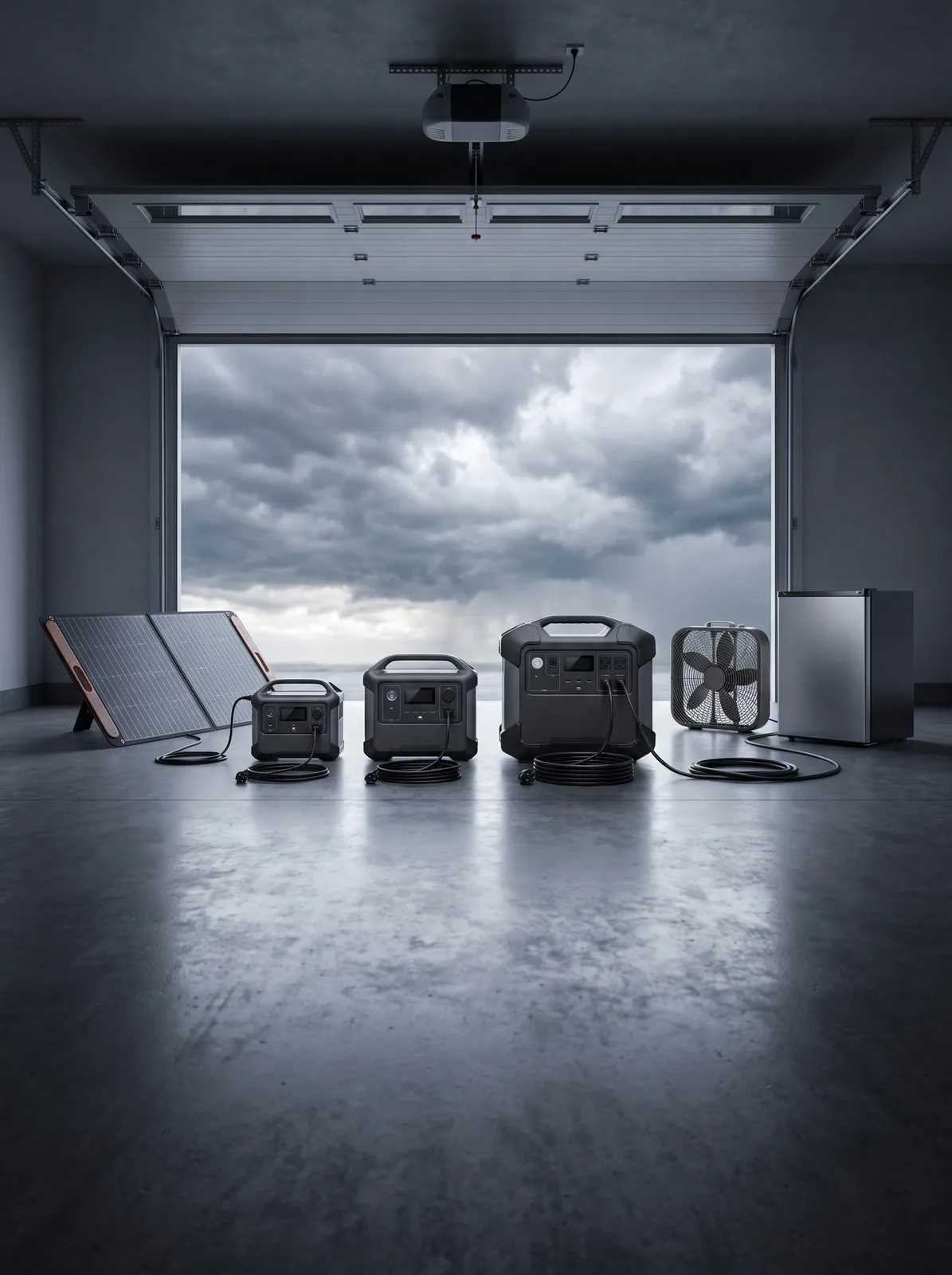
A heat-wave blackout is the scenario portable power stations were built for: the grid fails on a blistering afternoon, the AC is out of reach anyway, and what you really need is to keep the fridge cold, the fans moving, the phones charged, and a CPAP running overnight; outages hit exactly those needs, from food and medicine refrigeration to cooling, communication and medical equipment (American Red Cross). The question is which unit, and how big.
Short answer: for most households, a 1,000Wh-class unit with a pure sine wave inverter and solar input is the sweet spot — big enough to keep a refrigerator running for many hours and recharge from a panel during the long sunny days a heat wave delivers. Below, I compare a well-rounded EcoFlow, a heat-tolerant LiFePO4 Bluetti, and a budget solar generator, and show you how to size any unit to your own appliances.
Disclosure up front: we analyzed manufacturer specs, independent 2026 reviews, and real-world runtime reports rather than bench-testing every unit ourselves, and the product links here are affiliate links. With that said, here is how the classes actually compare.
Best Power Stations for a Blackout: Side-by-Side
| EcoFlow (mid-size) | Bluetti AC180 (LiFePO4) | Budget 300W Solar Generator | |
|---|---|---|---|
| Best for | All-round home backup | Heat tolerance & long life | Phones, lights, light loads |
| Capacity class | ~1,000Wh | ~1,150Wh | Small (300W class) |
| Runs a full-size fridge? | Yes, for many hours | Yes, for many hours | No — too small |
| Battery chemistry | Lithium (NMC/LiFePO4 by model) | LiFePO4 | Lithium |
| Solar recharge | Fast, high input | Yes, strong input | Yes, modest |
| Inverter | Pure sine wave | Pure sine wave | Varies by model |
| Weight | Moderate | Moderate (~35 lb) | Light |
| Price class | $$ | $$ | $ |
The row that matters most in a heat wave is battery chemistry. A hot garage is a hostile place for a battery, and that is where LiFePO4 earns its keep.
Why Battery Chemistry Matters in the Heat
Older portable power stations use NMC lithium, which is lighter but less thermally stable. Newer quality units — including the Bluetti AC180 — use LiFePO4 (lithium iron phosphate), which is more thermally stable and is rated for thousands of charge cycles: 3,500+ cycles to 80% capacity for the AC180 (BLUETTI). During a heat wave, when your backup battery may be sitting in a hot garage while it works, that thermal stability is not a spec-sheet nicety. Heat limits still apply: BLUETTI rates the AC180 to discharge at up to 104°F, with output capped at 1,500W above 86°F (BLUETTI).
Sizing a Power Station to Your Appliances
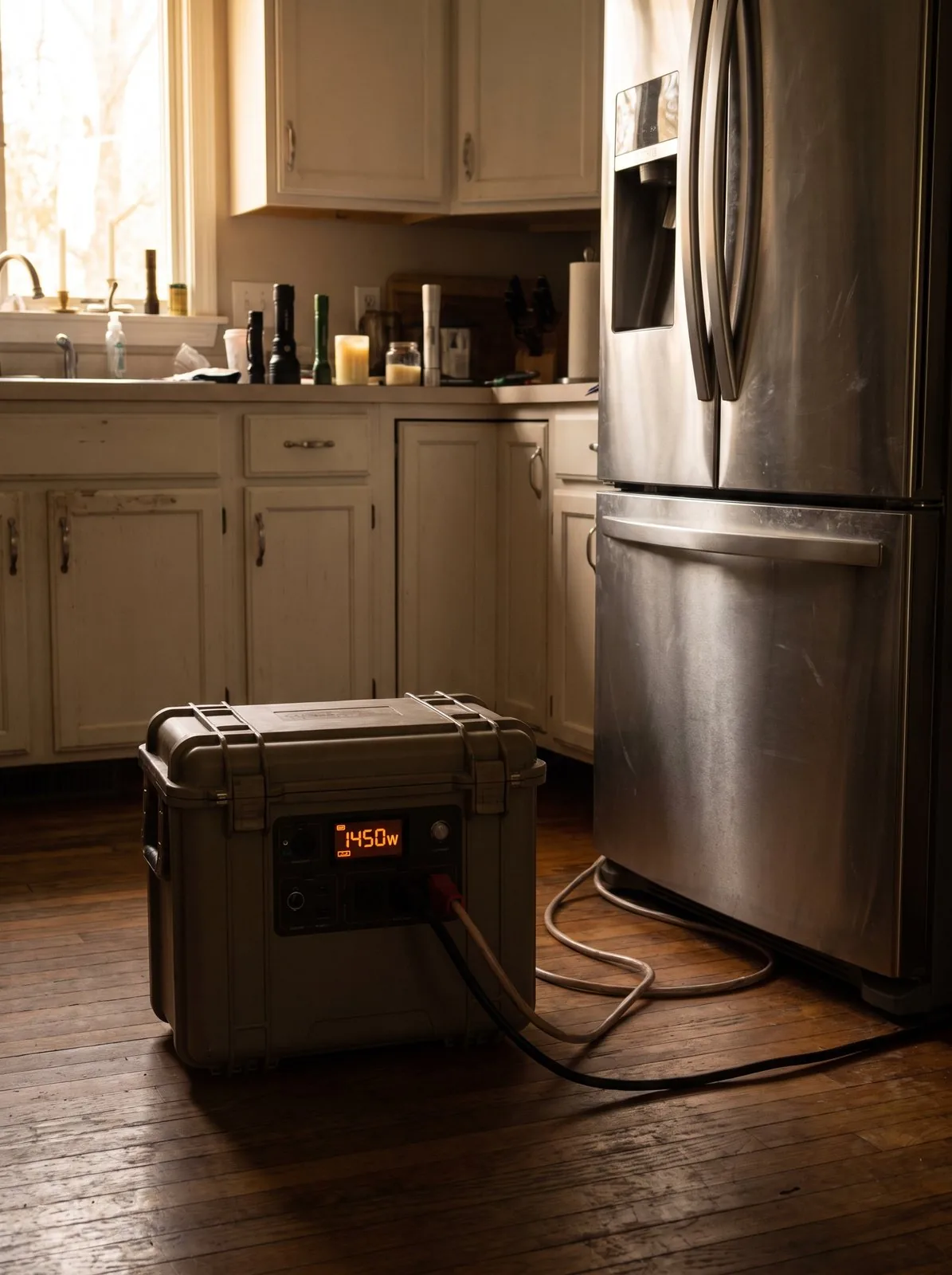
You do not need to guess. Every device lists its wattage; divide the unit’s watt-hours by the device’s watts for a rough runtime. A fridge is the exception to simple math: it cycles on and off and runs at its maximum wattage only about a third of the time (Virginia Cooperative Extension).
| Device | Typical draw | Runtime on 1,000Wh |
|---|---|---|
| Full-size refrigerator | Cycles on and off; full wattage about a third of the time | Many hours; varies by model |
| Box fan | Low to moderate; check the label | Many hours |
| CPAP (no humidifier) | Low; check the label | Many hours |
| Phone charge | Small | Dozens of charges |
| Window AC (8,100 BTU) | High | About an hour (BLUETTI lists 0.9 hr on the 1,152Wh AC180) |
Two takeaways. First, a fridge, fans, and phones — the real essentials — are comfortably within a 1,000Wh unit’s reach for a night, and a budget 300W-class unit like a portable 300W solar generator (Amazon) covers phones and lights but cannot carry a fridge. Second, a window AC will drain even a big unit in about an hour (BLUETTI), which is exactly why staying cool in a blackout is a job for shade, fans, and a DIY off-grid swamp cooler rather than for the battery.
Solar Recharge: The Heat-Wave Advantage
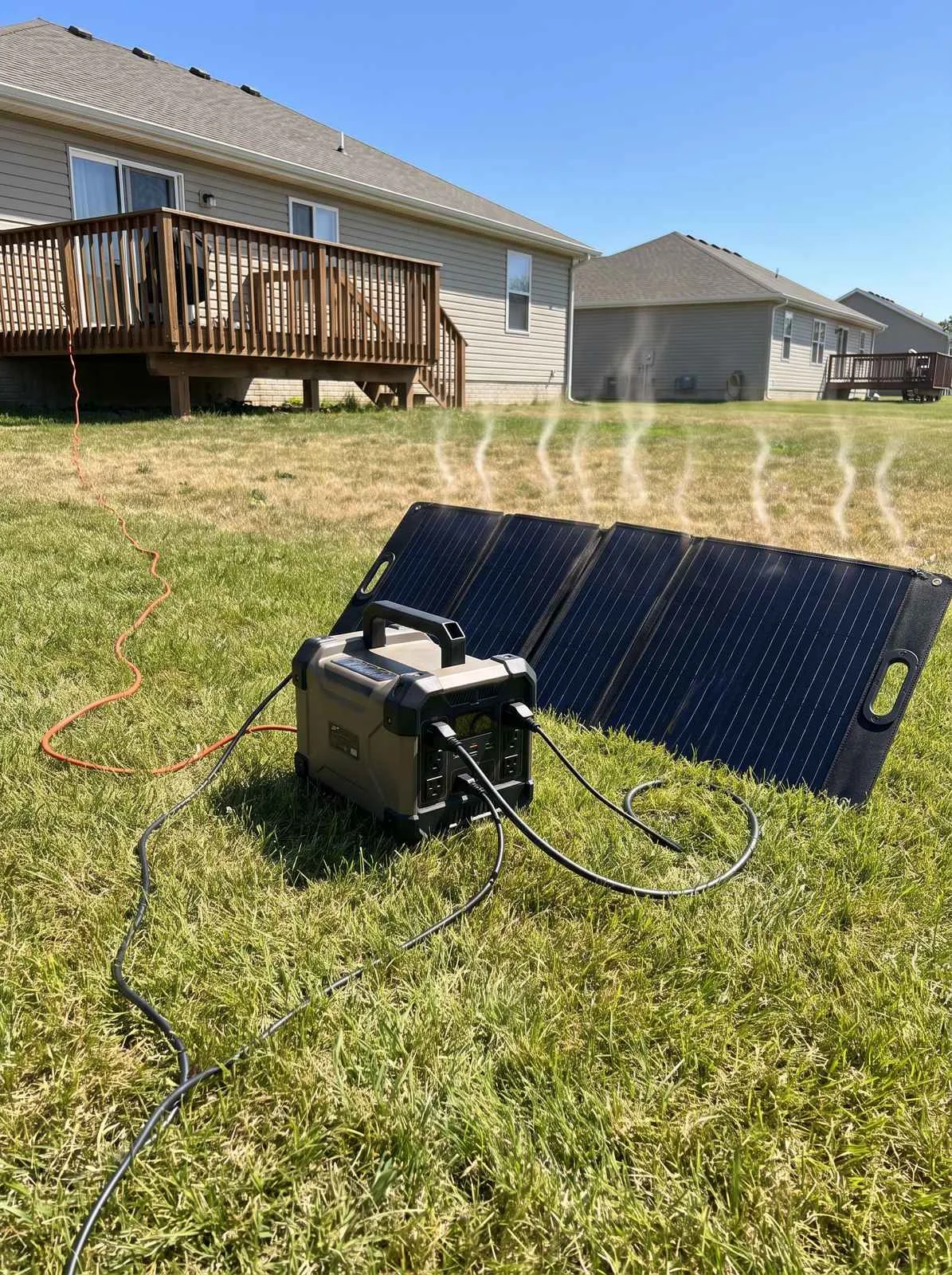
The feature that turns a power station from “a few hours of backup” into “open-ended power” is solar input. A heat wave hands you long, cloudless days — the best possible solar conditions — so a 100W folding panel (Amazon) or larger can replace much of what the fridge draws overnight while the sun is up. Pairing any of these units with a panel is what lets you run a refrigerator through a multi-day outage instead of watching the battery empty.
What About Jackery and Anker?
Jackery and Anker are the other two names you will see in every 2026 roundup, and both make genuinely good units — a Jackery Explorer 1000 or an Anker SOLIX in the same 1,000Wh class competes directly with the EcoFlow and Bluetti above. The decision between the major brands usually comes down to price on the day, warranty, and whether the model uses LiFePO4. The sizing logic does not change: pick a ~1,000Wh unit with a pure sine wave inverter and solar input, confirm the chemistry, and you are covered regardless of the badge.
Going Bigger: Whole-Home and DIY Solar
A portable power station is outage insurance for the essentials. If your goal is broader — running more of the house, or cutting the power bill year-round — the next step is a larger home solar and battery system.
The Verdict
- Best overall for a heat wave: a LiFePO4 unit around 1,000–1,150Wh like the Bluetti AC180 (Amazon) — thermally stable, long-lived, and big enough to carry a fridge overnight.
- Best all-rounder: an EcoFlow ~1,000Wh station (Amazon) for fast recharging and versatility beyond blackouts.
- Best budget starter: a 300W solar generator (Amazon) for phones, lights, and small devices — just do not ask it to run a fridge.
Whichever you choose, add a solar panel and you have turned the least reliable thing in your house — the grid — into a solved problem for the loads that matter. Pair it with a full summer blackout prep checklist and your plan to keep food cold without power, and a heat-wave outage stops being an emergency.
Frequently Asked Questions
- What size power station do I need to run a refrigerator?
- A refrigerator's compressor cycles on and off, so it runs at its full rated wattage only part of the time (Virginia Cooperative Extension suggests about a third). To run one through a night you want at least a 1,000Wh (1kWh) unit; actual runtime depends on your fridge. Add a solar panel to recharge during the day and you can extend that runtime considerably. Make sure the unit has a pure sine wave output and enough surge capacity for the compressor's startup spike.
- Which is better for a blackout, a power station or a gas generator?
- For indoor essentials — fridge, fans, phones, CPAP — a battery power station is better: it is silent, emits no fumes, and is safe to run inside, which a gas generator never is. Gas generators deliver more sustained power for whole-home or high-draw loads like a window AC, but must run outdoors away from windows because of carbon monoxide, as the American Red Cross advises. Many households keep a power station for the essentials and treat a generator as a separate, heavier-duty option.
- Can power stations be recharged by solar during an outage?
- Yes, and in a heat wave that is their biggest advantage. Most modern units accept solar input, and a 100–200W panel will meaningfully recharge a 1,000Wh station over a sunny day — exactly the long, cloudless days a heat wave brings. Solar recharging is what turns a power station from a few hours of backup into open-ended power.
- Is LiFePO4 better than regular lithium for a power station?
- For heat and longevity, yes. LiFePO4 (lithium iron phosphate) batteries are more thermally stable than the older NMC lithium chemistry, and they are typically rated for thousands of charge cycles. In a hot garage during a heat wave, LiFePO4 is the safer, longer-lasting choice, which is why many newer units use it. Every unit still has a rated operating temperature range, so check it.
- How long will a power station run during a blackout?
- It depends on capacity and load. As a rough guide, divide the unit's watt-hours by your device's watts to estimate hours; a 1,000Wh unit can charge a phone dozens of times. Because a fridge only runs its compressor part of the time, real-world fridge runtime is usually longer than the raw math suggests.
Sources & references
Before you go
The Renter's Homestead Pack
Self-reliance projects for the yard you don't own — container yields, a raised bed built to move with you, balcony preservation basics, and the landlord questions to ask first.
Free guide
The Renter's Homestead Pack
Self-reliance projects for the yard you don't own — container yields, a raised bed built to move with you, balcony preservation basics, and the landlord questions to ask first.