What’s the short answer?
- Ducks are naturally more cold-tolerant than chickens and will use water even in freezing weather (University of Maryland Extension).
- Chicken frostbite risk rises sharply at single-digit Fahrenheit temperatures and below (eXtension / University of Kentucky).
- Frostbite risk concentrates in large single-comb breeds like Leghorns and Minorcas, not chickens generally (University of Maryland Extension).
- Humid air inside a coop raises frostbite risk more than dry cold air (Ohio State University Extension).
- Change water at least twice daily in freezing weather for both species (Ohio State University Extension).
Winter is closing in, and if you keep a backyard flock, you have probably already started sorting out which birds handle the cold on their own and which ones need help. If you are deciding whether to add ducks to your setup, or wondering whether your chickens are actually as tough as you assume, the difference between the two species is not a myth. It is documented, and it changes how you should plan feed, water, and shelter for the next few months.
The short answer: Yes, ducks handle winter cold measurably better than chickens. Waterfowl are naturally built for freezing conditions and will keep swimming in ice-cold water, while chickens, especially large-combed breeds, face real frostbite risk once temperatures drop into the single digits Fahrenheit.
Why Ducks Handle Cold Better Than Chickens
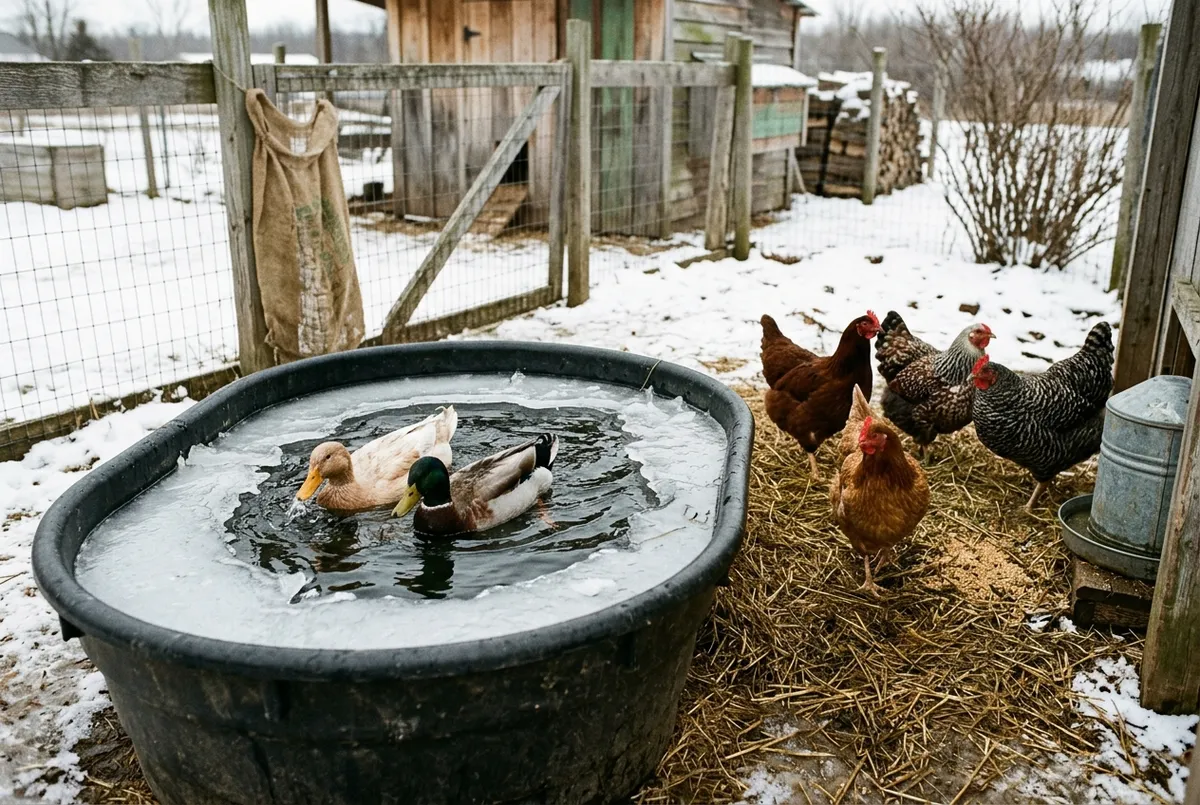
Extension researchers put waterfowl and turkeys in a different category than chickens when it comes to cold tolerance. Ducks and geese are described as naturally climate hardy, and even in the coldest temperatures they will still seek out water to swim in, a behavior chickens simply do not share (University of Maryland Extension, FS-1133). That one fact tells you most of what you need to know: a duck’s instinct in freezing weather is to look for open water, not to hide from it.
Chickens do not have that same relationship with cold. Their combs, wattles, and feet are exposed skin with no feather protection, which is exactly where the real winter risk shows up.
That does not mean ducks need zero winter planning. They still need dry bedding to rest on, shelter from direct wind overnight, and access to unfrozen water, the same basics every backyard bird needs. The difference is that a duck’s baseline tolerance for raw cold air and cold water is simply higher, so the margin for error on a rough night is wider than it is for a chicken standing on bare feet in a drafty run.
What Temperature Is Too Cold for Chickens Without a Heat Lamp?
Most healthy, cold-acclimated chickens handle a wide range of winter temperatures without supplemental heat. The risk changes sharply at extremely low temperatures, specifically single digits Fahrenheit and below, when frostbite becomes a real concern (eXtension / University of Kentucky, Dr. Jacquie Jacob). Below that threshold, exposed skin on the comb, wattles, and feet is at meaningfully higher risk, and an injury does not heal quickly: recovery from frostbite takes 4 to 6 weeks (eXtension / University of Kentucky).
Temperature alone is not the whole story. Wind exposure, not just raw air temperature, is a major driver of cold stress in chickens, so a drafty coop can put birds at risk at temperatures that would otherwise be manageable (University of New Hampshire Extension, Feb 2024). A coop that blocks wind while still allowing ventilation does more for your flock than a heat lamp, and it removes the fire risk that comes with running supplemental heat in a wood structure. If you are weighing that tradeoff, The DIY Chicken Coop Heater That Won’t Start a Fire walks through how to think about it.
Humidity inside the coop is the other variable people underestimate. Humid air creates more frostbite risk than dry cold air, and a poorly ventilated coop lets that humidity build up (Ohio State University Extension (Ohioline), ANR-66, Dec 2018). That points straight at ventilation, not insulation, as the priority in a winter coop.
Do Ducks Need Heated Water in Winter, or Can They Handle Ice?
This is where the most common assumption about ducks goes wrong. Many keepers assume ducks need heated water or they will freeze, but that overstates the risk. Ducks are far more cold-tolerant than commonly assumed, and extension sources note that waterfowl actively seek out water even in the coldest weather (University of Maryland Extension, FS-1133). The bird itself is not what needs the warmth.
What ducks do need is unfrozen liquid water, both for drinking and deep enough for them to dunk and wash their heads, since ducks use water in ways chickens do not (University of Maryland Extension, FS-1133). That makes the requirement about access, not temperature: keep the water from freezing solid, and ducks handle the cold air on their own.
For both species, poultry keepers are advised to change coop water at minimum twice a day in winter, more often on the coldest days, since neither ducks nor chickens can drink from solid ice (Ohio State University Extension (Ohioline), ANR-66). A heated waterer removes the twice-daily chore, but it is a convenience upgrade, not a survival requirement for the ducks themselves. If you are deciding whether that upgrade is worth the cost and the extra outlet in your coop, Heated Chicken Waterer Review: Does It Stop the Freeze? breaks down what it actually solves versus what you can manage manually. Note that any mains-powered heated waterer means running electricity to an outbuilding; the wiring, outlets, and breakers for that circuit are a job for a licensed electrician and your local code official, not a weekend DIY project.
Which Chicken Breeds Are Most Cold-Hardy for Northern Winters?
Not all chickens carry the same winter risk, and the difference comes down almost entirely to comb type. Frostbite is specifically a problem for breeds with large combs, such as Leghorns, Minorcas, and other Mediterranean breeds (University of Maryland Extension, FS-1133, updated Jan 27, 2023).
Breeds with smaller comb types, such as pea and strawberry combs, have much lower frostbite incidence (eXtension / University of Kentucky), and birds with smaller combs have less chance of getting frostbite generally (University of New Hampshire Extension). That is a useful correction to a common assumption: it is not that all chickens are equally frostbite-prone. Risk concentrates in larger combs, which is worth knowing before you add new breeds to a flock that will winter over in a cold climate.
If you are still deciding which hens are worth carrying into another winter, Culling or Keeping? How to Decide Which Hens to Overwinter covers that decision in more depth, and comb type is one of the factors worth weighing alongside age and production.
Comb type is also worth thinking about before you order chicks in spring. If you are in a climate that regularly sees single-digit lows, choosing pea- or strawberry-combed breeds from the start avoids the whole problem rather than managing around it every winter. That is a different decision than culling an existing bird, but it uses the same underlying fact: the risk lives in the comb, not in the breed’s general hardiness.
How Do I Stop My Rooster’s Comb From Getting Frostbite?
Frostbite in chickens most commonly affects the feet, comb, and wattles, and a larger comb or wattle, including on roosters of most breeds, can be a site for frostbite even in an otherwise cold-tolerant breed (Ohio State University Extension (Ohioline), ANR-66). The two variables you actually control are moisture and airflow. Since humid air inside the coop raises frostbite risk more than dry cold air does, good ventilation that lets moist air escape, without creating a direct draft on the roost, is the single biggest lever you have (Ohio State University Extension (Ohioline), ANR-66).
Beyond ventilation, keeping the coop dry, giving birds a wide flat roost so their feet are covered by feathers overnight, and watching for wind exposure on the coldest nights all reduce risk, since wind, not just temperature, is a major driver of cold stress (University of New Hampshire Extension). If frostbite does happen anyway, recovery takes 4 to 6 weeks, so prevention is considerably cheaper than treatment in terms of the bird’s welfare and your time (eXtension / University of Kentucky).
Can Ducks and Chickens Share a Coop in Winter?
They can, but the two species have different moisture tolerances, and that matters more in winter than in any other season. Ducks are messier with water by nature, and humid air is a documented driver of frostbite risk for chickens (Ohio State University Extension (Ohioline), ANR-66). If ducks and chickens share an enclosed winter coop, the extra moisture ducks bring in from splashing at water and mud can push humidity up right when chickens are most vulnerable to it.
The practical fix is not necessarily separate buildings. It is separating the wet zone from the dry zone: keep duck water access outside the coop or in a section with drainage, and keep the roosting area where chickens sleep dry and well ventilated. Both species still need that water changed at minimum twice daily in freezing weather, so whatever layout you choose has to make that chore easy enough that it actually gets done on the coldest days (Ohio State University Extension (Ohioline), ANR-66).
An automatic coop door is worth considering either way, since it lets you keep the coop closed against wind overnight without you having to be out there at first light. Automatic Coop Door vs Manual: Worth It for Winter? compares the tradeoffs if you have not made that call yet.
If you keep both species and space is tight, even a simple partition, wire panel, or divided run gives ducks a place to splash without soaking the litter chickens roost over. It does not need to be elaborate. The goal is just to stop duck water from becoming chicken humidity.
The Bottom Line for Mixed Winter Flocks
Ducks come into winter with a real physical advantage: waterfowl are built to handle cold water and cold air in a way chickens are not, and that shows up as behavior, not just biology, since they will keep swimming when a chicken would be hunting for shelter (University of Maryland Extension, FS-1133). Chickens are not fragile, but their winter risk is specific and predictable: it concentrates in large-combed breeds, gets worse with humidity and wind, and turns genuinely dangerous mainly once temperatures fall into the single digits Fahrenheit and below (eXtension / University of Kentucky).
If you are winterizing a mixed flock this season, start with the two things both species actually need: liquid water changed at least twice a day, and a coop that manages wind and humidity rather than one that simply traps heat. Get those two right, and comb type, not species, becomes the main variable left to manage.
Frequently Asked Questions
- What temperature is too cold for chickens without a heat lamp?
- Most healthy chickens handle winter fine without supplemental heat, but frostbite risk rises sharply once temperatures drop into single digits Fahrenheit and below, according to eXtension and the University of Kentucky.
- Do ducks need heated water in winter, or can they handle ice?
- Ducks are more cold-tolerant than most keepers assume. University of Maryland Extension notes waterfowl actively seek out water even in the coldest weather, so the priority is keeping water unfrozen and accessible, not heating it for the birds' warmth.
- Which chicken breeds are most cold-hardy for northern winters?
- Breeds with smaller comb types, such as pea and strawberry combs, have much lower frostbite incidence, per eXtension and the University of Kentucky, while University of Maryland Extension flags large-combed breeds like Leghorns and Minorcas as the ones frostbite is a problem for.
- How do I stop my rooster's comb from getting frostbite?
- Focus on ventilation and dryness. Ohio State University Extension notes humid air inside the coop raises frostbite risk more than dry cold air, and frostbite most commonly affects the feet, comb, and wattles.
- Can ducks and chickens share a coop in winter?
- They can, but ducks add moisture that raises humidity, which Ohio State University Extension identifies as a frostbite risk factor for chickens, so separating wet and dry zones matters more in winter than in other seasons.
Sources & references
Before you go
The Renter's Homestead Pack
Self-reliance projects for the yard you don't own — container yields, a raised bed built to move with you, balcony preservation basics, and the landlord questions to ask first.
Free guide
The Renter's Homestead Pack
Self-reliance projects for the yard you don't own — container yields, a raised bed built to move with you, balcony preservation basics, and the landlord questions to ask first.