What’s the short answer?
- Gift-exchange guides say the best white elephant gifts are ones people actually want to steal: funny, surprisingly useful, or both. A purely gag gift no one wants kills the stealing.
- Steal caps are commonly two or three per gift, and the person who just lost a gift cannot immediately steal it back.
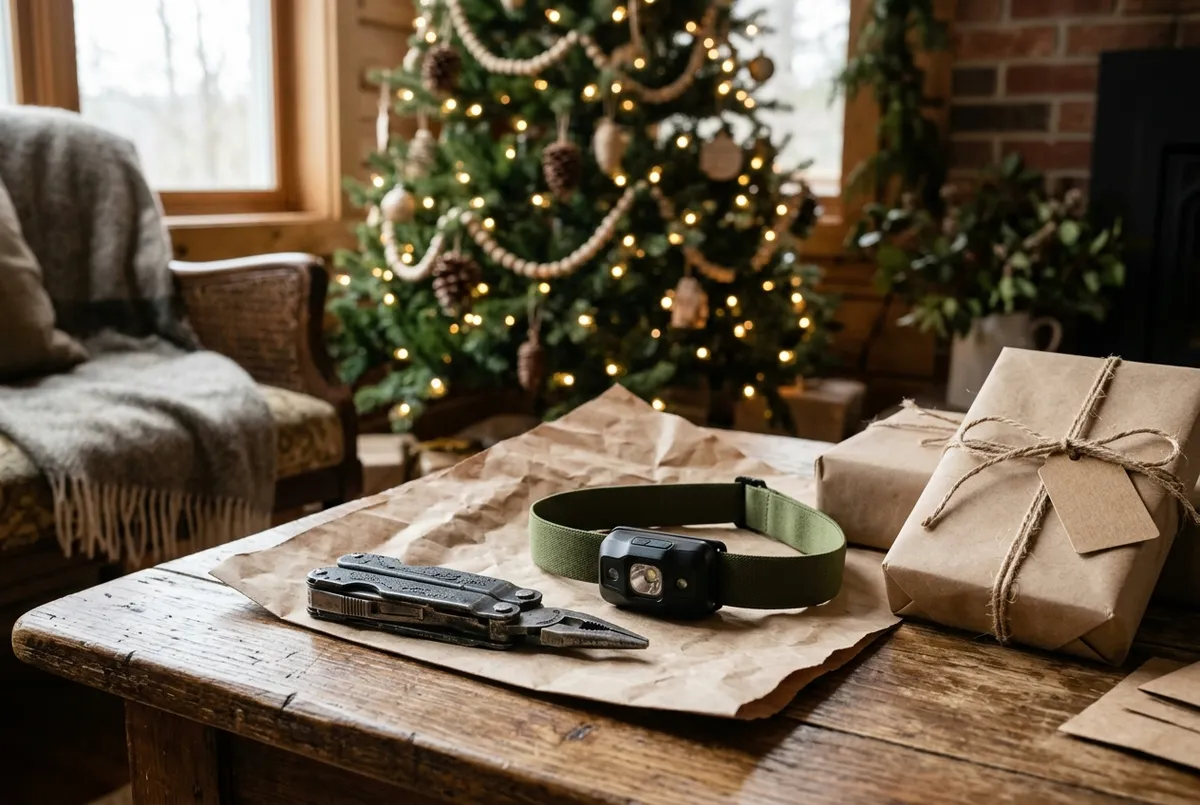
- A practical item such as a hand-crank radio, headlamp, or multitool fits the "surprisingly useful" category, within the typical $20 to $30 budget.
- The name is said to come from Siamese kings giving white elephants to courtiers they wanted to ruin, though historians find no record of it.
The invite says bring one wrapped gift, keep it under twenty dollars, and don’t overthink it. Many white elephant exchanges end with the same two piles: the item that got fought over repeatedly, and the gag gift nobody touched after the first round.
The short answer: The gift that gets stolen is the one someone in the room actually wants to keep. Gift-exchange guides recommend something funny, surprisingly useful, or both, and warn that a purely gag gift no one wants kills the stealing. A genuinely useful, well-made item such as a hand-crank radio, a solid headlamp, or a multitool fits that.
How a White Elephant Exchange Actually Works
White elephant, also called Dirty Santa or a Yankee Swap depending on where you grew up, is a group gift game with a simple setup and a surprisingly competitive middle (GiftList). Everyone brings one wrapped, anonymous gift and drops it in a shared pile. The host either assigns an order or has players draw numbers or straws to decide who goes first (CBS News).
From there, each player on their turn has two choices: open a new, still-wrapped gift from the pile, or steal one that’s already been unwrapped by someone else. That second option is where the game gets its personality. A gift with broad appeal doesn’t sit still for long, and that’s the mechanic worth planning around before you wrap anything.
The order matters more than most first-timers expect. Going early means opening a mystery gift with no read on the room yet; going late means you get to see what’s already circulating and can steal instead of gamble on the pile. Either way, the game rewards the same thing: a gift that survives being unwrapped in front of strangers and still looks worth taking.
Reading the Room Before You Buy
A white elephant gift almost never goes to one specific person. It goes into a pool, gets opened by whoever draws that turn, and then gets fought over by whoever else in the room wants it. That changes the math compared to normal gift-giving, where you’re shopping for someone you know well.
The safest bet is something with appeal that doesn’t depend on a shared hobby. An office party and a family exchange skew differently: coworkers may not know or care that you garden or keep chickens, while cousins and in-laws might already have their own version of your favorite gear. Either way, a gift that reads as generally useful, rather than as a signal about your specific interests, is the one that gets picked up by more than one person during the game.
Why the Steal Rule Is the Whole Game
Most groups play with two guardrails on stealing. First, a given gift can only be stolen once per turn. Second, whoever just had a gift taken from them can’t immediately take it back; they have to unwrap something new or steal a different opened gift (CBS News, SecretSanta.com).
Groups also commonly set a steal limit on any single gift, usually three in current gift-exchange guides (Wikipedia notes two is also common), after which that gift is “frozen” with whoever is holding it and can’t be taken again for the rest of the game (SecretSanta.com, Wikipedia). That cap is what turns the game into a real signal. A gift that gets stolen all three times before it freezes told you something: multiple people in that room wanted it enough to fight for it. A gift nobody bothers to steal even once told you something too.
Why One Useful Item Is a Safer Bet Than a Pure Gag Gift
The instinct with a white elephant gift is to go for a laugh: something loud, something weird, something that will get a reaction when it’s unwrapped. That reaction is real, but it’s also short, and SecretSanta.com warns that a purely gag gift no one wants kills the stealing dynamic (SecretSanta.com). The guides don’t say to skip humor: they recommend a mix of desirable and funny gifts, and GiftList describes the best picks as funny, surprisingly useful, or both (GiftList).
A practical, well-made item is a dependable way to land on the useful side, because the calculation for the person deciding whether to steal is different. They’re not only weighing whether it’s funny. They’re weighing whether they would use it. A gift that clears that bar has a better shot at being stolen until the steal cap shuts it down.
What Makes a Prepper-Adjacent Gift Steal-Worthy
The gear that tends to clear that bar in a mixed group, one where not everyone gardens or keeps a pantry the way you do, shares a few traits. It’s useful outside of any one hobby: a headlamp works for a power outage, a camping trip, or just dropping something behind the dresser. It’s small enough to look good wrapped and to actually fit under a tree or on a table. And it reads as thoughtful rather than alarming, gear people actually use day to day rather than gear that signals you’re expecting the worst.
A hand-crank radio fits that description about as well as anything on a prepper-adjacent gift table: it doesn’t need batteries sitting in a drawer, it has an obvious everyday use during any ordinary storm-related outage, and it’s the kind of thing almost nobody buys for themselves but many people are glad to have. We’ve looked at how these radios actually perform in real conditions in our piece on solar-powered emergency radios in overcast weather, which is worth a read if you want to know what you’re actually buying before you wrap one. A quality fire starter, a compact multitool, or a well-insulated steel thermos land in the same category: cheap enough to not feel like you overspent on a coworker’s white elephant party, and useful enough that whoever ends up holding it may not want to let it go.
What tends to backfire is anything that only makes sense to someone already deep into the same hobby you are. A tool that requires explaining what it’s for, or gear tied to a specific setup like a particular garden bed size or a coop design, narrows the pool of people willing to steal it down to one or two. The items that survive three steals are the ones a random guest at the party would recognize on sight and already know they’d use, not the ones that need a follow-up conversation to appreciate.
Picking One Gift Instead of Building a List
This isn’t a shopping list. If you want a longer set of options to browse, we’ve already put one together in 12 Gifts for the Prepper or Homesteader in Your Life, and a more budget-focused version in 5 Prepping Buys Worth It in a Big Amazon Sale. Both are built for someone shopping for a specific person they know well.
A white elephant gift is a different problem. You’re not shopping for one recipient; you’re shopping for whoever happens to open it, and possibly for whoever steals it from them twice after that. The single-item strategy works because it narrows the decision: instead of ten options at ten price points, pick the one thing in your price range that the largest number of people at that party would actually want to walk out with. That’s a strategy question, not a browsing exercise.
Where the Name “White Elephant” Comes From
The name has nothing to do with an actual elephant showing up as a gift. The phrase is said to come from the practice of the King of Siam (now Thailand) giving rare albino elephants to courtiers who had displeased him, so that the upkeep costs would ruin them. However, there is no actual record of the king giving a white elephant specifically to burden the recipient, white elephants are considered highly valuable and sacred in Thai culture, and the first use of the term remains a matter of contention among historians (Wikipedia). That story is still where the popular explanation for “white elephant” as something costly to keep that nobody quite wants comes from. The modern gift-exchange game borrows the name for the same reason: half the fun is watching which gifts turn out to be the sacred elephant nobody wants, and which ones people would fight to keep.
Gifts That Match a Standard Emergency Kit
If the goal is a useful gift, FEMA’s Ready.gov publishes a list to pick from instead of a guess. Its basic disaster supplies kit could include a battery-powered or hand crank radio and a NOAA Weather Radio with tone alert, a flashlight, a first aid kit and extra batteries (Ready.gov, 2026-07-01).
The same list names a whistle to signal for help, a dust mask, a manual can opener, local maps, and a wrench or pliers to turn off utilities. It also lists a cell phone with chargers and a backup battery, alongside water and at least a several-day supply of non-perishable food.
The page adds two notes: replace expired items as needed, and re-think your needs every year and update the kit. A radio, flashlight, or backup phone battery is a standard kit item, so a gift from that group rests on a published list, not a hunch.
Ground Rules Worth Setting Before the Party
A few details are worth confirming with the host ahead of time rather than guessing at the party. Agree on a spending limit in advance and state it plainly on the invite; $20 to $30 is the typical range, with $25 the most common cap (GiftList). Confirm the steal cap; three is the most common in current guides, but some groups play with two, and knowing the number changes how aggressively people play. Confirm whether wrapping paper is required or whether a gift bag is fine, since an unwrapped gift can tip off what’s inside before the first round even starts.
None of this changes the core strategy, but it does change how the game plays out once you bring your gift. A host who allows a higher steal cap rewards gifts with the broadest possible appeal even more, since there are more chances for someone new to decide they want it.
Once those details are settled, the actual decision is simple: pick one item, keep it inside the agreed price range, and choose function over novelty. That’s the whole strategy behind a gift that survives to the steal cap instead of getting left in the corner.
Frequently Asked Questions
- What is a white elephant gift exchange?
- White elephant, also called Dirty Santa or a Yankee Swap, is a group gift game where each person brings one wrapped, anonymous gift. Players take turns either opening a new gift from the pool or stealing one that has already been unwrapped, with the turn order set by the host or drawn by lot.
- How many times can one gift be stolen in a white elephant game?
- Groups commonly cap steals per gift, most often at three in current gift-exchange guides, though two is also common. Once a gift hits the cap it is out of play and whoever holds it keeps it. The person who just lost a gift also cannot immediately take it back.
- Where does the term white elephant come from?
- The phrase is said to come from the practice of the King of Siam (now Thailand) giving rare albino elephants to courtiers who had displeased him, so that the upkeep costs would ruin them. Historians find no actual record of that, white elephants are considered highly valuable and sacred in Thai culture, and the first use of the term remains disputed.
- What kind of gift actually wins a white elephant exchange?
- Gift-exchange guides say to aim for gifts people actually want to steal: funny, surprisingly useful, or both. A purely gag gift that no one wants kills the stealing dynamic. Typical budgets run $20 to $30.
Sources & references
Before you go
The Renter's Homestead Pack
Self-reliance projects for the yard you don't own — container yields, a raised bed built to move with you, balcony preservation basics, and the landlord questions to ask first.
Free guide
The Renter's Homestead Pack
Self-reliance projects for the yard you don't own — container yields, a raised bed built to move with you, balcony preservation basics, and the landlord questions to ask first.