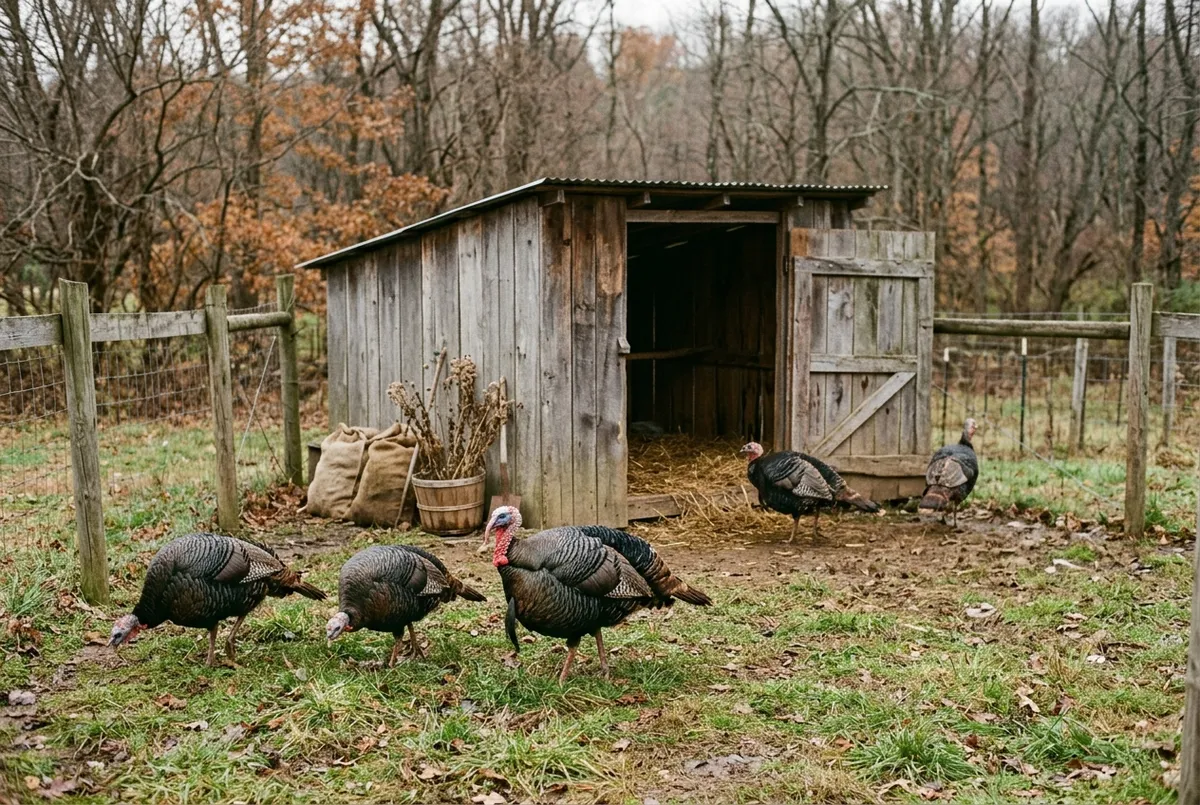
Thanksgiving puts a roasted turkey on the table and a question in a lot of homesteaders’ minds: could you have raised that bird yourself? If you already keep a few laying hens and have the yard space to expand, adding turkeys to next year’s flock looks like a natural next step, even though no poult can go in a brooder for months yet. What looks like a simple add-on to an existing coop setup turns out to run on a different timeline and a different feed budget than the flock you already have. I get why the math feels tempting to run right now.
The short answer: Raising your own turkey can be worth it if you have real space, a feed budget, and months of lead time, but November is a planning window, not a starting window. Turkey poults need 14 to 17 weeks of feeding and housing before they reach market weight, so a bird destined for next year’s table has to start in the brooder by early-to-mid summer, not this month.
Why This Is a Spring Decision, Not a November One
Thanksgiving is exactly when the question is loudest and exactly when it’s too late to act on it. Turkey hens reach 18 to 20 pounds live weight at 14 weeks of age, and toms take longer, reaching 24 to 36 pounds at 17 weeks (Penn State Extension). Counted backward from a fall harvest, that puts the poult order window in late spring to early summer, not autumn. If you’re standing in the kitchen this November wondering whether to try it, the honest answer is: decide now, order poults in spring, and treat this season as research rather than a start date.
What “planning” actually means right now is concrete, not vague. It means working out how many birds your space and budget can realistically support, picking a hatchery or local source so poults are reserved before their order window closes, and reading through the space and feed numbers below against your own yard before you commit to anything. None of that requires a bird on the property yet.
How Long Does It Take to Raise a Turkey to Slaughter Weight?
The 14-to-17-week range above is the number to plan around, and it comes with a built-in trade-off: toms grow bigger, but they take three weeks longer to get there and eat more feed the whole way. Hens finish lighter and faster. These are typical figures for commercial varieties, so treat them as planning numbers rather than guarantees (Penn State Extension).
That trade-off is the actual decision point for most backyard keepers picking between hens and toms, not price. Toms give you more meat and more freezer space per bird, but three extra weeks of feed and housing at full finishing space. Hens free up the run three weeks sooner but at a lighter dressed weight. Neither is the “correct” choice; it’s a question of what your freezer, your family size, and your available run space actually need.
How Much Space Do Backyard Turkeys Need?
Turkeys need more room than most backyard keepers expect, and the requirement changes twice as the birds grow.
Brooding space, weeks 1 through 6
For the first five to six weeks, plan on one square foot of brooder space per poult (Penn State Extension). That space also needs to hold a heat source: Penn State Extension recommends a room temperature of about 88°F with supplemental heat lamps bringing the area under the heat source to 95°F, then, after the first 10 days, lowering the room temperature by 5°F per week until it reaches 70°F (Penn State Extension). Poults also need a draft-free, well-ventilated space, and in confined housing the guidance is a minimum of about 0.5 cubic feet per minute of air circulation per pound of body weight, a number that climbs as the birds gain size (Penn State Extension).
Growing and finishing space, week 6 to market
Once birds move out of the brooder, confined housing needs 3 to 5 square feet per bird from about 8 weeks to market age. If you have pasture to work with, range production supports roughly 250 birds per acre (Penn State Extension), a ratio that matters more for scale than for the two or three birds a typical backyard setup runs. It tells you the space math doesn’t get easier as flock size grows, even at small numbers.
Keeping predators out for the long finishing stretch
A meat-chicken batch is often in and out of the run in a matter of weeks. A turkey occupies that same run for the full 8-to-11-week finishing stretch between the brooder and market weight, which is a much longer window of exposure to the same predator pressure a laying flock deals with year-round. Whatever you’re already using to secure hens overnight, from a manual latch to an automatic door built for winter and predator pressure, needs to hold up over that entire finishing period, not just a few nights.
Stack the two stages together and a small turkey project needs a dedicated brooder area for six weeks, then a run or pasture section sized for 3 to 5 square feet per bird for another 8 to 11 weeks. That’s a bigger and longer-lived footprint than a chicken coop typically asks for, which is worth weighing against whatever run space your existing flock already occupies.
What Do Backyard Turkeys Eat, and Does It Change as They Grow?
Yes, and the change is bigger than most first-time keepers expect. Turkeys need a starter feed at 28 percent protein for the first three to four weeks, then step down to a growing ration at 26 percent for the next two weeks, then keep reducing protein as the birds age, to about 16 percent for birds from 12 weeks of age to market (Penn State Extension). That starter protein level sits well above the roughly 18 percent crude protein a laying hen’s diet is built around (Alabama Cooperative Extension System), and it has to be sourced and budgeted for from day one, not phased in gradually. Feed cost data specific to this year’s market isn’t something this guide can responsibly cite without a dated source, so treat the protein percentages above as the planning number and price your local feed store’s turkey starter, grower, and finisher lines directly before you commit to poults.
The three-step schedule also means checking that your feed source actually carries all three rations, not just a starter. A feed store that stocks chick starter and layer feed for the existing flock doesn’t automatically stock a 26 percent turkey grower or a dedicated finisher; some keepers end up special-ordering by the bag or driving to a second store partway through the season. Confirming that supply chain before poults arrive is part of the same planning work as measuring brooder space.
Is It Actually Cheaper to Raise Your Own Turkey Than to Buy One?
This is the question most people are actually asking around Thanksgiving, and it doesn’t have a clean dollar answer without local feed and poult pricing, which changes by region and season. What’s fixed is the input side: 14 to 17 weeks of feed at protein levels well above what a laying flock eats, a dedicated brooder setup, and 3 to 5 square feet of housing per bird for two to three months. None of that is optional or reducible, so the honest framing is a trade rather than a shortcut. You’re paying in feed, space, and months of attention instead of a store price, and whether that trade pencils out depends on your own feed costs and how much you value knowing exactly how the bird was raised. Price your local feed store’s turkey rations before you decide, because that’s the number that actually determines the answer.
There’s also a cost that doesn’t show up on a receipt: your own time. Sixteen or so weeks of daily feeding, water checks, and brooder monitoring is a bigger recurring commitment than most people budget for when they’re only picturing the harvest at the end of it. If the appeal is mostly about knowing exactly what the bird ate and how it was housed, that’s a legitimate reason on its own, separate from whether it beats a store price.
Can You Raise Just One or Two Turkeys, or Do They Need a Flock?
The space and feed numbers above are per bird, so they apply whether you raise one turkey or several (Penn State Extension). It’s a common assumption that one turkey is about as easy to raise as one chicken, but the comparison doesn’t hold: turkeys need more brooding and finishing space per bird, and a 28 percent protein starter against around 18 percent for a laying hen’s diet. A single turkey is possible, but it inherits the full per-bird space and feed requirements above without spreading the setup cost. If your goal is a Thanksgiving table for an extended family, that argues for a small group of two to four birds over a lone bird: it spreads the brooder and finishing setup cost across more meat at the end, even though every individual bird still needs its full share of space.
Turkeys vs. the Flock You Already Have
If you’re already running chickens, the honest comparison isn’t turkey versus nothing, it’s turkey versus more chickens, or turkey versus a species that’s an easier step up. Turkeys ask for a longer brooding window, a bigger jump in starter protein, and more finishing space per bird than almost anything else in a typical backyard flock. That doesn’t make them a bad addition, it makes them a bigger one, and the numbers above are the ones to run against your actual yard and shed before you order poults. If the run and the budget already feel stretched by the flock you have, that’s worth admitting now rather than mid-brooder in July.
There’s also a disease reason not to mix them. Penn State Extension says to raise turkeys away from other poultry, because blackhead (histomoniasis) and Mycoplasma gallisepticum can be serious problems for turkeys raised among chickens or on ground chickens have used within the previous three to five years (Penn State Extension).
Chickens Can Carry Blackhead Without Getting Sick
Blackhead, also called histomoniasis, is caused by a microscopic, single-celled organism, Histomonas meleagridis. A University of Nebraska-Lincoln Extension guide calls it a common and serious illness in turkeys that no available medication can treat (University of Nebraska-Lincoln Extension, 1994).
The organism infects other birds too, including chickens, but not equally. Turkeys are probably the most susceptible species and become severely ill if infected. Chickens are the most resistant of the birds it infects: they can be carriers and contaminate a premise, yet they usually do not get sick. That gap in how the two species react is the reason for the guide’s plain conclusion: raise chickens and turkeys in separate facilities and in separate pens.
For a yard that already holds a laying flock, that means giving the turkeys their own pen and their own housing, not a corner of the existing run.
Deciding If Turkeys Are Worth It Next Year
Nothing about raising a backyard turkey is complicated on its own; it’s the combination of a 14-to-17-week runway, real brooding infrastructure, and a feed budget that steps up twice that makes it a bigger commitment than most first-time keepers expect walking in. Use this Thanksgiving to do the arithmetic on your own space and feed costs, not to start the project. If the numbers work, mark a calendar reminder for late spring, price poults from a hatchery that ships to your area, confirm your local zoning or homeowners’ association actually allows turkeys before you order anything, and treat next November as the actual test of whether it was worth it.
Frequently Asked Questions
- Is it actually cheaper to raise your own turkey than buy one at Thanksgiving?
- There is no verified feed-cost figure to compare directly against a store price, so the honest answer depends on local feed and poult pricing. What is fixed is the input side: 14 to 17 weeks of feed at protein levels well above a laying flock's diet, plus 3 to 5 square feet of finishing space per bird, so price your local feed store's turkey rations before deciding.
- How much space do backyard turkeys need?
- Plan on 1 square foot of brooder space per poult for the first 5 to 6 weeks, then 3 to 5 square feet of confined housing per bird from about 8 weeks to market age. On pasture, range production supports roughly 250 birds per acre (Penn State Extension).
- How long does it take to raise a turkey to slaughter weight?
- Hens reach 18 to 20 pounds live weight at 14 weeks of age, and toms reach 24 to 36 pounds at 17 weeks (Penn State Extension).
- What do you feed backyard turkeys, and does it change as they grow?
- Yes. Feed a starter at 28 percent protein for the first 3 to 4 weeks, a growing ration at 26 percent for the next two weeks, then gradually less protein as the birds age, down to about 16 percent from 12 weeks of age to market (Penn State Extension).
- Can you raise just one or two turkeys, or do they need a flock?
- A single bird is possible, but one bird still needs the full per-bird space and feed commitment described above rather than a scaled-down version of it.
Sources & references
Before you go
The Renter's Homestead Pack
Self-reliance projects for the yard you don't own — container yields, a raised bed built to move with you, balcony preservation basics, and the landlord questions to ask first.
Free guide
The Renter's Homestead Pack
Self-reliance projects for the yard you don't own — container yields, a raised bed built to move with you, balcony preservation basics, and the landlord questions to ask first.