What’s the short answer?
- DST ending only shifts the clock; actual daylight changes by about 2 minutes, not an hour.
- The real November charging loss comes from a lower sun angle and shortening days into the December solstice.
- A lower sun angle means more atmosphere for light to pass through, cutting panel output even during daylight hours.
- Northern-latitude setups see a bigger seasonal charging drop than southern ones, per the EIA.
- DST's real effect is scheduling: it moves usable evening daylight an hour earlier on the clock.
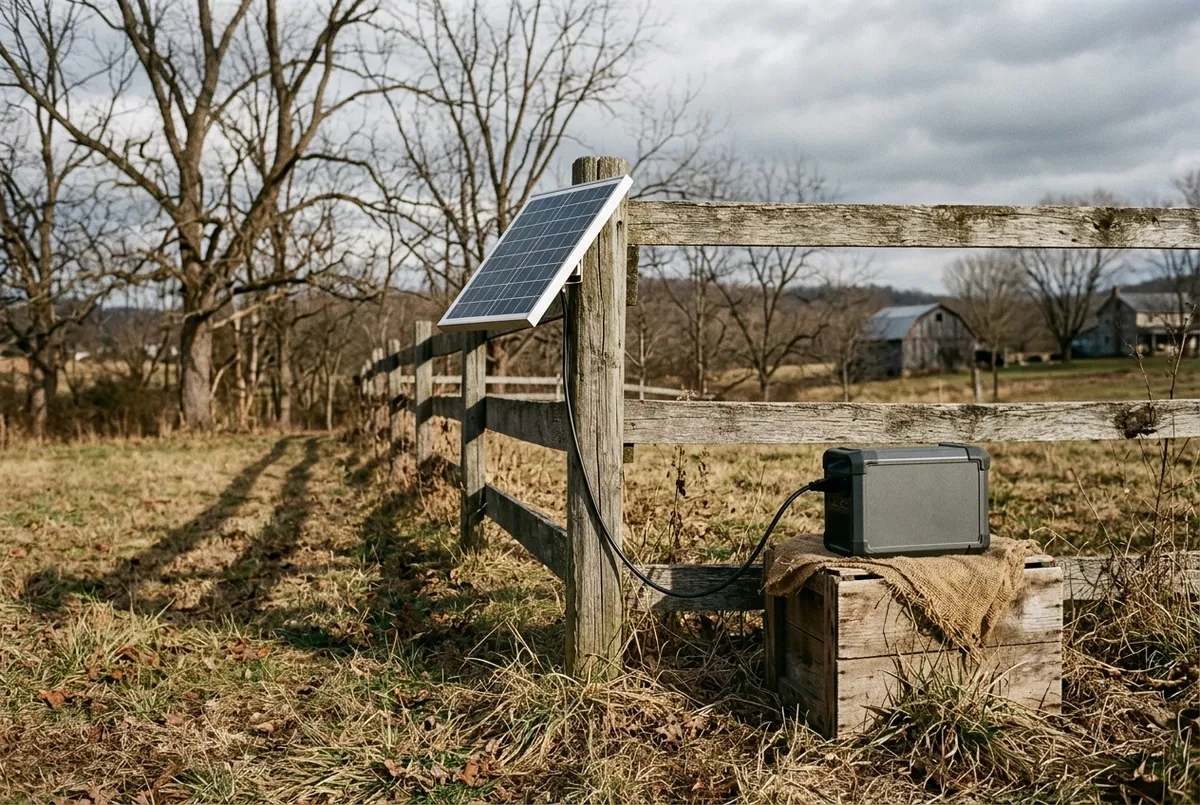
Clocks fell back the first Sunday in November, and by five in the afternoon your yard is already dark. If you charge a portable power station or run panels off a shed or fence line during the workday, that missing hour of evening light feels like the sun quit early this year. The clock is rarely the actual problem.
The short answer: Daylight saving time ending doesn’t cut into your real sunlight; it just moves sunrise and sunset about an hour earlier on the clock. The real loss in your solar charging window through November comes from the sun sitting lower in the sky and days growing steadily shorter on the way to the December solstice, both of which happen whether or not the clocks change.
Does Daylight Saving Time Actually Reduce Solar Panel Output?
Not in the way most people assume. It’s a common read on the calendar: fall back an hour, lose an hour of sunlight. The actual sun data says otherwise.
Take Kansas City, Missouri, a reasonable stand-in for the middle of the country. On October 31, 2026, the last day of daylight saving time, sunrise was at 7:45am and sunset at 6:18pm, for 10 hours and 33 minutes of daylight. The next morning, on standard time, sunrise moved to 6:46am and sunset to 5:17pm (US Naval Observatory, accessed Sept 2026). Sunset looks 61 minutes earlier on the clock. Total daylight dropped by about two minutes.
That’s the entire trick of daylight saving time. It relabels which clock hours the sun happens to be up during; it doesn’t add or remove sunlight. The sun doesn’t check what your microwave display says before it rises.
What that means for a solar setup: the total number of hours your panels can pull in light on November 1 is almost identical to what it was on October 31. What changes is when those hours land on your schedule. If you’re used to getting home at 5:30pm and topping off a battery on the porch, standard time just moved sunset to before you walk in the door.
That distinction matters because it points you toward the right fix. If the actual problem were lost sunlight, there would be nothing to do about it until the calendar turned toward spring. But since the sun is roughly where it was the day before, the fix is simpler: charge earlier in the day, before the clock, not the sun, gets in the way.
Where Your Real Charging Window Goes This Month
The clock switch is a one-day event on the calendar. The bigger, slower loss that actually eats into your charging window has nothing to do with daylight saving time at all.
Solar declination, the angle of the sun relative to the equator, keeps dropping through November and doesn’t bottom out until the winter solstice on December 21 or 22, when it reaches -23.45 degrees (PVEducation.org, Arizona State University). Practically, that means the sun sits lower in the sky every single day this month, not just on the day clocks change.
A lower sun angle matters for a fixed panel because sunlight traveling through the sky at a low angle has to pass through more atmosphere before it reaches your rooftop, shed, or ground mount. Engineers call this “air mass,” and a higher air mass number means more of that light gets scattered or absorbed before it ever hits your cells (PVEducation.org, Arizona State University). Even during the hours the sun is technically up, a November midday delivers less usable energy per hour than an October midday did, and quite a bit less than a June one.
This is the part daylight saving time gets blamed for that it didn’t actually cause. Your panels were already losing ground to sun angle before the clocks ever moved, and they’ll keep losing ground through the rest of November regardless of what your phone says the time is.
How Many Daylight Hours You Actually Lose in November
The clock change costs you almost nothing in raw daylight. The calendar does, just slowly and steadily.
Using the same Kansas City reference point, total daylight goes from 10 hours 31 minutes on November 1 to 9 hours 42 minutes by November 27, with sunrise sliding to 7:15am and sunset to 4:57pm (US Naval Observatory, accessed Sept 2026). That’s a loss of 49 minutes of daylight across the month, an average of under two minutes a day.
Two minutes a day sounds trivial on its own, and it is. What makes late November feel like a cliff is that this daily shortening stacks on top of the sun angle problem above. You’re losing a little daylight every single day, and each of the daylight hours you have left is producing less power than it did earlier in the fall. Neither of those trends starts or stops with daylight saving time; they just happen to share a calendar week with it, which is why it’s easy to blame the wrong culprit.
How Much Less Power Does Solar Generate in Winter Than Summer?
There’s no single figure that applies everywhere, since it depends on your latitude and local weather, but the direction is consistent and it compounds through the fall and winter. Two effects stack on top of each other: the day itself is shorter, and the sun that is up sits lower in the sky, pushing more light through the atmosphere before it reaches your panel and losing energy to scattering along the way (PVEducation.org, Arizona State University). Both effects get worse together as the calendar moves toward the December solstice, which is why a panel that performs well in June can feel disappointing by late November even on a clear day.
Why This Hits Harder the Further North You Are
If you live somewhere like Minnesota or Maine, the November charging slump feels worse than it does for someone in south Texas, and that isn’t just your imagination.
Seasonal, month-to-month swings in available solar resource “increase with increasing distance from the earth’s equator,” according to the U.S. Energy Information Administration (EIA). Higher latitudes see a bigger gap between their best and worst solar months, which is exactly why the sun angle and shortening-day effects described above compound faster the farther you are from the equator.
If your yard sits in the northern half of the country, plan on the steepest drop in output landing between now and the solstice, and expect it to recover just as steadily once days start lengthening again after late December.
What Daylight Saving Time Actually Changes for Your Routine
None of this means the clock switch is irrelevant. It just isn’t a solar problem; it’s a scheduling problem.
Federal law fixes the end of daylight saving time as the first Sunday in November each year, which landed on November 1 in 2026 (NIST), right as the sun is already dropping fast toward the solstice. The clock change’s real effect is that it moves your usable evening daylight an hour earlier by the clock. If you were used to squeezing in a late-afternoon charge after work or evening chores, that window now closes an hour sooner than it did the week before, even though the sun itself barely changed its own schedule.
The fix for that is a routine change, not a hardware one. Shift charging earlier in the day when you can, and plan around midday and morning sun rather than counting on evening light that isn’t there by the time you get to it anymore. For most households that means moving a portable power station or panel setup into direct sun during errands, lunch, or whatever midday window you already have, instead of relying on the after-work stretch that used to work fine back when it was still light out at 6pm.
Should You Re-Angle Your Panels After Clocks Fall Back?
The clock change itself gives you no reason to touch your panels. What does give you a reason is the sun angle drop described above, and that’s happening on the calendar regardless of what time your phone says.
As the sun’s path gets lower through November and into December, a panel sitting flat or fixed at a shallow summer angle catches light less directly than one tilted to face that lower path. Many portable panel kits and ground-mount racks have adjustable legs or brackets for exactly this reason. If yours does, checking the angle now, while the sun sits noticeably lower than it did back in September, is worth more to your output than anything tied to the clock change itself.
What’s the Best Solar Panel Angle for Winter?
There’s no single number that works everywhere; the right angle depends on your latitude and how low the sun sits at your location this time of year, which is the same declination effect covered above. The general principle holds no matter where you live: as the sun’s path lowers toward the solstice, steepening your panel’s tilt to face that lower arc keeps more light hitting the panel head-on instead of glancing off at an angle, which is where the air-mass losses get worse. If your setup has adjustable tilt, this is the month to actually use it rather than leaving it set at a summer angle out of habit.
If you’re weighing a fixed panel against a portable, adjustable setup for exactly this kind of seasonal repositioning, our 300W vs 1000W Solar Generator comparison breaks down which size actually matches different yard sizes and budgets.
June Sun Versus December Sun in the Same Yard
The calendar, not the clock, sets the swing between a summer yard and a winter yard. The U.S. Department of Energy lists five things that change how much solar radiation reaches a spot on the ground: geographic location, time of day, season, local landscape and local weather. The setting of the clocks is not on that list.
The season factor comes from the 23.5° tilt of Earth’s axis, which the department calls a significant factor in the amount of sunlight striking a given location. That tilt gives the northern hemisphere longer days from the spring equinox to the fall equinox. Countries in the middle latitudes, such as the United States, receive more solar energy in summer because the days are longer and the sun is almost directly overhead, while winter rays are far more slanted. Denver, Colorado, near 40° latitude, receives nearly three times more solar energy in June than in December (U.S. Department of Energy).
Where This Leaves Your Winter Power Plan
None of this is a reason to panic about winter charging, and it isn’t really a daylight saving time problem to solve. It’s two ordinary seasonal facts, a lower sun and shorter days, that happen to land on the calendar the same week the clocks change. Plan your charging around midday rather than a fading evening window, check your panel angle if it’s adjustable, and treat the clock switch for what it actually is: a schedule change, not a sunlight change.
If you’re also weighing other off-grid power options for the darker stretch of the year, our look at whether backyard wind turbines actually hold up in winter covers a common complement to solar for exactly this season. And if you’re shopping for new gear before the days get any shorter, our roundup of Black Friday solar generator deals is worth a look before you pay full price.
Frequently Asked Questions
- Does daylight saving time actually reduce solar panel output?
- No. US Naval Observatory data for Kansas City, MO shows total daylight dropped by only about 2 minutes from Oct 31, 2026 (DST) to Nov 1, 2026 (standard time), even though sunset appeared 61 minutes earlier on the clock. Daylight saving time relabels when the sun is up on the clock; it doesn't add or remove sunlight.
- How many daylight hours do I lose in November for solar charging?
- At the same reference location, total daylight fell from 10 hours 31 minutes on Nov 1, 2026 to 9 hours 42 minutes by Nov 27, a loss of 49 minutes across the month, averaging under 2 minutes a day (US Naval Observatory).
- How much less power does solar generate in winter than summer?
- There's no single figure that applies everywhere, but the direction is consistent: shorter days combine with a lower sun angle, which forces light through more atmosphere (higher air mass) and scatters more energy before it reaches the panel, per PVEducation.org (Arizona State University). Both effects compound as the calendar moves toward the December solstice.
- Should I re-angle my panels after clocks fall back?
- The clock change itself is not a reason to re-angle panels. The sun angle drop that happens through November and into December is the real reason, since it's tied to the calendar and solar declination, not the time change.
- What's the best solar panel angle for winter?
- There's no single number that works everywhere since it depends on your latitude and how low the sun sits locally this time of year. The general principle: as the sun's path lowers toward the December solstice, steepening your panel's tilt to face that lower arc keeps more light hitting the panel head-on instead of glancing off at an angle.
Sources & references
- US Naval Observatory, 2026 sunrise/sunset table for Kansas City, MO (opens in new tab)
- PVEducation.org (Arizona State University) - Declination Angle (opens in new tab)
- PVEducation.org (Arizona State University) - Air Mass (opens in new tab)
- U.S. Energy Information Administration (opens in new tab)
- NIST, Daylight Saving Time (DST) (opens in new tab)
- U.S. Department of Energy, Solar Radiation Basics (opens in new tab)
Before you go
The Renter's Homestead Pack
Self-reliance projects for the yard you don't own — container yields, a raised bed built to move with you, balcony preservation basics, and the landlord questions to ask first.
Free guide
The Renter's Homestead Pack
Self-reliance projects for the yard you don't own — container yields, a raised bed built to move with you, balcony preservation basics, and the landlord questions to ask first.