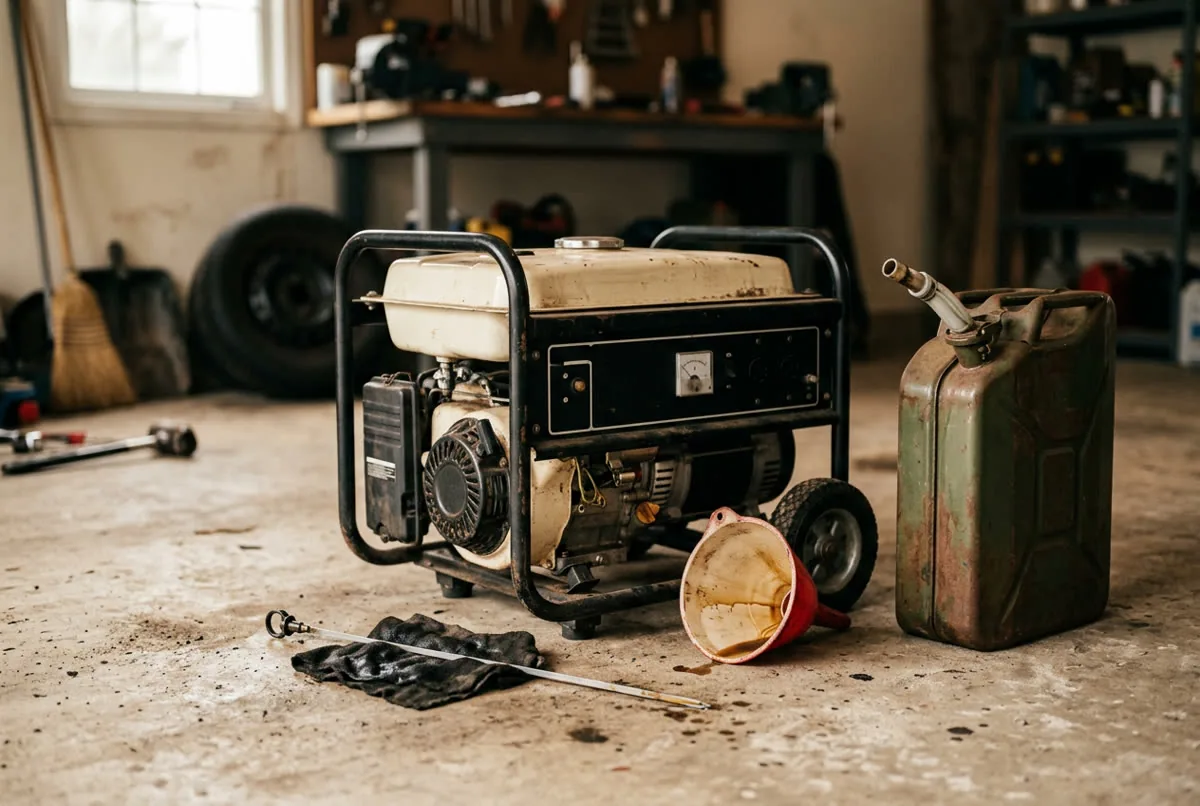
The forecast turns colder, the wind picks up, and somewhere in the garage or shed sits a portable generator that hasn’t run since the last outage, or maybe since it came out of the box. Before the first real winter storm rolls through, it’s worth finding out now, in daylight, whether that generator will actually start.
The short answer: Change the oil on the manufacturer’s schedule, treat or drain fuel that’s been sitting for more than a month or two, and run the unit under an actual electrical load before storm season arrives. That combination is what generator owner’s manuals point to as the difference between a generator that starts easily and one that doesn’t.
What Pre-Winter Maintenance Should You Do on a Portable Generator?
A pre-winter check doesn’t need to be complicated, but it does need to happen every year, not just the year the generator seemed to run rough. A generator that’s sat idle for months is the one most likely to fail, or to be used unsafely by someone in a hurry, and the US Fire Administration warns that portable generators, while useful during winter storms, can cause injuries and death if not used safely (US Fire Administration / FEMA, 2020).
Federal safety guidance is blunt about placement: run a portable generator outdoors only, at least 20 feet (about 6 meters) from the house with the exhaust directed away from windows, doors, and vents, and never in a garage, because opening doors or windows will not provide enough ventilation (U.S. Consumer Product Safety Commission, 2025). Carbon monoxide from a generator engine is colorless and odorless, and that distance rule isn’t a suggestion to shorten because it’s raining or snowing.
A basic pre-winter checklist, in order:
- Check the oil, change it if it’s due.
- Inspect the air filter and spark plug if the manual calls for it.
- Decide whether the fuel in the tank and any stored cans needs to be treated, used, or drained.
- Test-start the generator under a real load, not just an idle spin.
- Confirm extension cords and any transfer equipment are rated for the load and in good condition.
That last point matters more than it sounds. If the plan is to power part of the house through the electrical panel rather than running appliances off extension cords, that connection has to go through a properly installed transfer switch. Wiring a generator into household circuits, or backfeeding through a wall outlet, is electrical work for a licensed electrician and the local code official, not a weekend project, and no amount of generator maintenance substitutes for that step being done correctly. This guide sticks to the generator itself: fuel, oil, and the test run. For the rest of a storm-ready setup, the hurricane season power outage checklist covers what to stage around the generator, from lighting to a way to charge phones during an outage.
None of this takes a full weekend. Spread across two evenings, the oil check and fuel decision fit in under an hour combined, and the test run is mostly waiting while the engine runs under load. The point of doing it now, in October, rather than during the first cold snap of the season, is that a problem found in the driveway on a Tuesday afternoon is an errand. The same problem found during an actual outage, in the dark, with the temperature dropping, is a much worse afternoon.
A small, weatherproof storage box kept near the generator, holding a spare filter, funnel, stabilizer bottle, and the owner’s manual, saves the trouble of hunting through a cluttered shed for the right part on a cold, dark evening when the power just went out.
How Often Should You Change the Oil in a Backup Generator?
Oil is the maintenance item most owners already know about and still put off. Manufacturer schedules pair an hour count with a calendar interval. Honda’s EU2200i manual, for example, calls for the first oil change after the first month or 20 hours, then every 6 months or 100 hours, whichever comes first; the exact interval depends on the engine and how the generator gets used (Honda EU2200i Owner’s Manual).
That calendar clause is the one that applies to most backup generators sitting in a shed, because a unit that only runs for test purposes and the occasional outage rarely logs enough hours to hit the hour mark first. Size and duty cycle change the math, so the owner’s manual’s hour-and-calendar combination, not a number borrowed from a bigger unit’s schedule, is the one to follow for a portable generator.
Checking the hour meter, if the unit has one, only takes a minute and settles the question either way. If there’s no hour meter, the calendar does the job instead: oil changes on the calendar interval the manual specifies, with one timed to land right before the pre-winter test run, keep a rarely used generator from ever running on oil old enough to have broken down.
How Long Does Gasoline Stay Good for Generator Use in Storage?
This is where most no-start calls actually start. Fuel deterioration and oxidation can occur in as little as 30 days, well before most owners think to check it, and old gasoline causes hard starting and leaves gum deposits that clog the fuel system (Honda EU2200i Owner’s Manual). That can leave a generator cranking without starting, exactly the moment it’s needed most.
A fuel stabilizer formulated for storage, added to fresh gasoline, extends fuel storage life; Honda’s manual calls for fresh gas plus stabilizer for storage from one month up to a year, and draining the fuel tank and carburetor for storage of a year or more (same source). The key word is fresh: stabilizer slows degradation, it doesn’t reverse fuel that’s already gone stale for months. If the gas in the tank or a stored can is more than a season old and was never treated, plan on running it out or disposing of it properly rather than trusting it through another winter.
Do You Really Need Fuel Stabilizer If You Only Use the Generator Once a Year?
Yes, and this is the assumption worth retiring. The instinct is understandable: gas that’s “only” ten or eleven months old doesn’t sound old. But manufacturer storage guidance is specific about the gap between uses that a once-a-year generator sees: for storage of one month up to a year, fill with fresh gasoline and add a stabilizer formulated to extend storage life, then reduce or drain the fuel left in the carburetor before storage (Honda EU2200i Owner’s Manual).
Skipping stabilizer on the theory that “it’s not that old” is a common misconception, not a documented safe practice. Fuel deterioration problems may occur within a few months, long before a once-a-year generator gets its next scheduled use (same source).
How Do You Safely Test-Run Your Generator Before a Winter Storm?
An annual test run is the step that surfaces starting problems, weak batteries, and clogged carburetors before a real outage does.
Set up outdoors, away from the house
Position the generator at least 20 feet from the house, angled so exhaust points away from windows, doors, vents, and any neighboring structure, following the same placement rule used during an actual outage (U.S. Consumer Product Safety Commission, 2025).
Start it and let it run under a real load
An idle spin for thirty seconds proves the engine turns over; it doesn’t prove much else. Plug in an actual load, a shop light, a space heater, anything that draws real current, and let the generator run under it for a while. This is when a weak battery, a fouled spark plug, or a fuel problem tends to show up, while there’s still time before the season to fix it. A generator that idles fine for a minute but stumbles or stalls once a real load hits it has told you something an idle spin never would.
Shut it down the way it will be shut down after a real outage
If the fuel has been treated with stabilizer, this is also the moment to shut off the fuel supply and let the engine run until it stops, using up the fuel in the carburetor before the generator goes back into storage for winter (Honda EU2200i Owner’s Manual).
Check the rest of the storm kit while the generator is already out
With the generator out of storage and running, it’s a good time to check the rest of what would get used during an extended outage. A hand-crank or battery weather radio that hasn’t been touched since last winter is worth testing on the same afternoon, since a radio that won’t power on is just as unwelcome a surprise as a generator that won’t start. Anyone weighing a battery-based power station as a second option alongside a gas generator can compare the Bluetti AC180 against an EcoFlow unit for a winter blackout.
Two Maintenance Myths Worth Retiring Before Winter
“It started fine last year, so it’ll start fine this winter” is the assumption behind most November and December service calls. Long inactivity, gasoline that degraded in storage, and a starting battery that quietly weakened over the off-season are common reasons a generator that worked last winter fails to start this one; old gasoline alone causes hard starting and gum deposits (Honda EU2200i Owner’s Manual).
The second myth is the fuel-age one already covered above: gas under a year old is not automatically fine, and stabilizer isn’t an optional extra for the cautious. It’s the product category built specifically for the once-or-twice-a-year use pattern most backup generators actually see. Everything else in this guide is technique; the carbon monoxide placement rule is safety, and it doesn’t bend for weather or convenience.
Pull the owner’s manual, check the hour meter against the oil-change interval it specifies, and pick a dry afternoon in the next two weeks to run through the oil, fuel, and test-run routine outdoors before the first winter storm warning goes out. That single afternoon, done now while the driveway is still dry, is what turns a generator into backup power instead of a shed ornament.
Frequently Asked Questions
- How often should I change the oil in my home backup generator?
- Intervals vary by model, so follow the owner's manual. Honda's EU2200i manual, for example, calls for the first oil change after the first month or 20 hours of use, then every 6 months or 100 hours, whichever comes first. A backup unit that only runs for tests and outages usually hits the calendar mark before the hour mark.
- Do I really need fuel stabilizer if I only use my generator once a year?
- Yes. Gasoline can start to deteriorate in as little as 30 days, and Honda's generator manual calls for fresh gas plus a stabilizer for storage from one month up to a year, and draining the fuel tank and carburetor for storage of a year or more. A once-a-year generator is exactly the use pattern stabilizer is built for.
- How do I safely test-run my generator before a winter storm?
- Run it outdoors only, at least 20 feet from the house with the exhaust pointed away from windows, doors, and vents, under a real electrical load rather than an idle spin, then shut off the fuel supply and let it run until it stops if the fuel was stabilized, reducing the fuel left in the carburetor before storage.
Sources & references
Before you go
The Renter's Homestead Pack
Self-reliance projects for the yard you don't own — container yields, a raised bed built to move with you, balcony preservation basics, and the landlord questions to ask first.
Free guide
The Renter's Homestead Pack
Self-reliance projects for the yard you don't own — container yields, a raised bed built to move with you, balcony preservation basics, and the landlord questions to ask first.