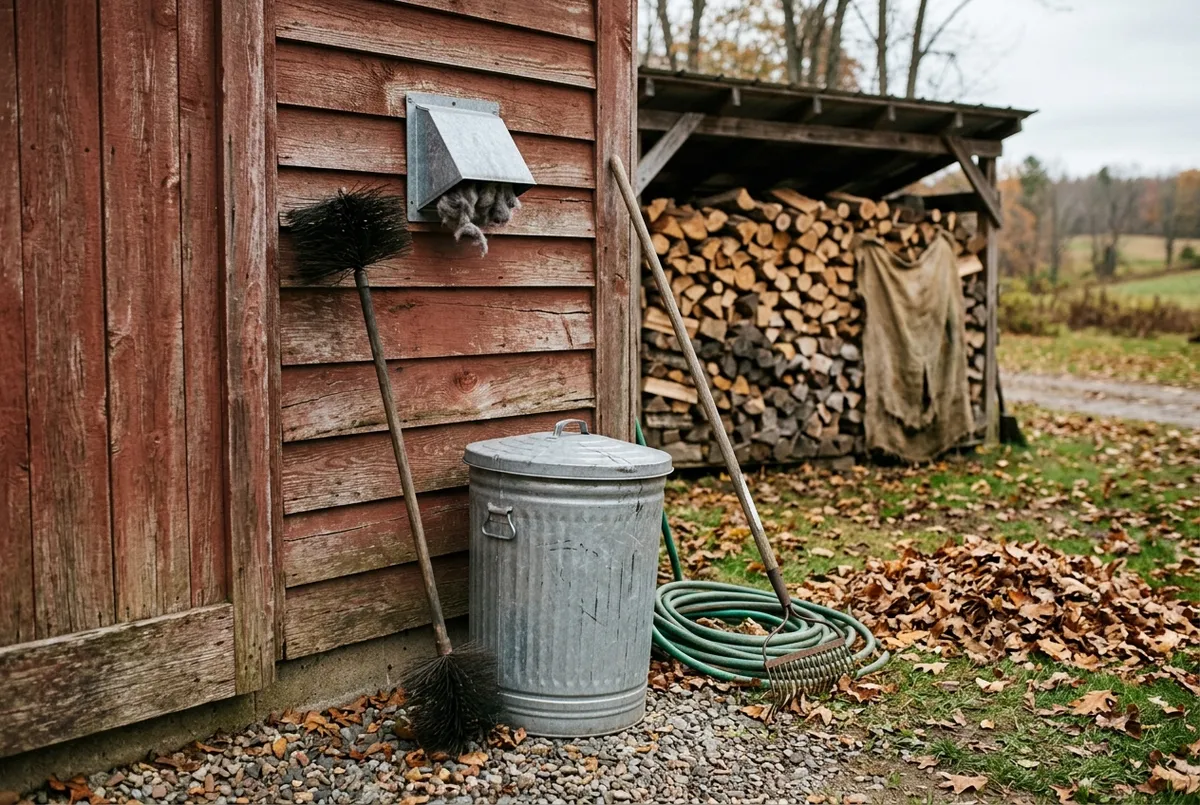
Fire Prevention Week rolls around every October, and it is easy to file it under “smoke alarm batteries” and move on to raking leaves. That is not what the 2026 campaign is actually about, and if you keep a yard, a shed, or a woodpile, the parts that matter most this year sit outside the official poster entirely. This guide pulls together NFPA’s own fire-loss numbers and a state forestry agency’s debris-burning guidance so you can check the real risks instead of guessing at them.
The short answer: Fire Prevention Week 2026 runs October 4-10 with an official theme about safe lithium-ion battery charging, but the backyard risks that cause real property damage before winter are unswept heating equipment, debris burning that gets away from you, and a dryer vent nobody has cleaned since spring.
What Fire Prevention Week 2026 Is Actually About
Fire Prevention Week 2026 runs October 4-10, and NFPA’s official campaign theme is “Charge Into Fire Safety. Safe Charging Is a Superpower” (NFPA, 2026). That is a deliberate, narrow focus on lithium-ion batteries and how people charge them, not a general “check your whole house” campaign the way some past Fire Prevention Week themes read.
That is worth knowing before you plan around it. If you searched expecting chimney safety or yard-cleanup guidance, you will not find it on NFPA’s own page this year. The battery-charging angle still matters if you run solar gear, a portable power station, or rechargeable tool batteries out of a shed or garage, and we cover that below. But most of what actually threatens a backyard property before winter sits outside this year’s official campaign, which is exactly why it is worth checking separately.
The reason NFPA landed on charging habits this year is not hard to guess. Cordless drills, ebikes, riding-mower batteries, garden tools, and backup power stations have all quietly gone lithium over the last decade, and a lot of that gear ends up charging unattended in a garage or shed overnight. That is a real and growing category of risk. It just is not the category that determines whether your particular backyard makes it through winter without a fire. The four checks below are.
Every item covered below shares one trait: the risk is easy to fix right now and much harder to fix once cold weather has already forced daily use of heating equipment, dryers, and stored fuel. A cracked chimney flue, a lint-packed dryer vent, or a debris pile sitting a little too close to a fence line are all simple to spot and correct in October. In January, with the equipment running daily and the ground already frozen, the same problems turn into emergency calls instead of routine maintenance.
How Often Should a Chimney Be Swept Before Winter
NFPA’s guidance is to have heating equipment and chimneys inspected and cleaned every year by a qualified professional (NFPA Research, Dec. 1, 2022). Its research also shows why the timing matters. Heating equipment caused an estimated annual average of 44,210 US home structure fires, 480 deaths, 1,370 injuries, and more than $1 billion in direct property damage between 2016 and 2020 (NFPA Research, Dec. 1, 2022).
Larger (non-confined) fireplace and chimney fires are a small slice of that total by count, just 7% of home heating-equipment fires, but they caused 22% of the direct property damage from those fires over the same five years (NFPA Research, Dec. 1, 2022). When a chimney fire happens, it tends to do outsized damage relative to how often it happens.
The seasonal pattern backs up why “before winter” is the right window and not “during winter.” Nearly half of home heating-equipment fires, 46%, occur in December through February, tied to the seasonal ramp-up in chimney and space-heater use (NFPA Research, Dec. 1, 2022). A certified chimney sweep can tell you, based on how much you actually burned last season and what your flue looks like now, whether you need a full sweep or just an inspection. Book that before the first cold snap, not after the first fire of the season.
What a chimney inspection actually covers
A sweep is not just running a brush down the flue. A proper visit checks for creosote buildup along the liner, cracks or gaps in the masonry or metal flue that could let heat reach nearby framing, animal nests or debris blocking the draft, and whether the damper opens and seals correctly. Any one of those, left unchecked, is exactly the kind of small problem the NFPA damage numbers above are describing: an issue that only shows up as a fire once the equipment is in daily use.
Is It Legal to Burn Leaves and Yard Debris This Fall
This depends entirely on where you live. Burn permits, seasonal bans, and local ordinances vary by state and often by county, so check with your local fire marshal or state forestry agency before you light a debris pile. Do not treat this article, or any general homesteading site, as your legal answer.
What is consistent is why the rule exists in the first place. In Virginia, escaped debris burns, leaves and brush included, are the state’s leading human cause of wildfire (Virginia Department of Forestry). If your state’s data looks anything like that, a debris pile that gets away is not a rare fluke; it is a predictable pattern. Whatever your county’s actual answer turns out to be, keep water and a way to fully extinguish the pile on hand while it burns, and never leave it unattended.
If burning is not allowed, or you would rather skip it
Alternatives to burning exist for a reason: an unattended or wind-caught pile is a known, recurring cause of wildfire, not a hypothetical one, as the Virginia data above shows. Composting leaves and soft plant material instead of burning them turns the same fuel load into next spring’s garden input. Municipal yard-waste pickup, where it exists, and a rented or borrowed chipper for woodier debris both get rid of the pile without ever putting a match to it; Virginia’s forestry agency lists chipping and composting as alternatives to burning (Virginia Department of Forestry).
Why Dryer Vents Catch Fire, and How to Clean Yours
This hazard gets forgotten because it lives indoors, not in the yard, but it belongs on the same before-winter list because residential dryer fires run higher in the fall and winter months, peaking in January (U.S. Fire Administration, Aug. 2012). That older federal baseline estimated about 2,900 residential clothes dryer fires a year, with roughly 5 deaths, 100 injuries, and $35 million in loss annually, and “failure to clean” was the leading factor, responsible for 34% of those fires (U.S. Fire Administration, Aug. 2012). That data is a decade-plus old now, so treat it as a baseline showing the pattern rather than a current-year count.
The lint trap is not the whole job
Clearing the lint trap every load matters, but it only catches what collects at the very end of the vent path. The duct running from the dryer to the outside wall accumulates lint the trap never sees, and that buildup is where heat gets trapped. Have the full vent duct cleaned out periodically, not just the trap, especially if a load is taking noticeably longer to dry than it used to.
Signs your vent needs attention now, not later
A load that takes noticeably longer to dry than it used to is a common signal of a restricted vent. So is a dryer that runs noticeably hotter to the touch than it used to, a persistent burning-dust smell during a cycle, or visible lint gathering around the outside exhaust hood instead of blowing clear. Any of those on their own is worth a vent cleaning before the machine sees heavier fall and winter use.
Charging Batteries and Backup Power Safely
This is the part NFPA actually built the 2026 campaign around, and it applies directly if you run solar panels, a portable power station, or rechargeable tool batteries out of a shed or garage. The safe-charging habits NFPA is pushing are not complicated: use the cord and charger that came with the device or one approved by the manufacturer, not a mismatched replacement; charge on a hard, flat surface; unplug once the device is fully charged; and charge large items like e-bikes and power tools outside when possible, without blocking exits (NFPA, 2026).
If you are sizing up a portable power station for winter backup, this is also the right moment to think about where you will charge it. A Bluetti AC180 is a lithium-battery power station, which means the hard-surface, use-the-included-cable habits above apply to it specifically, not just to loose tool batteries sitting on a shelf.
When to stop using a battery instead of charging it again
A battery that has swollen, cracked, gotten wet, or dropped a significant distance is not a battery to charge again out of habit. Unusual heat during charging, a smell you cannot place, or a case that no longer sits flat are all reasons to stop and set the unit aside rather than plug it in one more time; NFPA’s own list adds leaking, smoking, and popping or hissing sounds (NFPA, 2026). This applies as much to a $30 drill battery as it does to a several-hundred-dollar power station.
Your Next Step
None of this needs to be a weekend project. Book the chimney sweep before the first cold snap, find out your county’s actual debris-burning rules before you light anything, clear the dryer vent duct and not just the trap, and move any battery charging setup somewhere you can actually see it. If you are still working out how much backup power you need this winter, our 300W vs 1000W Solar Generator comparison walks through what you actually need before you buy, and 5 Backyard Homestead Projects for Slow Winter Weeks covers what else is worth tackling once this checklist is done. For readers who want a broader self-reliance reference beyond a single season’s checklist, The Book: The Ultimate Guide to Rebuilding Civilization is worth a look too.
Frequently Asked Questions
- When is Fire Prevention Week 2026 and what's this year's theme?
- Fire Prevention Week 2026 runs October 4-10, and NFPA's official theme is "Charge Into Fire Safety. Safe Charging Is a Superpower," focused on lithium-ion battery and charging habits rather than general home hazards (NFPA, 2026).
- How often should a chimney be swept before winter?
- NFPA recommends having heating equipment and chimneys inspected and cleaned every year by a qualified professional. Its data also shows why timing matters: larger fireplace and chimney fires caused 22% of heating-fire property damage despite being only 7% of heating-equipment fires, and nearly half of all home heating fires cluster in December through February (NFPA Research, Dec. 1, 2022). Have a certified chimney sweep inspect before that window opens, not during it.
- Is it legal to burn leaves and yard debris in my backyard this fall?
- Rules vary by state and county, so check with your local fire marshal or state forestry agency before burning. Take it seriously: in Virginia, escaped debris burns are the leading human cause of wildfire (Virginia Department of Forestry).
- Why do dryer vents catch fire, and how do I clean mine?
- An older federal baseline counted about 2,900 residential clothes dryer fires a year, and "failure to clean" was the leading factor in 34% of them (U.S. Fire Administration, Aug. 2012). Clear the lint trap every load, and have the vent duct itself cleaned out periodically, not just the trap.
- What backyard fire hazards should I check before first frost?
- Based on Fire Prevention Week priorities: your chimney and heating equipment before the December-February fire season, any debris pile you plan to burn, your dryer vent, and how you charge lithium-ion batteries in sheds and garages, which is literally this year's official NFPA theme (NFPA, 2026).
Sources & references
Before you go
The Renter's Homestead Pack
Self-reliance projects for the yard you don't own — container yields, a raised bed built to move with you, balcony preservation basics, and the landlord questions to ask first.
Free guide
The Renter's Homestead Pack
Self-reliance projects for the yard you don't own — container yields, a raised bed built to move with you, balcony preservation basics, and the landlord questions to ask first.