What’s the short answer?
- Thermoneutral needs drop fast as pigs mature: suckling pigs need 85°F or higher, while 200-lb finishing hogs only need 50-60°F (Penn State Extension).
- Below about 40°F mature pigs need added cold protection; growing pigs can't adequately withstand much below 50°F (Penn State Extension, Winter Housing for Swine Welfare).
- Cold weather can push daily feed needs up 3x or more depending on age, size, and severity (Penn State Extension).
- Winter housing needs dry bedding and shelter from precipitation and dampness regardless of the exact temperature (Penn State Extension).
Backyard pig owners feel the pressure the moment overnight lows start dropping into the 30s: is the current shelter enough, does anything need a heat source, and is the feeding routine about to fall short. Get the housing or the feed wrong and a pig that did fine in October can struggle by January, especially younger stock that hasn’t put on much cold tolerance yet. It’s not the cold that catches people out, it’s guessing at what actually needs to change.
The short answer: Backyard pigs need dry, draft-free housing first, and whether they also need heat, extra feed, and more shelter depends heavily on age and weight. A 350-lb sow handles cold far better than a 15-lb weaned piglet, pigs under about 200 lbs need warm housing, and even mature pigs need added protection once temperatures fall below about 40°F (Penn State Extension).
What Temperature Is Actually Too Cold for Backyard Pigs?
The common assumption is that pigs are tough enough to shrug off cold weather because of their size and the layer of fat under the skin. That assumption doesn’t hold up well once a pig is actually exposed to freezing temperatures for any length of time. Pigs carry very little hair and can’t grow the kind of insulating winter coat that goats, sheep, or cattle put on, which is part of why cold hits them harder than their body size would suggest (Utah State University Extension).
Penn State Extension puts numbers on where tolerance ends: once temperatures fall below about 40°F, mature pigs need added protection from the cold, while growing pigs (birth to about 6 months) can’t adequately withstand temperatures much below 50°F (Penn State Extension). Below those points, a pig isn’t just uncomfortable, it’s actively working to maintain body temperature, and that effort pulls energy away from growth or reproduction.
That 40°F and 50°F range is a floor, not a target to manage toward. Housing and feeding decisions should aim to keep pigs comfortably above those minimums for most of the season, rather than treating the minimum as an acceptable steady state. A pig that spends weeks hovering right at its tolerance line is still under cold stress even if it never drops below the number on the chart.
How Thermoneutral Needs Change by Age and Weight
The single biggest factor in how much cold protection a pig needs isn’t the breed or the setup, it’s the pig’s stage of growth. Utah State University Extension, citing Fabian and Hines (2019), notes that a pig’s thermoneutral-zone requirement shifts substantially with age, with younger pigs needing much higher ambient temperatures than older, larger animals (Utah State University Extension).
Penn State Extension breaks that shift down by stage:
- Pre-wean suckling pigs need 85°F or higher.
- 15-lb weaned pigs need 77-85°F.
- 45-lb nursery pigs need 70-75°F.
- 100-lb growers need 60-65°F.
- 200-lb finishing pigs need 50-60°F.
- 350-lb gestating sows need 60-65°F.
- Lactating sows need 55-65°F.
That range is wide on purpose, and it’s the detail most backyard setups get wrong. A pen with a nursing sow and litter has a fundamentally different heat requirement than a pen with a couple of finishing hogs headed toward processing weight, even though both are technically “backyard pigs in winter.” Sizing the shelter, bedding depth, and any supplemental heat source to the youngest or smallest pig in the group, rather than to the average or the toughest animal, is what avoids under-protecting the pigs that actually need the most help.
This is also where a lot of the seasonal risk sits. A setup that worked fine for a group of growers in November can fall short within weeks if a sow farrows in December and the newborn litter’s thermoneutral needs are 20-30°F higher than what the existing shelter was built for.
Do Backyard Pigs Need a Heated Shelter in Winter?
Not automatically, and for most mature backyard hogs, active heat isn’t the first thing to add. What Penn State Extension identifies as the non-negotiable requirement is shelter from precipitation and dampness, plus a dry bedding area, regardless of the exact ambient temperature (Penn State Extension).
Wet bedding and a drafty structure will undercut a pig’s cold tolerance faster than a few degrees on the thermometer ever will. A dry, wind-blocked shelter with deep bedding lets a pig generate and hold its own body heat through normal metabolism and by huddling with penmates. For mature stock sitting comfortably above their minimum tolerance range, that combination is frequently enough on its own.
Supplemental heat becomes a real consideration for every pig under about 200 lbs: Penn State Extension says warm housing, with heat from a sow and/or a supplemental heat source, is necessary for the welfare and growth efficiency of pigs that size (Penn State Extension). The gap is widest for pre-wean piglets and very young weaners, whose thermoneutral zone sits well above what an unheated structure will hold through a hard winter. For those groups, the priority shifts from “keep it dry” to actively closing the gap between whatever the shelter holds and the 77-85°F-plus range those animals need. For mature pigs, dry and draft-free does most of the work, and adding heat on top of that is a secondary decision, not the first fix to reach for.
How Much Extra Should You Feed Pigs When It’s Cold?
Feed is the other lever, and it moves more than most people expect. Penn State Extension notes that in cold weather, daily feed allowance may need to increase by three times or more, depending on the pig’s age, size, and how severe the weather actually is (Penn State Extension).
That’s a wide range for a reason. A mature pig in a dry, wind-blocked shelter losing only a few degrees below its thermoneutral zone needs a modest bump in ration. A younger or thinner pig in a drafty setup during a hard cold snap can need multiples of its normal ration just to hold body temperature, before any of that feed goes toward actual growth or reproduction.
The practical takeaway is to treat winter feeding as a moving target tied to conditions, not a fixed number set once at the start of the season. Watching body condition through the winter, and adjusting the ration upward as temperatures drop or a storm system moves through, matters more than locking in one winter feeding rate in October and assuming it will hold through February.
Water access matters alongside the ration itself. Waterers can freeze in cold weather, and Utah State University Extension stresses that cool, fresh water should always be available to pigs in winter (Utah State University Extension). Checking water twice a day through the coldest stretches is as much a part of the winter feeding routine as the feed itself.
Can Pigs Live Outside All Winter Without a Barn?
For mature pigs in a region where lows don’t regularly drop far below 40°F, a well-built, dry, draft-blocked shelter can be enough without a fully enclosed barn. The determining factor isn’t really “barn or no barn,” it’s whether the structure reliably keeps pigs dry and out of the wind, and whether it’s sized to the coldest-tolerant animal in the group rather than the hardiest one.
Where that approach breaks down is with younger or smaller pigs, or in climates where lows regularly fall well under a mature pig’s minimum tolerance. In those cases, the thermoneutral-zone numbers above aren’t a soft guideline, they’re close to the line between pigs that hold condition through winter and pigs that lose weight fighting the cold for months. Matching shelter and feed decisions to the specific pigs on hand, rather than leaning on a general “pigs are hardy” assumption, is what actually determines whether an outdoor-only setup holds up through a full season.
Watching for Cold Stress as the Season Goes On
Because the exact temperature that stresses one pig might barely register for another, the more useful habit through winter is watching the pigs themselves rather than just the thermometer. Pigs that are struggling to stay warm tend to bunch tightly together for long stretches, spend more time in the driest, most sheltered corner of the pen, and show less interest in normal rooting and moving around. A pig that’s eating its full ration but still losing condition through a cold snap is a signal that the current setup, not the feeding plan, needs the next look; Penn State Extension recommends routinely scoring body condition to see how pigs are handling winter temperatures (Penn State Extension).
This matters most for the pigs sitting closest to their thermoneutral floor: young weaners, a sow close to farrowing, or any animal that’s thinner than the rest of the group going into winter. Checking on those individuals specifically, rather than assuming the whole group is fine because the toughest pig in the pen looks comfortable, catches problems before real condition is lost.
Is a Three-Sided Shelter Enough for Winter Hogs?
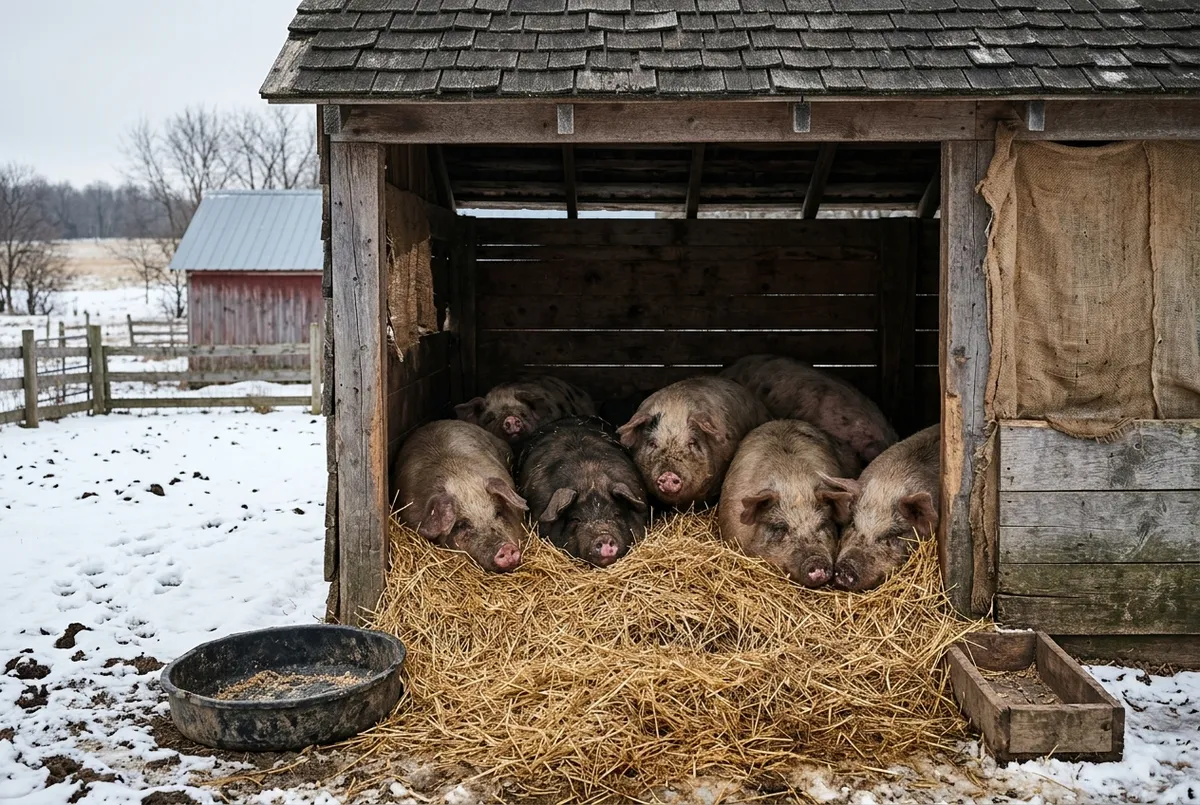
Virginia Cooperative Extension says that in lower-cost open-front housing, wind protection on three sides, a roof overhead and clean, dry bedding in the sleeping area are adequate to prevent cold stress in growing-finishing market hogs, meaning pigs from 45 lb to market weight. The same page says supplemental gas heat is not practical where open-front housing is used (Virginia Cooperative Extension, 2005-08).
The floor and bedding are the other half of that setup. Dry bedding on top of a solid concrete or wooden floor in the sleeping and loafing area does an excellent job keeping growing hogs warm in cold seasons, and straw, wood shavings and peanut hulls are listed as good cold-weather materials. Damp bedding has poor insulation value and does not protect hogs from cold temperatures, so removing damp, soiled bedding and replacing it with fresh, dry material is an important cold-weather practice. Housing several pigs together also helps, because the animals can huddle to conserve body heat.
Cold also costs performance. Hogs stressed by cold grow slower and convert feed to body weight less efficiently, because they must use more feed energy to maintain body temperature. The page is written for market hogs, so read it next to the age-based figures above rather than instead of them.
Getting the Setup Ready Before the Cold Hits
Most of what separates a winter hog setup that works from one that doesn’t comes down to two things: keeping the shelter dry and draft-free, and adjusting feed as conditions change rather than after a pig has already lost condition. Neither one requires guessing once the age and weight of the pigs on hand are checked against the thermoneutral ranges above, and neither one is about buying more infrastructure than the group actually needs.
If pigs aren’t the only animals being prepped for the season, the fall chores checklist for chickens and bees covers the broader seasonal punch list worth working through at the same time. For anyone locking down other structures against winter weather and predators while they’re at it, the automatic coop door comparison is worth a look too.
The next step is straightforward: walk the current shelter and check it honestly against the driest, most draft-free version of itself, confirm which pigs in the group sit closest to their thermoneutral floor, and make sure the feeding plan can scale up before a real cold snap arrives rather than after.
Frequently Asked Questions
- What temperature is actually too cold for backyard pigs?
- Once temperatures fall below about 40°F, mature pigs need added protection from the cold, while growing pigs (birth to about 6 months) can't adequately withstand temperatures much below 50°F, per Penn State Extension's Winter Housing for Swine Welfare guidance.
- Do backyard pigs need a heated shelter in winter?
- It depends on size. Penn State Extension identifies shelter from precipitation and dampness plus a dry bedding area as the requirement regardless of exact temperature, says well-managed cold housing can work for mature pigs, and says warm housing, with heat from a sow and/or a supplemental heat source, is necessary for pigs smaller than 200 lbs.
- How much extra should you feed pigs when it's cold?
- Penn State Extension notes daily feed allowance may need to increase by three times or more, depending on the pig's age, size, and how severe the weather is.
- Can pigs live outside all winter without a barn?
- Mature pigs can do well in well-managed cold housing, meaning an unheated but dry, draft-blocked, ventilated shelter, but Penn State Extension says pigs smaller than 200 lbs need warm housing, and colder climates need shelter and feed matched to the age-based thermoneutral zones Penn State and Utah State Extension outline.
- What's the minimum winter temperature pigs can safely tolerate?
- Penn State Extension puts the line at about 40°F for mature pigs, below which added protection from the cold is a must, and about 50°F for growing pigs.
Sources & references
- Penn State Extension, Cold temperature management for pigs (opens in new tab)
- Penn State Extension, Winter housing for swine welfare (archived) (opens in new tab)
- Utah State University Extension, Maintaining pig temperatures (opens in new tab)
- Virginia Cooperative Extension, Temperature extremes and youth market hog project pigs (opens in new tab)
Before you go
The Renter's Homestead Pack
Self-reliance projects for the yard you don't own — container yields, a raised bed built to move with you, balcony preservation basics, and the landlord questions to ask first.
Free guide
The Renter's Homestead Pack
Self-reliance projects for the yard you don't own — container yields, a raised bed built to move with you, balcony preservation basics, and the landlord questions to ask first.