What’s the short answer?
- Late winter, after the coldest weather passes but before spring growth begins, is the usual dormant-season pruning window, not fall.
- Extension guidance links fall or early winter pruning of apple trees to a higher risk of severe winter injury.
- On fire blight-susceptible trees, pruning during the growing season may spread the disease.
- Diseased cuts need to go a minimum of 8 to 12 inches below visible infected tissue, with tools disinfected between cuts.
- Infected prunings should be promptly destroyed by burning or burying, per Clemson Extension.
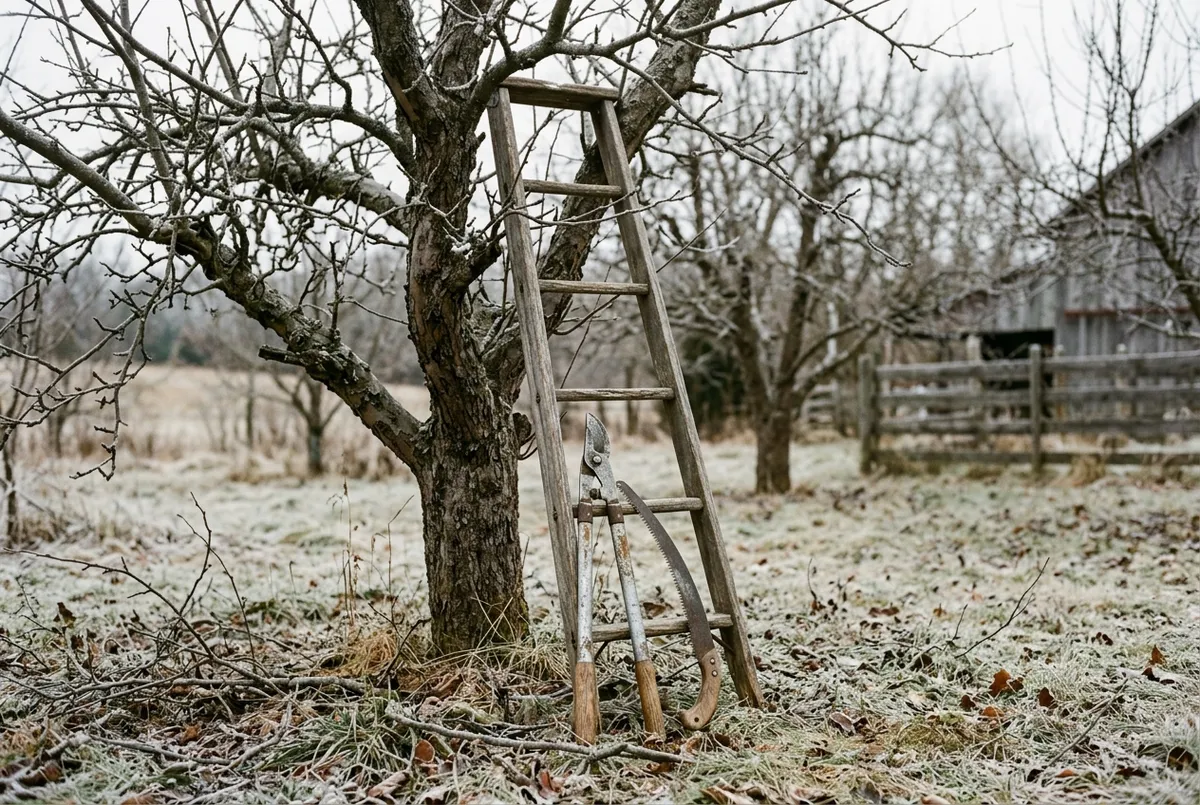
The last apples and figs are off the trees, the leaves are dropping, and the pruning shears are sitting in the shed looking useful. It’s a natural moment to want to tidy up the orchard before winter really sets in, and it’s tempting to reach for the loppers in November because it feels like the logical next step after harvest.
The short answer: No. Wait until late winter, after the coldest weather has passed but before spring growth begins. Extension guidance warns that fall or early winter pruning of apple trees increases the risk of severe winter injury, and on fire blight-susceptible trees pruning is best done in the dormant season.
Why fall pruning puts your trees at risk
University of New Hampshire Extension is direct about apples: the ideal time to prune is between February and April, and fall or early winter pruning should be avoided because it increases the risk of severe winter injury (UNH Extension). Utah State University Extension gives the same logic for dormant pruning: do it after the coldest part of the winter but before spring bud swell, because pruning earlier in the year puts the tree at risk of low-temperature injury, since maximum hardiness may not have been achieved (Utah State University Extension).
Clemson Cooperative Extension’s guidance for figs in South Carolina follows the same pattern: prune during the winter months, preferably after the coldest weather has passed but before growth begins in the spring (Clemson Cooperative Extension HGIC, updated Oct. 27, 2025). Timing the cut close to spring growth, rather than right after harvest, can feel backward, but the extension guidance above is why the wait matters.
What’s actually the best month to prune apple, peach, or fig trees
There isn’t one universal calendar date, because “late winter” shifts depending on your climate and species. UNH Extension gives February through April for apples (UNH Extension). University of Illinois Extension says heavy pruning usually should be limited to the latter part of the dormant season, preferably February 1 to March 15 in the southern half of Illinois and February 15 to April 1 in the northern half, and that pruning earlier may increase the danger of cold injury. The same page lists peach and nectarine trees as exceptions: their pruning wounds heal more rapidly and with less chance of infection if they are pruned just before bloom or during bloom (University of Illinois Extension). For figs, Clemson’s South Carolina guidance is winter, after the coldest weather has passed but before growth begins in spring (Clemson Cooperative Extension HGIC).
If you’re not sure where that window falls where you live, your county extension office is the right place to ask, since pruning recommendations are one of the more region-specific pieces of fruit tree care.
The Illinois windows show the pattern: the colder northern half of the state has a later window than the southern half. Either way, the marker to watch for isn’t a date on a calendar, it’s the tree itself: buds still tight and dormant, and the hardest freezes of the season behind you rather than ahead of you.
If you already made fall cuts, what now
If you’ve already pruned this fall before reading this, the useful move now is simply to stop, leave the rest of the tree alone until the correct window opens, and watch those cut sites for any dieback or discoloration as winter goes on. If you’re managing a fire blight-susceptible variety, such as apple or pear, keep an eye out for anything that looks like active infection near those cuts, and call your local extension office if you’re unsure what you’re seeing.
Can pruning in fall actually hurt the tree over winter?
The concern isn’t hypothetical shape damage, it’s winter injury. UNH Extension says fall or early winter pruning of apple trees increases the risk of severe winter injury (UNH Extension), and Utah State Extension notes that pruning earlier in the year puts a tree at risk of low-temperature injury because maximum hardiness may not have been achieved (Utah State University Extension). Those pages are written about apples, and Clemson’s winter-pruning advice is specific to figs, so check your own species and region with your local extension office.
This is also why “I’ll just get it out of the way now” is the wrong instinct here. Based on the extension guidance above, an earlier cut adds risk rather than benefit.
Does pruning timing matter for disease, or just for shape and yield
It matters for disease too. Fire blight is one of the most devastating and difficult-to-control diseases of many fruit trees, including apple and pear. Clemson’s factsheet says to prune out blackened twigs and branches with cankers during the dormant season, and warns that pruning during the growing season may spread the disease (Clemson Cooperative Extension HGIC, updated July 18, 2025).
So the calendar question here isn’t only about cold hardiness. On fire blight-susceptible trees, it’s also a disease-management decision about when to cut.
How do you know if a branch is diseased versus just dormant
This is worth getting a second opinion on rather than guessing. Extension guidance on fire blight sets a specific distance for cuts below any sign of infected tissue, which is a reason not to cut right at the edge of visible damage (Clemson Cooperative Extension HGIC).
If you’re staring at a branch in November trying to decide whether it’s just asleep for winter or actually diseased, that’s a good reason to call your local extension office rather than make the cut yourself right now. They can help with a positive identification, and per the timing guidance above, November isn’t the month you want to be cutting into it anyway unless the tree is telling you something is actively wrong.
When you do find disease, how the cut itself should be made
Once the dormant season arrives and it’s time to prune, disease removal has its own rule that’s separate from routine shaping cuts. Clemson says pruning cuts of twigs and branches are made a minimum of 8 to 12 inches below any sign of infected tissue (Clemson Cooperative Extension HGIC). Cutting right at the visible edge of the damage isn’t enough: you have to cut well past it into wood you’re confident is clean.
Tool sanitation matters here too. Pruning tools should be disinfected between cuts with a 10% bleach solution (1 part household bleach to 9 parts water) or 70% alcohol, so you’re not carrying disease from one branch to the next on the blade itself (Clemson Cooperative Extension HGIC). Skipping this step turns your pruning shears into the thing spreading the problem you were trying to remove.
What to do with the prunings afterward
Don’t leave diseased cuttings lying around the yard. Clemson’s guidance is to promptly destroy all infected prunings by burning or burying (Clemson Cooperative Extension HGIC). Composting isn’t among the disposal methods it lists.
Getting your tools ready now, even though the cutting waits
None of this means November is a wasted month for orchard care. It’s actually a reasonable stretch to get equipment ready so you’re not scrambling once the real pruning window opens in late winter. University of Illinois Extension recommends a protective coating of boiled linseed oil to maintain the life of wooden handles, and sharpening dull pruning tools and coating metal surfaces lightly with an oil lubricant before winter storage (University of Illinois Extension). Clean tools also matter for disease control, as covered above. Our guide to cleaning, sharpening, and oiling garden tools for winter walks through that prep if your shears and loppers haven’t been touched since summer.
It’s also a good window for the broader planning side of homesteading: figuring out what else on the property can get handled during the slower winter weeks, from tool maintenance to smaller build projects, so late winter isn’t the only thing on the list once pruning season actually opens. Our roundup of backyard homestead projects for slow winter weeks is a reasonable place to start if you’re looking for what to prioritize between now and then.
If you’re newer to running a productive backyard and want a broader grounding in this kind of seasonal decision-making, not just pruning, but the full range of what a small home operation involves, it’s worth reading a resource that lays the whole picture out rather than piecing it together one question at a time. We cover what that looks like in practice in our Backyard Liberty review.
What to actually do this month
Hold off on the pruning shears. Use November to inspect your trees for anything that looks clearly diseased and flag it for your extension office rather than cutting into it yourself, clean and oil your tools so they’re ready when the window opens, and mark your calendar to watch local frost patterns so you can identify when the coldest weather has genuinely passed where you live. When that window arrives, typically late winter, ahead of spring bud break, that’s when the cuts belong, made past any visible disease with a disinfected blade, and with anything infected hauled off to be burned or buried rather than piled up in the yard.
Frequently Asked Questions
- Is it bad to prune fruit trees too early in the fall?
- Yes, for apples at least. University of New Hampshire Extension says to avoid fall or early winter pruning of apple trees because it increases the risk of severe winter injury. Extension guidance generally points to the dormant season, after the coldest weather has passed but before buds swell.
- What's the actual best month to prune apple, peach, or fig trees?
- There is no single universal month. UNH Extension gives February through April for apples, Illinois Extension lists different late-dormant windows for northern and southern Illinois, and it notes peach and nectarine trees are exceptions, best pruned just before or during bloom. Clemson Extension advises pruning figs in South Carolina during winter, after the coldest weather has passed but before spring growth. Check with your local extension office for your area.
- Can pruning in fall make a fruit tree more likely to die over winter?
- It can raise the risk of winter injury. UNH Extension says fall or early winter pruning of apple trees increases the risk of severe winter injury, and Utah State Extension notes that pruning earlier in the year puts a tree at risk of low-temperature injury because maximum hardiness may not have been achieved.
- Does pruning timing matter for disease, or just for growth and shape?
- It matters for disease too. Clemson Extension says pruning during the growing season may spread fire blight, a disease of fruit trees including apple and pear, and that cankered twigs and branches should be pruned out during the dormant season.
- How do you know if a fruit tree branch is actually diseased versus just dormant?
- If you're unsure whether a branch is diseased or just dormant, contact your local extension office for a positive identification before cutting. For fire blight, Clemson Extension says to cut a minimum of 8 to 12 inches below any sign of infected tissue.
Sources & references
- Clemson Cooperative Extension HGIC, Figs: How to Grow and Care for Figs in South Carolina (opens in new tab)
- Clemson Cooperative Extension HGIC, Fire Blight of Fruit Trees (opens in new tab)
- UNH Extension, Growing Fruits: Care of Mature Backyard Apple Trees (opens in new tab)
- Utah State University Extension, Training and Pruning Apple Trees (opens in new tab)
- University of Illinois Extension, Making Pruning Cuts (opens in new tab)
- University of Illinois Extension, Proper maintenance extends lifespan, saves money on garden tools (opens in new tab)
Before you go
The Renter's Homestead Pack
Self-reliance projects for the yard you don't own — container yields, a raised bed built to move with you, balcony preservation basics, and the landlord questions to ask first.
Free guide
The Renter's Homestead Pack
Self-reliance projects for the yard you don't own — container yields, a raised bed built to move with you, balcony preservation basics, and the landlord questions to ask first.