What’s the short answer?
- Microbial activity slows sharply near freezing, but a large, insulated hot pile can often keep working through winter.
- Small or uninsulated piles typically pause in freezing weather and resume breaking down once temperatures warm in spring.
- Windbreaks, straw or leaf covers, and consolidating into one larger pile help a pile hold heat.
- Plant-based kitchen scraps are fine to keep adding all winter; skip meat, dairy and oily foods.
- Worm bins need to stay above freezing, which usually means moving them indoors or into a protected structure.
- Keeping the pile damp but not wet, and diverting meltwater, prevents a frozen, saturated mess.
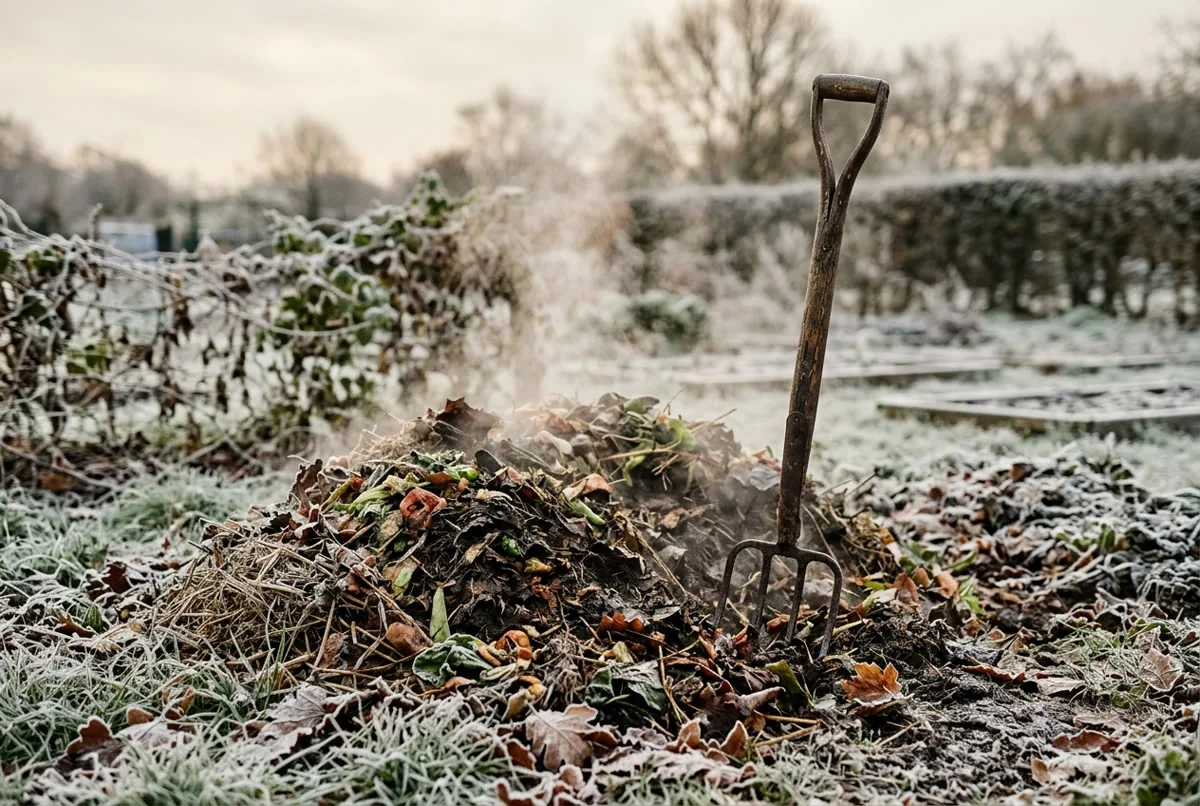
The frost hit three weeks ago, the pile in the corner of the yard hasn’t shrunk since, and now you’re staring at a bucket of coffee grounds and eggshells wondering whether to dump them somewhere else or just start over. Winter composting looks like a dead end from the kitchen window: no steam, no visible breakdown, just a lump of yesterday’s leaves sitting under a skin of frost. A lot of yard guides that cover hot versus cold composting stop right at the point where the thermometer drops, which is exactly the gap this one is meant to close. Whether a pile is actually stalled, or just moving slower than usual, comes down to a handful of decisions made before the first hard freeze, and the difference usually comes down to size and cover, not luck.
The short answer: Composting doesn’t stop below freezing, it slows down, and how much depends on the pile’s size, moisture and insulation. A large, well-built hot pile can keep working through most of winter; a small or exposed pile typically pauses and picks back up in spring, with no need to start over.
Does Composting Actually Slow Down Below Freezing?
Composting is a microbial process, and those microbes are the whole engine. As pile temperatures approach freezing, microbial activity drops off fast, which is why a pile that was steaming in October can look completely inert by January. That doesn’t mean it’s dead. A hot pile that retains enough mass, moisture and insulation to keep its internal temperature above freezing can keep breaking material down through winter, even while the outside of the pile is frozen solid (UNH Extension).
Smaller or less-managed backyard piles usually don’t have that kind of thermal mass. They tend to enter what’s really a pause phase: material keeps going in, but very little breaks down until temperatures climb again in spring. That’s not a failure, and it doesn’t mean the pile needs to be torn apart and rebuilt. It means the pile is doing exactly what a cold pile does in any season, just on a slower clock; Oregon State University Extension describes a frozen outer layer as simply a pause in the process (OSU Extension). Backyard Freedom Lab’s own compost guide draws this same line between hot, actively managed piles and cold, slower ones, and that distinction matters more in winter than at any other time of year, because it’s the difference between a pile that keeps working and one that’s simply resting until the ground thaws.
The idea that winter composting is impossible, and that a frozen pile has to be abandoned and rebuilt in spring, doesn’t hold up. Breakdown slowing or pausing in freezing conditions is normal, not a sign the pile failed. As long as material and moisture are managed through the cold months, the same pile picks back up once temperatures rise, without needing to start from scratch.
If a pile has gone quiet, the honest question isn’t whether something went wrong. It’s whether the pile was ever built big enough and wet enough to hold heat in the first place. If comparing bin styles for next season, our tumbler vs. worm factory breakdown walks through which setups hold onto heat and mass better than others.
How to Insulate and Size a Winter Compost Pile So It Keeps Working
Sizing and insulation do more for winter compost than any additive. A single larger pile holds heat far better than the same volume of material split across two or three smaller heaps, because it has less surface area exposed to cold air relative to its mass, and a large pile’s interior is likely to stay warm enough to avoid freezing (UNH Extension). If separate bins for browns and greens have been the routine all year, winter is a reasonable time to consolidate them into one working pile instead.
Beyond size, a few low-effort additions help a pile hold onto what heat it generates.
Windbreaks
Wind pulls heat out of a pile faster than still cold air does. A simple barrier on the windward side, even stacked straw bales or a length of fencing, cuts that heat loss; UNH Extension suggests surrounding bins with bags of leaves or straw bales to buffer against freezing temperatures (UNH Extension). Positioning a new pile against an existing fence, wall or hedge for winter does the same job without adding anything extra to build or buy.
Insulating covers
A layer of straw, dry leaves, or cardboard over the top of the pile traps heat that would otherwise radiate straight up and out. None of these materials are exotic; they’re the same browns already being added to balance the pile, just used as a blanket instead of mixed in. A thick enough layer also keeps hard rain or heavy snow from compacting the surface into an impermeable crust.
Consolidation over spread
Rather than starting a fresh small pile for winter scraps, feed everything into one main pile. A bigger, denser mass is simpler to insulate and slower to lose the internal heat it’s already built up. It also means only one pile to cover and check instead of two or three scattered ones.
None of this guarantees a pile stays fully active through a hard freeze. It shifts the odds toward a pile that keeps working longer into the cold, and toward a faster restart once spring temperatures return. For anyone weighing whether a current setup is worth insulating versus replacing, the hot-versus-cold breakdown in our backyard compost system guide is a useful starting point before investing more in a bin that was never sized to hold heat.
What to Keep Feeding Your Pile Through Winter
It’s tempting to stop adding scraps once the pile looks frozen, but that’s not necessary and it isn’t what keeps a winter pile in good shape. Typical kitchen scraps, fruit and vegetable peels, coffee grounds, eggshells, remain safe to add all winter. What changes is what to leave out: meat, dairy and oily foods should stay out of the pile, winter or not, since they can attract animals and backyard piles generally don’t get hot enough to fully break them down, a bigger problem around a pile that’s already slower and less active than usual (EPA).
The idea that all food scraps need to stop once temperatures drop doesn’t match how a winter pile actually behaves. Cutting out meat and dairy while continuing to add plant-based scraps keeps feedstock flowing, so decomposition can speed back up quickly once internal and outdoor temperatures rise again, rather than starting the whole buildup process over.
Feeding the pile through winter is really about keeping the input side moving so there’s material ready to break down fast once things warm up, not about forcing decomposition on a schedule the cold won’t allow. A pile kept fed with the right scraps through a slow winter tends to come out of dormancy faster in spring than one left untouched for months. It also means less material piling up in a kitchen bin or freezer bag waiting for a thaw that’s still weeks away.
Should Worms Move Indoors for Winter?
If part of the setup includes a worm bin, winter changes the plan more than it does for a standard compost pile. Red wiggler worms are efficient when conditions suit them, but that efficiency depends on warmth: EPA guidance puts the ideal bin temperature at 59-77°F, with survival down to about 32°F only if the worms have at least four inches of bedding. Worm bins generally need to move indoors or into a protected structure, such as a garage, shed or basement, once outdoor temperatures drop toward freezing, and EPA recommends insulating any bin kept outdoors during colder months, because the worms themselves can’t shrug off a hard freeze the way a static compost pile’s microbial community can, simply going dormant and restarting later (EPA).
This is one of the clearer differences between the two systems: a dormant compost pile is inconvenient, but a frozen worm bin is a dead one. For anyone running or considering vermicomposting alongside a regular pile, plan the indoor move before the first hard freeze rather than after, since relocating an already-cold bin in a scramble is harder on the worms than moving them a few weeks early. A bin kept in a garage, mudroom or basement over winter can keep processing kitchen scraps at close to its normal pace the whole season, which is the one part of this whole picture that doesn’t have to slow down at all.
Keeping Winter Compost From Turning Into an Icy, Smelly Mess
The complaint that actually derails most winter composting isn’t slow breakdown, it’s a pile that turns into a frozen, waterlogged block or starts smelling despite the cold. Both usually trace back to moisture management. Winter brings its own version of the problem summer does: instead of drying out, piles can end up saturated from snowmelt and freeze-thaw cycles, shedding meltwater and nutrients as they thaw and refreeze. The target is the same one worth aiming for any other season, damp but not wet, like a wrung-out sponge (EPA), and it’s worth checking and adjusting through winter rather than assuming cold weather handles moisture on its own.
A couple of habits keep this manageable. Route or divert runoff away from the pile so meltwater doesn’t pool against nearby paths, beds or structures, especially where it can refreeze into ice. When checking whether a pile still has active internal heat versus sitting fully frozen, a long-stem compost thermometer reads the interior without digging into a crusted, half-frozen exterior, which matters more in winter than any other season since visual cues alone are unreliable once everything’s covered in frost. Keeping meat, dairy and oily scraps out, as covered above, does double duty here too: it’s the same odor and pest control that matters year-round, just more noticeable against a quiet winter pile where any smell tends to stand out.
None of this is about rescuing a failed pile. A pile that’s iced over on the outside with active material underneath, or one that’s simply paused until spring, isn’t broken. Managing moisture and feedstock through the cold months is what keeps it from becoming an actual mess rather than just a slow one, and it’s a far smaller job than rebuilding a pile from scratch every year.
What to Do Next
If a compost pile has gone quiet since the first freeze, don’t tear it apart or start over. Check its size and moisture first, since a single consolidated pile with a straw or leaf cover holds heat far better than several small, exposed ones, and keep feeding it plant-based scraps through the cold months so there’s material ready to move once temperatures climb. If a worm bin is part of the setup, get it into a garage, shed or other protected space before the next hard freeze rather than after. And for anyone weighing whether a current bin or tumbler was ever built to hold heat through winter, our comparison of compost tumblers and worm factories is worth a look before buying anything new for next season.
Frequently Asked Questions
- Does compost still break down when temperatures drop below freezing?
- Microbial activity slows drastically as pile temperatures approach freezing. A hot pile with enough mass, moisture and insulation to keep its interior above freezing can keep breaking material down through winter, while smaller or less-managed piles typically pause and resume once temperatures warm in spring.
- How do I insulate a backyard compost pile for winter?
- Common winter strategies include adding a windbreak, covering the pile with insulating materials like straw, dry leaves or cardboard, and consolidating material into one larger pile instead of several small exposed heaps, since a larger mass holds heat better.
- Should I keep adding kitchen scraps if the pile is frozen or slow?
- Yes. Fruit and vegetable peels, coffee grounds and eggshells remain safe to add through winter. Meat, dairy and oily foods should still be excluded to limit odor and pest activity around a slower, semi-dormant pile.
- Do worm bins need to move indoors for winter?
- Generally yes. EPA guidance puts the ideal worm bin temperature at 59-77°F, and worms can survive down to about 32°F only with at least four inches of bedding, so worm bins typically have to move indoors or into a protected, insulated spot like a garage once outdoor temperatures drop toward freezing.
- How do I stop winter compost from turning into an icy, smelly mess?
- Keep the pile damp but not wet, and divert meltwater and runoff away from it so freeze-thaw cycles don't saturate the material or wash nutrients into nearby paths or structures. Excluding meat, dairy and oily scraps also limits odor during the slower winter months.
Sources & references
Before you go
The Renter's Homestead Pack
Self-reliance projects for the yard you don't own — container yields, a raised bed built to move with you, balcony preservation basics, and the landlord questions to ask first.
Free guide
The Renter's Homestead Pack
Self-reliance projects for the yard you don't own — container yields, a raised bed built to move with you, balcony preservation basics, and the landlord questions to ask first.